


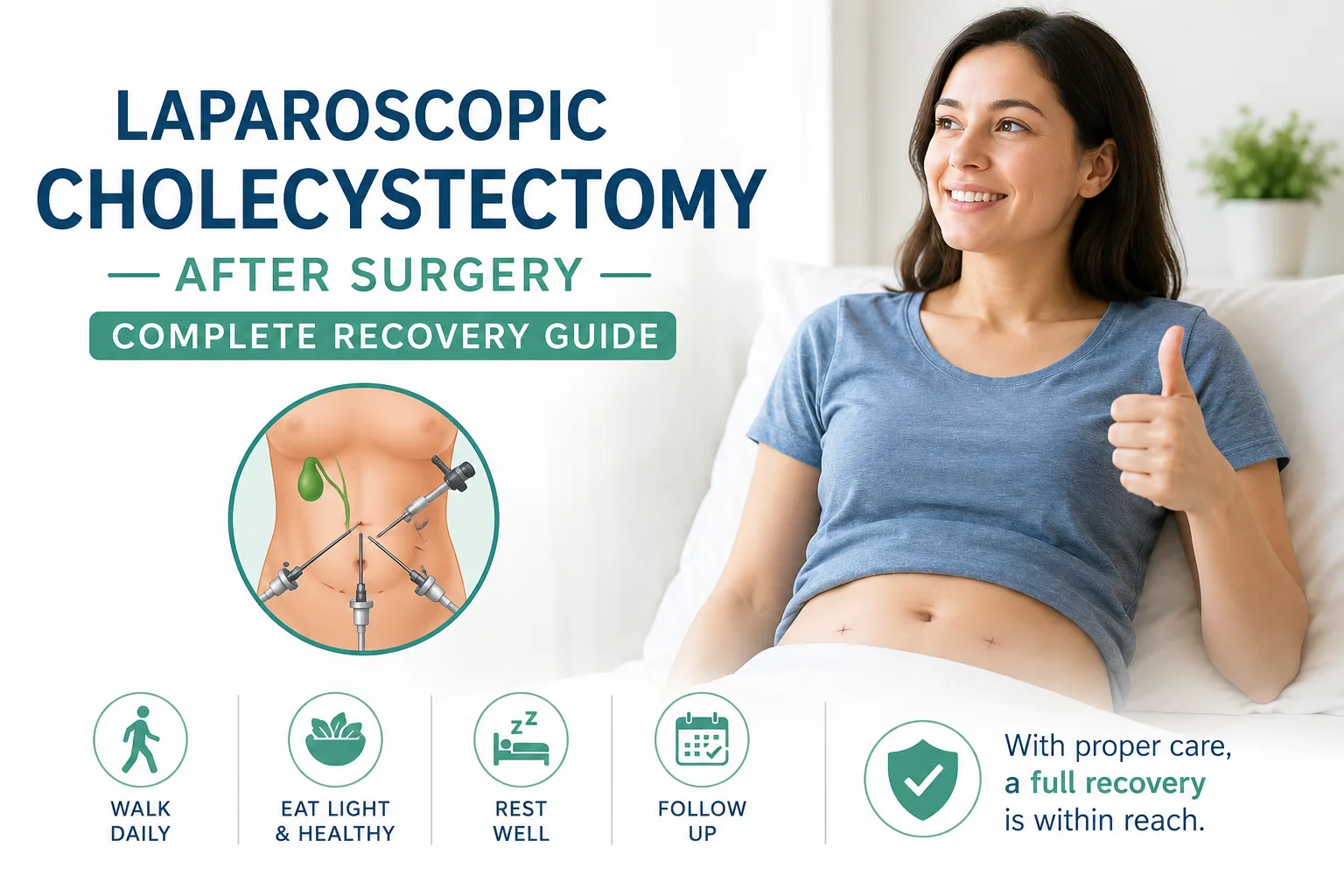
Laparoscopic Cholecystectomy After Surgery: Complete Recovery Guide
Summary
Having your gallbladder removed through laparoscopic cholecystectomy is one of the most commonly performed abdominal surgeries today. Thanks to the minimally invasive approach - using small incisions rather than one large cut - the procedure offers significantly faster healing, less pain, and a shorter hospital stay compared to traditional open surgery.
Yet for many patients, the question that matters most is not the surgery itself but what comes after. Understanding your recovery timeline, what to eat, which activities to avoid, and what warning signs to watch for is essential to ensuring a smooth and safe recovery from laparoscopic cholecystectomy after surgery.
This comprehensive guide walks you through every phase of your post-operative journey.
What Is Laparoscopic Cholecystectomy?
Laparoscopic cholecystectomy is a minimally invasive surgical procedure to remove the gallbladder. The surgeon makes 3 to 4 small incisions in the abdomen, inserts a thin camera (laparoscope) and surgical instruments, and removes the gallbladder while viewing the operation on a monitor. The abdomen is inflated with carbon dioxide gas to create space for the instruments and clear visualisation of internal organs.
The procedure is performed under general anaesthesia and typically takes 1 to 2 hours. It is the gold standard treatment for symptomatic gallstones, gallbladder inflammation (cholecystitis), and other gallbladder conditions.
Patients at Miracles Healthcare can access expert laparoscopic gallbladder stone surgery performed by experienced general surgeons using advanced minimally invasive techniques, ensuring minimal scarring and the fastest possible recovery.
Benefits of Laparoscopic Over Open Cholecystectomy
Understanding why the laparoscopic approach is preferred helps set recovery expectations accurately:
-
Smaller incisions - typically 0.5 to 1 cm each, rather than a 15–20 cm open incision
-
Less post-operative pain - significantly lower pain levels compared to open surgery
-
Shorter hospital stay - most patients go home the same day or within 24 hours
-
Faster return to normal activity - typically 1–2 weeks versus 4–6 weeks for open surgery
-
Lower risk of wound infection - smaller incisions reduce exposure to the external environment
-
Minimal scarring - incisions heal into small, barely visible marks over time
Day-by-Day Recovery After Laparoscopic Cholecystectomy
Day of Surgery (Day 0)
Immediately after the operation, you will be moved to a recovery room where your vital signs - heart rate, blood pressure, oxygen levels - will be monitored closely. Once the anaesthesia wears off and your condition is stable, you will be shifted to a ward or discharge bay.
Most patients are able to drink clear fluids within a few hours. The nursing team will encourage you to sit up and take a short walk the same evening - this is important for reducing the risk of blood clots and speeding up the passage of gas from the abdomen.
You may experience:
-
Mild to moderate pain or soreness at the incision sites
-
Shoulder and upper back pain - caused by residual carbon dioxide gas irritating the diaphragm
-
Nausea or drowsiness from anaesthesia
-
Abdominal bloating and flatulence
Pain relief medication will be provided, and most patients are discharged the same day or the following morning after confirming stable observations.
Days 1 to 3 - Early Recovery at Home
The first three days after laparoscopic cholecystectomy after surgery are typically the most uncomfortable, though pain levels are usually manageable with prescribed oral painkillers.
Key points for this phase:
-
Rest, but do not stay in bed all day - short walks every few hours help reduce bloating and gas pain and lower the risk of deep vein thrombosis
-
Take prescribed pain medication regularly - do not wait for pain to become severe before taking your next dose
-
Eat light and small - start with clear soups, toast, and diluted juices; avoid oily, fried, or spicy food entirely
-
Shoulder pain peaks around day 1–2 and resolves on its own as the gas is absorbed - warm compresses and walking help
-
Keep the incision sites dry and clean - sponge bathing is recommended until the wounds are fully healed
Days 4 to 7 - Building Momentum
By the end of the first week, most patients notice a significant improvement. Pain at the incision sites reduces to mild soreness, energy levels begin to return, and appetite improves.
-
Resume light activities around the house - cooking simple meals, gentle stretching, short outdoor walks
-
Patients with desk-based or sedentary jobs can often return to work between days 5 and 7 with their surgeon's clearance
-
Gradually introduce soft, low-fat foods - boiled rice, dal, yoghurt, bananas, cooked vegetables
-
Continue avoiding fatty foods, dairy, and high-fibre foods that can cause diarrhoea during this phase
-
Bowel movements typically normalise within 3–5 days; mild constipation is common initially due to pain medication
Weeks 2 to 4 - Returning to Normal Life
Most patients feel largely recovered by the end of the second week after laparoscopic cholecystectomy after surgery. Full internal healing, however, takes longer than it may appear on the outside.
-
Physical activity can be gradually increased - longer walks, gentle yoga, and light stretching are appropriate
-
Heavy lifting (anything over 5 kg), vigorous exercise, and strenuous physical work should still be avoided until week 4
-
Diet can progressively expand to include most regular foods - reintroduce one item at a time and monitor for any digestive discomfort
-
A follow-up appointment with your surgeon is usually scheduled at 1–2 weeks to assess the incision sites and confirm recovery
-
Incision wounds are usually well-healed and painless by week 3; any redness, swelling, or discharge must be reported to your surgeon
For full details on what the gallbladder removal surgery procedure involves, its indications, and outcomes, you can speak with a specialist at Miracles Apollo Cradle/Spectra, Sector 82, Gurgaon.
Post-Operative Diet After Laparoscopic Cholecystectomy
Since the gallbladder stores and concentrates bile for fat digestion, its removal means bile now flows continuously from the liver into the small intestine - in smaller, less concentrated amounts. This change can temporarily affect fat digestion, especially in the first few weeks after surgery.
Week 1 - Clear and Light Foods:
-
Clear soups, broths, and diluted fruit juices
-
Plain toast, biscuits, and crackers
-
Boiled rice and mashed potatoes
-
Tender cooked vegetables without spices or oil
Weeks 2 to 4 - Gradual Expansion:
-
Low-fat yoghurt, skimmed milk, and soft paneer
-
Boiled or steamed chicken, fish, and eggs
-
Lentils, cooked dal, and soft pulses
-
Fresh fruits (except very acidic ones initially)
Foods to Avoid for at Least 4 Weeks:
-
Fried, oily, and deep-fried foods
-
Full-fat dairy products - cream, butter, full-fat paneer
-
Rich gravies, curries, and heavily spiced food
-
Carbonated drinks and alcohol
-
Very high-fibre foods such as raw brassica vegetables, in the immediate post-operative period
Most patients find they can return to a near-normal diet within 4–6 weeks. Some people notice long-term sensitivity to very fatty meals, which is a normal consequence of gallbladder removal and typically manageable through portion control and dietary awareness.
Warning Signs That Require Immediate Medical Attention
While complications after laparoscopic cholecystectomy are uncommon, certain symptoms should never be ignored. Contact your surgeon or visit the emergency department immediately if you experience:
-
Fever above 38.5°C (101.3°F) that does not settle with paracetamol
-
Yellowing of the skin or eyes (jaundice) - may indicate a retained bile duct stone or bile duct injury
-
Severe or worsening abdominal pain that is not relieved by prescribed medication
-
Persistent nausea and vomiting preventing oral intake
-
Redness, swelling, or discharge from any incision site
-
Dark urine or pale stools, which can indicate bile duct obstruction
-
Difficulty breathing or chest pain (seek emergency care immediately)
The experienced team at Miracles Apollo Cradle/Spectra, Sector 82, Gurgaon provides round-the-clock emergency and post-operative care, ensuring that patients recovering from general surgical procedures have expert support at every step.
Physical Activity and Return to Work
One of the most common questions patients ask after laparoscopic cholecystectomy after surgery is when they can resume their normal activities. Here is a general guideline:
-
Light walking: From the day of surgery - essential for recovery
-
Driving: After 3–5 days, once you are off strong pain medication and can react safely
-
Desk job or work from home: 5–7 days post-surgery, with surgeon's clearance
-
Physical or manual work: 4–6 weeks post-surgery
-
Swimming and gym workouts: After 4 weeks, provided incisions are well-healed
-
Sexual activity: After 1–2 weeks, when comfortable and pain-free
Always follow your individual surgeon's guidance, as recovery timelines can vary based on your age, fitness level, and the complexity of the surgery.
Our Locations in Gurgaon
Miracles Healthcare offers expert general surgery, laparoscopic procedures, and post-operative care at multiple accessible locations in Gurgaon:
Miracles Apollo Cradle, Sector 14, Gurgaon SCO 1, 2 & 3, Delhi Rd, Sector 14, Gurugram, Haryana 122007. Call 0124-4797600 Services: General Surgery, Laparoscopic Surgery, Gynaecology, Baby Delivery, Level III NICU, ENT, Orthopaedics
Miracles Mediclinic, Sector 14, Gurgaon SCO-1, 2 & 3, Sector 14, Gurugram, Haryana 122007. Call 0124-4797600 Services: Consultations, NABL-accredited Lab Tests, Diagnostics, Health Checks
Miracles Mediclinic, Sector 56, Gurgaon SCO-68-69, More Market, Block B, Sector 56, Gurugram, Haryana 122011. Call 906-906-8800 Services: Consultations, Lab Tests, Diagnostics, Health Checks, MRI/CT Scans
Miracles Apollo Cradle/Spectra, Sector 82, Gurgaon Plot No. 45, Vatika India Next, Sector 82, Gurugram, Haryana 122012. Call 0124-352-8282 Services: General Surgery, Laparoscopic Surgery, Baby Delivery, Level III NICU, Diagnostics, MRI/CT Scans
Miracles Fertility & IVF Clinic, Sector 14, Gurgaon SCO 1, 2, 3, Old Delhi Gurugram Rd, Sector 14, Gurugram, Haryana 122001. Call 0124-4797600 Services: IVF, IUI, ICSI, Fertility Screening, Donor Egg Cycle, Semen Test, Egg & Semen Preservation
Why Choose Miracles Healthcare for Laparoscopic Surgery in Gurgaon?
Miracles Healthcare is a trusted multi-specialty hospital in Gurgaon, serving over 7 lakh patients since 2002. With 26,000+ successful surgeries and a near-zero infection rate of less than 0.001%, Miracles is one of Gurgaon's most experienced and trusted surgical centres.
Key advantages for laparoscopic cholecystectomy patients:
-
Experienced general surgeons specialising in minimally invasive and laparoscopic procedures
-
Dedicated, advanced operation theatres with near-zero post-surgical infection rates
-
NABH-accredited standards for patient safety and quality care
-
NABL-accredited diagnostics including ultrasound, blood tests, and imaging for pre- and post-operative evaluation
-
24x7 surgical and emergency care teams at Sector 14 and Sector 82 locations
-
Structured post-operative follow-up and personalised discharge guidance
-
Online appointments and WhatsApp report delivery for convenience
-
Rated 4.9 on Google across 12,000+ reviews
Book Your Consultation Today
Recovering from laparoscopic cholecystectomy after surgery is a manageable process when guided by the right medical team. At Miracles Healthcare, your neighbourhood family hospital in Gurgaon, our experienced general surgeons and post-operative care teams are with you at every step - from pre-surgical assessment to full recovery.
Call: 0124-4797600
WhatsApp: 98209-65000
Website: www.miracleshealth.com
Written and Verified by:

Frequently Asked Questions
Most patients recover well within 1–2 weeks for light daily activities and desk work. Complete internal healing and return to physically demanding work or heavy exercise typically takes 4–6 weeks. Recovery varies depending on age, overall health, and the specific details of the surgery.
Yes, shoulder and upper back pain are very common and expected symptoms after laparoscopic cholecystectomy. It is caused by carbon dioxide gas used during the surgery irritating the diaphragm, which refers pain to the shoulder. It typically resolves within 24–72 hours as the gas is absorbed by the body.
In the first week, stick to clear soups, toast, boiled rice, and soft cooked vegetables. Gradually reintroduce low-fat foods over weeks 2–4. Avoid fried, oily, heavily spiced food, full-fat dairy, and alcohol for at least 4 weeks. Most patients can return to a near-normal diet within 4–6 weeks.
For desk-based jobs, most patients can return to work within 5–7 days with their surgeon's clearance. Jobs involving physical labour, heavy lifting, or prolonged standing typically require 4–6 weeks of recovery before resumption.
Seek immediate medical attention if you develop a fever above 38.5°C, yellowing of the skin or eyes, severe or worsening abdominal pain, redness or discharge from incision sites, dark urine, or pale stools. These may indicate complications such as infection, bile leak, or bile duct injury.
Sponge bathing is recommended until the wound clips or stitches are removed and the incision sites are confirmed to be healing well, usually by your first follow-up visit at 1–2 weeks. Showering is typically permitted after 48–72 hours, but avoid submerging in water (bathtub, swimming pool) until full wound healing is confirmed.
You can consult an experienced general surgeon at Miracles Apollo Cradle, Sector 14 or Miracles Apollo Cradle/Spectra, Sector 82, Gurgaon. Call 0124-4797600 or WhatsApp 98209-65000 to book your appointment.






Was the information useful?
0 0