


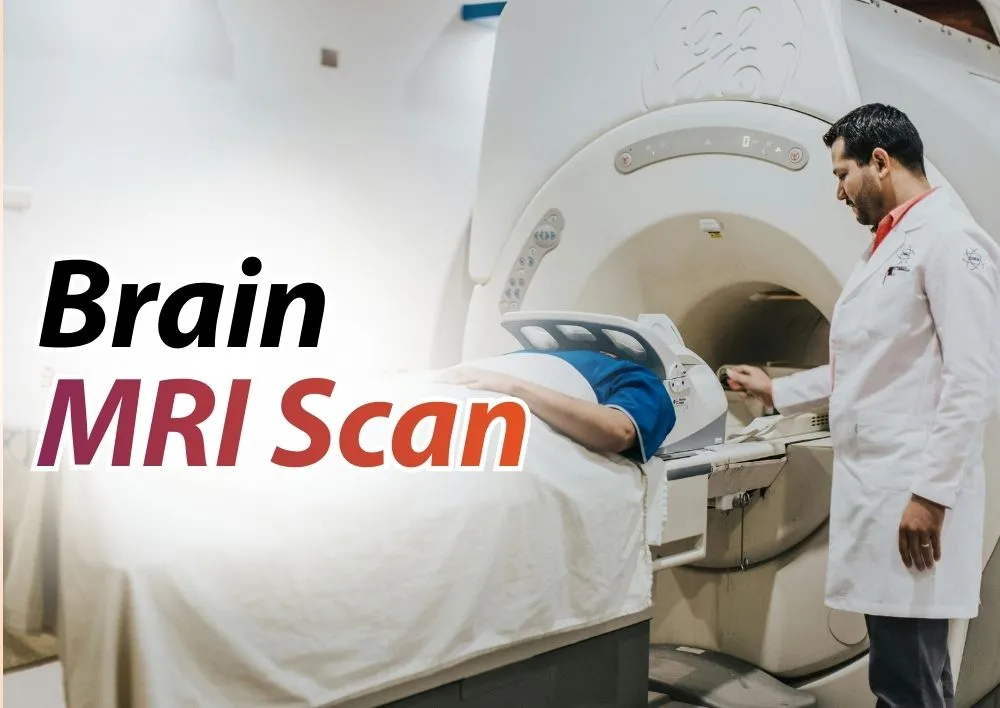
Brain MRI Scan: How It Works, Why It’s Done & What It Shows


- What is a Brain MRI?
- Types of Brain MRI Scan
- Why is a Brain MRI Done?
- How to Prepare for a Brain MRI?
- What is the Procedure for a Brain MRI without Contrast?
- What to Expect During a Brain MRI?
- What are the Advantages of a Brain MRI?
- What are the Risks Associated with a Brain MRI?
- What Care is Needed After a Brain MRI?
- Best Centre for MRI Brain Scan in Gurgaon
- In conclusion
Summary
Overview
A Brain MRI (Magnetic Resonance Imaging) is a non-invasive diagnostic test that uses strong magnetic fields and radio waves to create detailed images of the brain and surrounding structures
A brain MRI scan can be used by the medical professional to assess the integrity of the brain's tissue, nerves, and blood vessels and, therefore, identify any possible problems with the brain before they become symptomatic.
What is a Brain MRI?
A Brain MRI is an imaging test used to examine the brain in detail without using X-rays or radiation. It provides high-resolution images that help diagnose conditions affecting the brain, such as tumors, strokes, infections, and nerve disorders.
Doctors often recommend a brain MRI when symptoms cannot be clearly diagnosed through routine tests.
Types of Brain MRI Scan
Different types of Brain MRI scans are used depending on the symptoms, and medical condition:
-
Routine Brain MRI: The routine Brain MRI is the most common scan used to examine brain structure and detect tumors, infections, swelling, or injury.
-
Brain MRI with Contrast: A special dye (contrast agent) is injected to highlight blood vessels, tumors, inflammation, or abnormal tissues more clearly.
-
Functional MRI (fMRI): This scan measures brain activity by detecting changes in blood flow. It is often used before brain surgery to identify areas responsible for speech, movement, and memory.
-
MR Angiography (MRA): MRA focuses on blood vessels in the brain and helps detect aneurysms, blockages, or vascular malformations.
-
Diffusion MRI (DWI): This type is especially useful for early detection of stroke and brain tissue damage.
-
Perfusion MRI: Perfusion MRI evaluates how blood flows in the brain. It assists doctors to evaluate blood flow to brain tumours, to identify stroke and also some types of circulation problems
-
Spectroscopy MRI (MRS): This advanced MRI analyzes chemical changes in brain tissues. It helps differentiate between tumor types and other brain disorders.
Your doctor will decide the most suitable type based on your symptoms.
Why is a Brain MRI Done?
A Brain MRI may be advised to diagnose or monitor:
-
Constant headaches or migraines.
-
Brain tumors or cysts.
-
Stroke or bleeding in the brain
-
Seizures and epilepsy.
-
Memory loss or dementia.
-
Multiple sclerosis (MS).
-
Brain infections or inflammation.
-
Head injuries.
-
Vision or hearing problems related to nerves.
It helps doctors plan the right treatment based on accurate findings.
How to Prepare for a Brain MRI?
Preparing for a Brain MRI is simple
-
Inform the doctor if you have metal implants, pacemakers, or clips.
-
Remove all metal objects like jewelry, watches, hairpins, and hearing aids.
-
Wear comfortable, metal-free clothing.
-
Inform the technician if you are pregnant or claustrophobic.
-
Fasting may be advised if contrast dye is used.
-
Always follow the instructions provided by the MRI radiologist/technician.
What is the Procedure for a Brain MRI without Contrast?
The Brain MRI procedure includes
-
You will lie down on a movable table.
-
Your head will be positioned carefully for clear imaging.
-
The table slides into the MRI machine.
-
The machine takes multiple images while making tapping or humming sounds.
-
You must stay still for accurate results.
-
The scan usually takes 20 to 45 minutes, depending on the type of MRI.
What to Expect During a Brain MRI?
During the scan:
-
The procedure is painless.
-
You may hear loud noises. So, earplugs or headphones are provided.
-
You can communicate with the technician at any time
-
If contrast dye is used, you may feel a mild cool sensation.
-
Most patients find the test comfortable and safe.
What are the Advantages of a Brain MRI?
Brain MRI offers many benefits
-
No exposure to radiation.
-
Highly detailed images of brain tissues.
-
Early and accurate diagnosis.
-
Safe for repeated use.
-
Helps in precise treatment planning.
It is one of the most trusted imaging tests for brain health evaluation.
What are the Risks Associated with a Brain MRI?
Brain MRI is generally very safe. However:
-
People with certain metal implants may not be eligible.
-
Rare allergic reaction to contrast dye.
-
Mild discomfort for claustrophobic patients.
-
Always inform your doctor about your medical history to avoid risks.
What Care is Needed After a Brain MRI?
After a Brain MRI scan:
-
You can easily resume your normal activities immediately.
-
Drink plenty of water if contrast dye was used.
-
Follow up with your radiology doctor to discuss the results.
-
No special rest or medication is required.
Best Centre for MRI Brain Scan in Gurgaon
When looking for the most reliable Brain MRI Centre in Gurgaon, it is essential that you select a facility that provides accurate diagnosis and a quick and efficient service. Miracles Healthcare is the most highly regarded and respected MRI scan center in Gurgaon. It uses advanced diagnostic technology combined with qualified medical professionals.
Why Choose Miracles Healthcare?
-
The latest MRI technology gives you clear, high-quality images of the brain.
-
There are expert radiologists on staff to ensure an accurate diagnosis along with interpretation.
-
You receive reports quickly, so there are no delays in your treatment.
-
A comforting, and welcoming environment helps patients feel relaxed, and reduces anxiety during the MRI scan.
-
Strict safety measures as well as high hygiene standards are followed to ensure complete patient safety.
-
With a strong focus on quality services, accurate diagnosis, and patient comfort.
In conclusion:
Brain MRI is still an incredibly valuable resource for accurately diagnosing and monitoring neurological conditions at an early stage. Brain MRI is essential to determining the correct diagnosis promptly to allow effective treatment plans for these conditions. Because MRI imaging does not involve exposing the patient to any radiation, the imaging produced by an MRI is considered a very high-quality image that provides the highest fidelity possible when assessing and diagnosing brain diseases.
If you live in or around Gurgaon and are looking for a suitable brain MRI centre near you, please contact Miracles Healthcare, an award-winning Multispeciality Hospital in Gurgaon with the latest technology for performing MRI scans, experienced Radiologists, fast report turnaround times, and a warm and welcoming atmosphere for all your patient experiences.
Written and Verified by:

Dr Parth Kishor (Medical Officer) Exp: 4
Medical Officer Team
Frequently Asked Questions
It shows detailed images of brain tissues, nerves, blood vessels, and helps detect tumors, stroke, infection, or injury.
It is used to diagnose headaches, seizures, memory issues, brain tumors, stroke, and other neurological problems.
Yes, brain MRI is very safe as it does not use radiation and is suitable for repeated use in most patients.
Wear comfortable, loose clothing without metal; you may be asked to change into a hospital gown.
Yes, you can sleep as long as you remain still during the scan.
A brain MRI usually takes about 20 to 45 minutes.
Bras with metal hooks or wires are not allowed; a metal-free bra or gown is preferred.
Yes, you can swallow normally, but try to keep your head as still as possible.
No, usually only your head and upper body are inside the MRI machine.
Miracles Healthcare is one of the best MRI scan centers in Gurgaon. It is well-known for its advanced technology, and accurate reporting.






Was the information useful?
1 0