


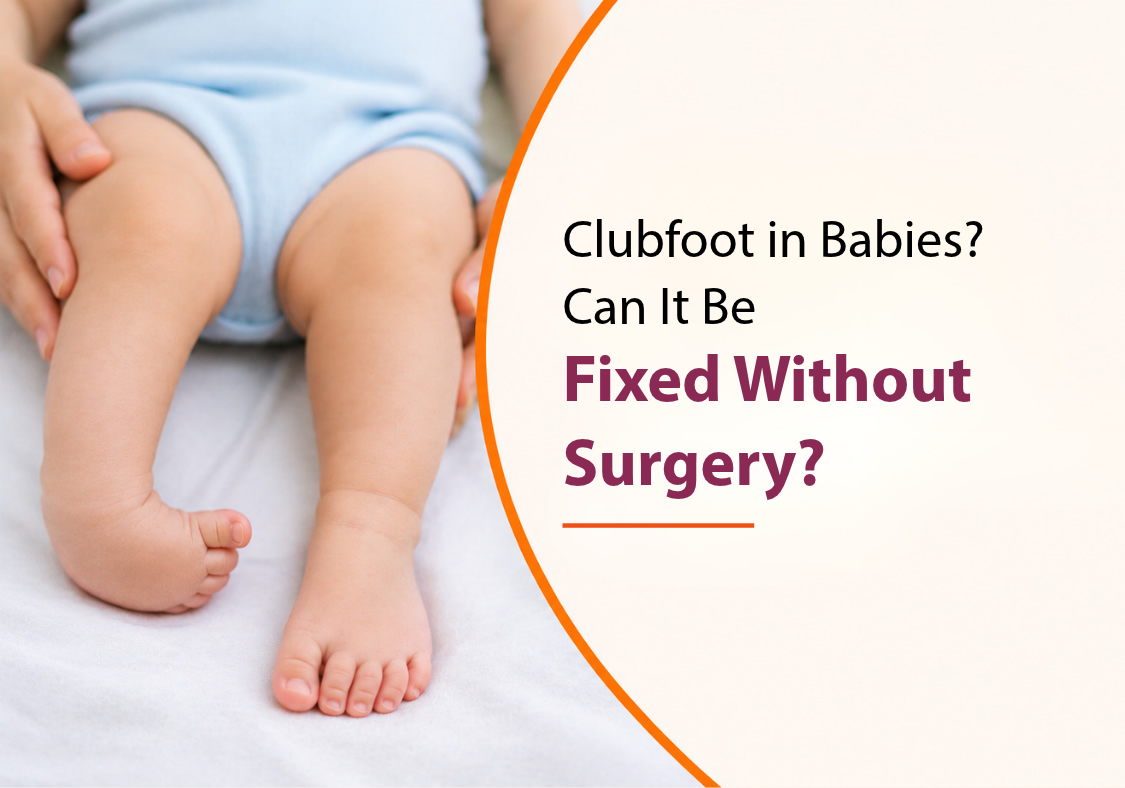
Can Clubfoot Be Fixed Without Surgery?

- What is Clubfoot?
- Can Clubfoot Be Corrected Without Surgery?
- When Is Surgery Needed for Clubfoot?
- Can Clubfoot Return After Non-Surgical Treatment?
- Does the Age of the Child Affect Clubfoot Treatment?
- When Should You Consult a Doctor for Clubfoot?
- Helping Your Child Take the Right Steps Towards Better Foot Alignment
Summary
-
Yes, clubfoot can be corrected without extensive surgery in most babies through the Ponseti method, which involves gentle manipulation and serial casting.
-
Treatment generally includes weekly casting, an Achilles tenotomy if needed, and a foot abduction brace to maintain correction.
-
Surgery may be considered when the deformity does not respond adequately to non-surgical treatment, recurs, or causes persistent foot and ankle problems.
-
Clubfoot can return after initial correction, making consistent brace use and regular follow-up important.
-
Early treatment is generally preferred, but older babies and children can also benefit from an orthopaedic assessment and an individualised treatment plan.
When a newborn's foot appears twisted inward or points downward, parents may immediately wonder whether their child will be able to stand, walk, and run normally. The possibility of surgery can make this concern even more stressful, especially when parents are still adjusting to their baby's early healthcare needs. However, clubfoot treatment has advanced significantly, and several approaches can help correct the foot's position during childhood.
However, it is important to understand that non-surgical treatment does not always mean avoiding every procedure. Many babies also need a minor procedure called an Achilles tenotomy, which releases a tight tendon at the back of the ankle to help the foot move into the correct position. Extensive corrective surgery is generally considered when the deformity does not respond adequately to treatment or returns despite appropriate care.
Early diagnosis, timely treatment, and consistent follow-up can make a significant difference to a child’s foot development and mobility. Understanding the available treatment options can help parents make informed decisions about their child’s care.
What is Clubfoot?
Clubfoot, medically known as congenital talipes equinovarus (CTEV), is a condition in which one or both of a baby’s feet are twisted inward and downward. The foot may appear curved, with the sole facing inward or partially upward. The affected foot may also feel stiff because the muscles, tendons, and other soft tissues are shorter or tighter than usual.
Clubfoot is present at birth and can affect one or both feet. Its severity may vary from one child to another. In some cases, the foot is relatively flexible, while in others, the deformity is more rigid and requires a structured treatment plan.
The exact cause of clubfoot is not always known. Genetic and environmental factors may contribute to its development. It is important for parents to understand that clubfoot is not caused by anything they did or did not do during pregnancy.
Dr. Sumit Anand, Orthopaedic Specialist in Gurgaon at Miracles Healthcare, shares, “Early evaluation of clubfoot is important because timely treatment can help slowly correct the foot’s position and support better mobility as the child grows. Parents should seek an orthopaedic assessment rather than waiting for the deformity to improve on its own.”
Can Clubfoot Be Corrected Without Surgery?
Yes, most babies with clubfoot can be treated successfully without extensive corrective surgery. The Ponseti method is widely used to slowly correct the foot’s position through gentle manipulation and serial casting.
The treatment works by slowly stretching the tight tissues and guiding the foot towards a more natural alignment. Treatment generally starts during the first few weeks after birth, although older babies and children may also benefit.
The Ponseti method typically involves three stages:
1. Gentle Manipulation and Serial Casting
The first stage involves carefully moving the baby’s foot into a better position. A plaster cast is then applied from the toes to the upper leg to hold the foot in the corrected position.
The club foot cast is usually changed every week. During each visit, the specialist gently adjusts the foot a little further before applying a new cast.
This process is repeated over several weeks until the major components of the deformity have been corrected. The number of casts required depends on the severity of the clubfoot and how the foot responds to treatment.
Parents should not try to stretch or reposition the affected foot themselves. These movements need to be performed by a trained specialist to avoid injury and ensure appropriate correction.
2. Achilles Tenotomy, If Required
After serial casting, some babies continue to have tightness in the Achilles tendon, which connects the calf muscles to the heel. This can prevent the foot from moving upwards adequately.
In such cases, the specialist may recommend a minor procedure called a percutaneous Achilles tenotomy. It involves making a small cut in the tendon to release the tightness and allow the heel and ankle to move into a better position.
Although tenotomy is a procedure, it is different from extensive reconstructive surgery. It is commonly included in the Ponseti treatment approach and is followed by another plaster cast to support healing.
Dr. Sumit Anand says, “Achilles tenotomy may be recommended when tightness in the heel cord prevents complete correction through casting alone. The decision depends on the child's foot condition and response to treatment.”
Not every child will have the same treatment requirements. The need for tenotomy depends on the remaining deformity and the specialist’s assessment.
3. Foot Abduction Brace
Once the foot has been corrected, the next step is to maintain its position. This is done using a special brace consisting of two shoes connected by a bar. It is commonly called a foot abduction brace or boots-and-bar brace.
Initially, the brace is generally worn for most of the day. Later, the wearing schedule is reduced to nighttime and nap-time use, according to the treating specialist’s instructions. It is commonly continued until the child is around four or five years old, depending on the individual treatment plan.
The brace is an essential part of treatment because clubfoot can return even after the foot has been successfully corrected.
When Is Surgery Needed for Clubfoot?
Although the Ponseti method works well for many children, some cases may require additional intervention. Clubfoot operation may be considered when the foot does not achieve adequate correction through casting, the deformity is particularly rigid, or the condition returns and cannot be managed with repeat casting or other appropriate measures.
A specialist may consider clubfoot surgery in situations such as:
-
Severe or resistant deformity: The foot does not respond adequately to serial casting and other recommended treatment.
-
Recurring clubfoot: The foot slowly returns to an abnormal position after initial correction.
-
Persistent tendon tightness: Certain tendons continue to restrict normal foot and ankle movement.
-
Muscle imbalance: Unequal muscle activity causes the foot to turn inward during movement.
-
Residual deformity: Some components of the original foot deformity remain despite treatment.
The type of procedure depends on the child’s age, foot structure, severity of the deformity, and previous treatment. Some children may need a limited procedure, such as tendon transfer, while extensive corrective surgery is reserved for selected cases.
Dr. Sumit Anand says, “ Clubfoot surgery is considered when the foot does not achieve or maintain adequate correction with non-surgical treatment. The choice of procedure depends on the child's individual condition, previous treatment, and functional needs.”
The decision should always be based on an individual clinical assessment rather than the appearance of the foot alone.
Can Clubfoot Return After Non-Surgical Treatment?
Yes, clubfoot can return even after the treatment that has been used for correction. Recurrence may happen when the prescribed brace is not worn consistently, although it can sometimes occur despite following the treatment plan.
Parents should watch for changes such as:
-
The foot slowly turning inward again.
-
The child walking on the outer edge of the foot.
-
Difficulty placing the heel flat on the ground.
-
Reduced flexibility in the ankle.
-
Changes in walking pattern as the child grows.
If parents notice any of these changes, they should arrange a review with the treating specialist. Early identification of recurrence may allow the foot to be corrected with repeat casting or other less extensive treatment, depending on the child’s condition.
Regular follow-up remains important even after the initial treatment is complete.
Does the Age of the Child Affect Clubfoot Treatment?
Age can influence the treatment approach, but it does not automatically mean that an older child will need surgery.
Treatment is generally recommended soon after birth because a newborn’s tissues are more flexible and the foot can often be slowly corrected through casting. Starting early also allows the brace phase to begin at an appropriate stage of development.
However, older babies and children may still benefit from the Ponseti method. The specialist will assess the flexibility of the foot, severity of the deformity, previous treatment, and whether any recurrence has occurred.
Children who have not received treatment earlier should still be evaluated rather than assuming that correction is no longer possible. The treatment plan may differ depending on their age and clinical findings.
When Should You Consult a Doctor for Clubfoot?
Parents should seek medical advice as soon as they notice an unusual foot position in their newborn or receive a prenatal finding suggesting clubfoot. Early assessment helps confirm the condition and allows the specialist to discuss suitable treatment options.
Consider consulting an orthopaedic specialist near you if your child has:
-
One or both feet appear twisted or unusually positioned after birth.
-
The affected foot does not move easily towards a normal position.
-
The sole appears turned inward or partially upward.
-
An older child has difficulty keeping the foot flat while standing or walking.
-
The foot starts turning inward again, or the heel becomes difficult to place on the ground.
-
The child experiences discomfort or develops an unusual walking pattern.
A doctor will examine the foot, assess its flexibility, and review the child's medical history. Additional investigations may be recommended when needed to understand the condition or identify associated abnormalities. Parents should not wait for the child to start walking before seeking an evaluation. If clubfoot is suspected at birth, an early orthopaedic consultation is advisable.
Helping Your Child Take the Right Steps Towards Better Foot Alignment
Clubfoot can be a concern for parents, particularly when they first notice an unusual foot position in their newborn. However, most babies can achieve good foot correction without extensive surgery when treatment is started at an appropriate time, and the recommended care plan is followed.
Miracles Healthcare is a NABH-accredited multispecialty hospital in Gurgaon, serving families since 2002. With healthcare facilities across Sector 14, Sector 56, and Sector 82, Gurgaon, the hospital offers access to a team of orthopaedic specialists and physiotherapists, supported by a multispecialty team of healthcare professionals. The team uses advanced diagnostic approaches and contemporary treatment techniques to assess and manage orthopaedic conditions, including clubfoot, based on each child's individual needs.
If your newborn has an unusual foot position or your child has previously been treated for clubfoot and you notice signs of recurrence, consider scheduling an orthopaedic consultation. The specialists can assess your child's foot alignment, flexibility, age, and treatment history to help determine an appropriate care plan. Access to multispecialty support and physiotherapy guidance can also contribute to coordinated care, whenever required. For appointments or further information, contact Miracles Healthcare at 906-906-8800.
Written and Verified by:

Frequently Asked Questions
Clubfoot can be successfully corrected in most children with timely and appropriate treatment. However, complete correction cannot be guaranteed in every case, and some children may experience recurrence or require additional treatment.
Yes, clubfoot can still be treated at 3 years of age. Treatment may involve serial casting, bracing, or, in some cases, surgery, depending on the severity and flexibility of the foot.
No, clubfoot does not necessarily cause lifelong disability. With appropriate treatment and follow-up, many children develop functional feet and participate in everyday activities.
Treatment should ideally begin in the first few weeks after birth, often within the first 1–2 weeks. Early treatment can make correction easier, but older children can also benefit from assessment and treatment.
Yes, clubfoot is more common in boys than girls, occurring approximately twice as often in boys.
No, isolated clubfoot does not affect brain development or intelligence. However, if it occurs alongside certain neurological or other medical conditions, further evaluation may be needed.





Was the information useful?
0 0