


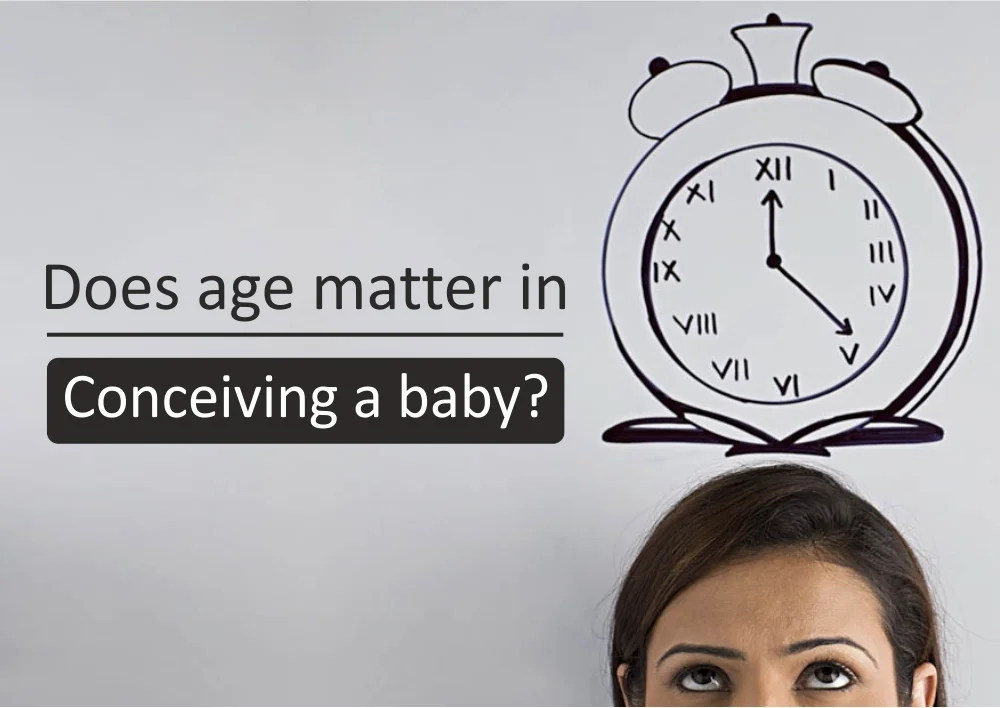
Does age matter in conceiving a baby?

- Does Age Matter in Conceiving a Baby?
- How Does Age Affect Female Fertility?
- How Does Age Affect Male Fertility?
- What is the Best Age to Conceive a Baby?
- Can You Get Pregnant Naturally After 35 or 40?
- What Tests Can Help Assess Fertility With Age?
- How Can You Improve Your Chances of Conceiving as You Age?
- When Should You Consult a Fertility Specialist?
- Get Expert Fertility Guidance at Miracles Healthcare, Gurgaon
Summary
-
Age plays an important role in fertility and the chances of natural conception.
-
In women, both egg quantity and quality decline with age, with a more noticeable reduction after 35.
-
Advancing maternal age may affect ovulation, conception chances, and pregnancy outcomes.
-
Male fertility can also change with age due to slow changes in sperm quality and reproductive health.
-
Couples should consider both partners' reproductive health when planning a pregnancy.
-
Fertility assessments may include AMH, antral follicle count, hormonal tests, pelvic ultrasound, and semen analysis.
-
Maintaining a healthy lifestyle, balanced nutrition, regular exercise, and adequate sleep can support reproductive health.
-
Couples should seek timely medical guidance if they are experiencing difficulty conceiving, particularly when the female partner is 35 or older.
-
An early consultation with a fertility specialist can help identify potential concerns and clarify suitable treatment options.
-
Miracles Healthcare, an ICMR-registered fertility hospital in Gurgaon, has been providing fertility care since 2014, with consultations available at its Sector 14, Sector 56 and Sector 82 centres.
Planning a baby is an important decision, and every couple has their own timeline for starting a family. While some couples conceive soon after trying, others may take longer than expected. During this journey, one question that often comes to mind is: Does age matter when trying to conceive a baby?
The answer is yes. Age is an important factor that influences fertility in both women and men. Although pregnancy is possible at different ages, the chances of natural conception slowly change as a person gets older. In women, this is mainly because the number and quality of eggs decrease with age. In men, ageing may influence sperm quality and other aspects of reproductive health.
Understanding how age affects fertility can help couples make informed decisions about family planning, recognise when they may need medical guidance, and explore appropriate fertility options.
Let's understand the relationship between age and fertility, the ideal time to plan a pregnancy, age-related fertility changes in men and women, and when to consult a fertility doctor.
Does Age Matter in Conceiving a Baby?
Yes, age plays an important role in your chances of conceiving. Female fertility is closely linked to the number and quality of eggs available in the ovaries. As a woman gets older, her ovarian reserve slowly decreases, and the remaining eggs are more likely to have chromosomal abnormalities.
The decline in female fertility becomes more noticeable after the age of 35 and generally accelerates as a woman approaches 40.
Male fertility also changes with age, although the decline is usually slower. Advancing paternal age may be associated with changes in sperm quality, sperm DNA integrity, and the time required for a couple to conceive.
However, age alone does not determine whether someone can become a parent. Many other factors, including reproductive health, hormonal balance, lifestyle and existing medical conditions, also influence conception.
"Age is an important factor in fertility because reproductive health changes over time. Understanding these changes can help couples plan their pregnancy and seek medical guidance at the appropriate stage," explains Dr. Anviti Saraf, Fertility Specialist in Gurgaon at Miracles Healthcare.
How Does Age Affect Female Fertility?
Age and fertility are closely connected because a woman's reproductive potential changes naturally over time. A woman is born with a finite number of eggs in her ovaries. Unlike sperm production in men, the ovarian egg reserve is not continuously replenished.
As a woman ages, both the quantity and quality of her eggs slowly decline. This natural biological process can influence her ability to conceive.
Dr. Anviti Saraf explains, "Age is an important factor influencing female fertility. As women grow older, the number of available eggs decreases, and changes in egg quality can also affect the chances of natural conception and successful pregnancy."
Here are some important ways age affects female fertility.
1. Decline in Egg Quantity
The number of eggs available in a woman's ovaries is known as her ovarian reserve.
A woman is born with approximately one to two million eggs, but this number slowly decreases throughout her lifetime. By puberty, the number is already significantly lower, and it continues to decline with increasing age.
As a result:
-
Fewer eggs are available for ovulation.
-
The ovarian reserve slowly reduces.
-
The number of eggs that may respond to fertility medications can decrease.
-
The chances of conception may decline with advancing age.
The decline in ovarian reserve becomes particularly important after 35 years of age and may accelerate further after 40.
According to Dr. Anviti, "Ovarian reserve naturally declines with age. Understanding this change through appropriate fertility evaluation can help women make informed decisions about their reproductive plans."
2. Decline in Egg Quality
Egg quality is another important factor that influences fertility.
As women age, their eggs become more likely to develop chromosomal abnormalities. These changes can affect fertilisation, embryo development and implantation.
Poorer egg quality may contribute to:
-
Difficulty conceiving naturally.
-
Lower chances of successful embryo development.
-
Increased risk of early pregnancy loss.
-
Higher chances of chromosomal abnormalities in a pregnancy.
It is important to understand that age-related changes do not mean every egg will be abnormal or that pregnancy is impossible after 35.
3. Changes in Ovulation and Hormonal Function
Ageing can also influence ovarian function and reproductive hormones.
Although many women continue to have regular menstrual cycles during their late 30s and early 40s, the number of available eggs may already be declining.
As women approach menopause, ovulation becomes less predictable, and menstrual cycles may become irregular.
These changes can make conception more challenging, particularly when combined with reduced ovarian reserve.
Dr. Anviti Saraf explains, "Regular menstrual cycles do not always indicate that ovarian reserve and egg quality are unaffected. A fertility assessment can provide additional information about reproductive health and help guide decisions about conception."
4. Increased Risk of Pregnancy Complications
Advancing maternal age can also increase the risk of certain pregnancy-related complications.
These may include:
-
Chromosomal abnormalities in the developing baby.
-
Preterm birth.
However, many women in their late 30s and 40s have healthy pregnancies and deliver healthy babies. Appropriate preconception counselling, antenatal care and medical monitoring can help identify and manage potential risks.
How Does Age Affect Male Fertility?
Fertility is not determined by female age alone. Male reproductive health also plays an important role in conception.
Unlike women, men continue producing sperm throughout their adult lives. However, sperm quality and certain reproductive functions may change with advancing age.
Some age-related changes in male fertility include:
1. Changes in Sperm Quality
As men grow older, certain sperm parameters may slowly change.
These include:
-
Sperm motility: The ability of sperm to move effectively towards the egg may decrease.
-
Sperm morphology: Changes in sperm shape and structure may occur.
-
Sperm concentration: Some men may experience changes in sperm concentration.
-
Sperm DNA integrity: The likelihood of DNA fragmentation may increase with advancing paternal age.
These changes can influence the chances of fertilisation and successful pregnancy, although the extent varies between individuals.
2. Increased Time to Conception
Studies suggest that couples with older male partners may take longer to achieve pregnancy. This may be associated with changes in sperm quality, reproductive hormones, and other age-related health factors.
However, male age does not affect every individual in the same way. Some men maintain good reproductive health well into their 40s and beyond.
3. Changes in Sexual and Reproductive Health
Ageing may also be associated with lower testosterone levels, erectile difficulties, and reduced sexual desire in some men. These changes highlight the relationship between age and fertility in men, as they may influence the frequency of intercourse and, consequently, the opportunities for conception.
Other health conditions, such as diabetes, obesity, and high blood pressure, may also affect male reproductive health and fertility potential.
"Fertility is a shared responsibility, and male age should not be overlooked when couples are planning a pregnancy. Understanding how age and fertility are connected, including changes in sperm quality and reproductive health, makes the evaluation of both partners important," says Dr. Anviti Saraf.
What is the Best Age to Conceive a Baby?
There is no single age that guarantees a successful pregnancy, and there is no fixed pregnancy age limit that applies to every woman. However, female fertility is generally highest during the 20s and begins to decline slowly in the early 30s.
The decline becomes more noticeable after 35 and accelerates further after 40. Although natural conception may become more challenging with advancing age, pregnancy is still possible for many women in their late 30s and 40s.
The following table provides a general understanding of how female age can influence fertility and pregnancy chances.
|
Female age |
Fertility and pregnancy considerations |
|
20–29 years |
Generally associated with higher natural fertility and a lower risk of age-related pregnancy complications. |
|
30–34 years |
Fertility may begin to decline slowly, although many women conceive naturally without difficulty. |
|
35–39 years |
Decline in egg quantity and quality becomes more noticeable, and miscarriage risk increases. |
|
40–44 years |
Natural conception becomes more challenging, with increased risks of miscarriage and chromosomal abnormalities. |
|
45 years and above |
Natural conception becomes significantly less likely, although pregnancy may still occur in some women. |
These age groups represent general trends, not individual predictions. Fertility varies depending on ovarian reserve, reproductive health, medical history, and other factors.
Can You Get Pregnant Naturally After 35 or 40?
Yes, natural pregnancy is possible after 35 and even after 40. However, the chances of conception generally decrease with age.
Women in their late 30s may still have regular ovulation and conceive naturally. However, the decline in egg quality and quantity can make conception take longer.
After 40, natural conception becomes more challenging because of reduced ovarian reserve and an increased likelihood of chromosomal abnormalities in eggs.
If you are planning a pregnancy after 35, it is advisable to discuss your reproductive health with a fertility specialist rather than waiting too long if conception does not happen.
Women over 40 may benefit from seeking fertility advice as soon as they start planning a pregnancy.
What Tests Can Help Assess Fertility With Age?
If you are planning a pregnancy at an advanced reproductive age or experiencing difficulty conceiving, a fertility specialist may recommend certain investigations.
These tests help evaluate reproductive health and identify factors that may influence conception.
|
Fertility Tests |
What it evaluates |
|
AMH (Anti-Müllerian Hormone) |
Provides an estimate of ovarian reserve. |
|
Antral Follicle Count (AFC) |
Assesses the number of small follicles visible in the ovaries through ultrasound. |
|
FSH test |
Helps evaluate ovarian function when interpreted with other clinical findings. |
|
Pelvic ultrasound |
Evaluates the uterus, ovaries, and certain reproductive conditions. |
|
Thyroid profile |
Identifies thyroid disorders that may affect reproductive health. |
|
Semen analysis |
Evaluates sperm concentration, motility, and morphology. |
It is important to remember that ovarian reserve tests do not directly measure egg quality or guarantee whether a woman can conceive naturally. The results should always be interpreted alongside age, medical history, and other fertility findings.
"Fertility investigations help us understand individual reproductive health rather than relying on age alone. Tests such as AMH, antral follicle count, and semen analysis may provide useful information when planning the next steps towards conception," explains Dr. Anviti Saraf.
How Can You Improve Your Chances of Conceiving as You Age?
Although ageing is a natural process that cannot be reversed, certain lifestyle and healthcare measures can support reproductive health.
Here are some steps couples can consider when planning a pregnancy.
1. Maintain a Healthy Weight
Being significantly underweight or overweight may affect hormonal balance and ovulation in women. In men, obesity may also influence sperm quality and reproductive hormones.
Maintaining a healthy weight through balanced nutrition and regular physical activity can support overall reproductive health.
2. Follow a Balanced Diet
A nutritious diet provides essential vitamins, minerals and antioxidants that support general health.
Include:
-
Fresh fruits and vegetables.
-
Whole grains.
-
Nuts and seeds.
-
Pulses and legumes.
-
Protein-rich foods.
-
Healthy fats.
Women planning pregnancy should also discuss folic acid supplementation with their healthcare provider.
3. Avoid Smoking and Limit Alcohol
Smoking can negatively affect egg quality, ovarian function, and sperm health.
Excessive alcohol consumption may also affect reproductive hormones and fertility in both partners.
Avoiding smoking and discussing alcohol consumption with a healthcare professional are important steps when planning a pregnancy.
4. Track Your Menstrual Cycle and Fertile Window
Understanding your menstrual cycle can help identify the days when conception is most likely.
Ovulation generally occurs around 14 days before the next menstrual period, although the timing varies between women and cycles.
Having regular intercourse every one to two days during the fertile window can help improve the chances of natural conception.
5. Avoid Delaying Fertility Evaluation
Age is an important factor in fertility, so couples should not postpone medical evaluation when they experience difficulty conceiving.
Women below 35 should generally seek an evaluation after 12 months of trying, while women aged 35 and above should seek one after six months.
Women over 40 or those with known reproductive health concerns should consider consulting a fertility specialist earlier.
When Should You Consult a Fertility Specialist?
If you are planning a pregnancy at an advanced reproductive age, experiencing irregular periods, or having difficulty conceiving, a fertility consultation can help you understand your reproductive health.
Consider seeking a fertility specialist near you for medical advice if:
-
You are 35 or older and have been trying to conceive for six months without success.
-
You are over 40 and planning a pregnancy.
-
You experience irregular or absent menstrual periods.
-
You have a known condition such as PCOS or endometriosis.
-
You have experienced recurrent pregnancy loss.
-
Your partner has a history of abnormal semen analysis or reproductive health concerns.
A fertility specialist can assess both partners, recommend appropriate investigations, and discuss suitable options based on individual circumstances.
"Age-related fertility changes are natural, but timely medical guidance can help couples understand their reproductive health and available options. Seeking an evaluation at the right time can make a meaningful difference in fertility planning," advises Dr. Anviti Saraf.
Get Expert Fertility Guidance at Miracles Healthcare, Gurgaon
Planning a pregnancy is a personal journey, and understanding how age influences fertility can help couples make informed decisions about starting or expanding their families.
Miracles Healthcare is an ICMR-registered fertility hospital in Gurgaon, providing fertility care since 2014. The hospital offers professional guidance to couples experiencing difficulty conceiving or planning a pregnancy at an advanced reproductive age.
With experienced fertility doctors, embryologists, gynaecologists, and diagnostic support, Miracles Healthcare provides evaluation and care for fertility-related concerns, including reduced ovarian reserve, ovulation disorders, hormonal imbalances, and male-factor infertility.
The focus is on understanding each couple's reproductive health, recommending appropriate investigations and discussing suitable treatment options based on individual needs.
With centres in Sector 14, Sector 56, and Sector 82, Gurgaon, Miracles Healthcare makes fertility consultations and healthcare services accessible to couples across the city.
Whether you are planning your first pregnancy or considering another child, understanding your fertility status can help you take the next step with greater clarity.
Book a consultation with Dr. Anviti Saraf, Fertility Specialist in Gurgaon at Miracles Healthcare, to discuss your pregnancy plans and receive guidance based on your reproductive health.
Written and Verified by:

Frequently Asked Questions
No, 36–37 is not too old to conceive. However, female fertility declines with age, particularly after 35, so seeking timely medical guidance can be helpful.
Female fertility is generally higher during the 20s and early 30s, but the right time to plan a pregnancy also depends on individual health and circumstances.
Yes, a 43-year-old man can father a child naturally. However, sperm quality may change with age, which can influence fertility.
No, pregnancy at 42 is possible, including naturally, but conception may be more challenging due to reduced egg quantity and quality and increased pregnancy-related risks.
Egg quality and quantity generally decline with age, but individual ovarian health varies. A fertility specialist may recommend tests such as AMH and antral follicle count to assess ovarian reserve.
Yes, natural pregnancy at 43 is possible, although the chances are lower than at younger ages and the risk of miscarriage is higher.





Was the information useful?
0 0