

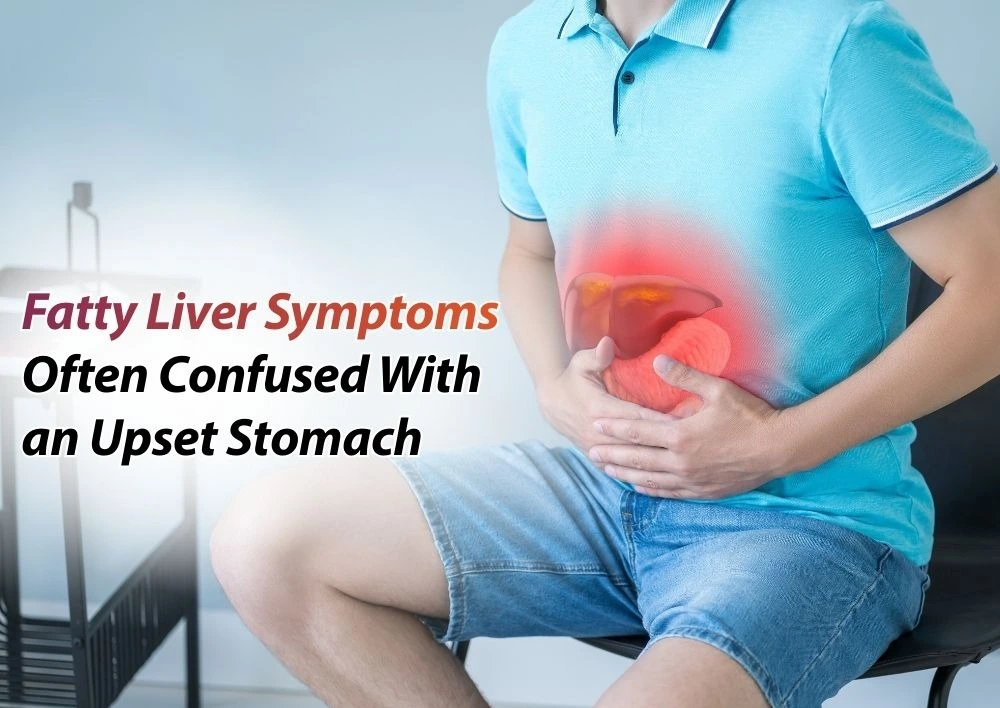
Fatty Liver Symptoms Often Confused With an Upset Stomach


Summary
Problems such as gas, bloating, acidity, or nausea in the stomach are very common. Most people link these problems to spicy food, irregular eating habits, or poor digestion.
However, what if these common complaints in the stomach are not actually being caused by the stomach?
In most instances, these problems can be the first signs of a fatty liver condition, a condition that affects the liver without actually being noticed, as it presents symptoms similar to those of an upset stomach. Since the symptoms are not severe and are common, they are usually overlooked.
In this blog, we will discuss the symptoms of a fatty liver that are often mistaken for an upset stomach.
Fatty Liver Symptoms That Look Like Stomach Problems
Below are the most common warning signs that are often misunderstood.
1. Repeated Bloating
Feeling bloated after eating is often blamed on gas, overeating, or weak digestion. However, in fatty liver disease, bloating can occur because the liver is unable to process fats properly.
Why This Happens
-
Digestion of fats becomes slower.
-
The fatty liver puts pressure on nearby digestive organs.
-
Reduced bile flow interferes with normal digestion.
According to Dr. Deepanshu Khanna, Gastroenterologist at Miracles Healthcare Gurgaon, “Persistent bloating after meals is not always a stomach issue. In many patients, we find that fatty liver affects digestion, leading to repeated bloating even after eating small quantities of food.”
When to Worry
-
Bloating occurs even after light or small meals
-
The uncomfortable feeling lasts for several hours
-
Bloating is present almost every day
Dr. Khanna further explains that “If bloating becomes a regular problem rather than an occasional one, it should not be ignored, as it may indicate underlying liver stress rather than simple indigestion.”
Also Read: सुबह की ब्लोटिंग से राहत पाने के आसान घरेलू उपाय
2. Constant Acidity or Acid Reflux
Heartburn that keeps coming back even after medication can be more than a stomach issue.
A fatty liver can disturb digestion and increase acid reflux by affecting how fats and toxins are processed. This can lead to recurring acidity that doesn’t fully settle with antacids.
3. Feeling Nauseous for No Clear Reason
Unexplained nausea, especially after eating, or early morning, is another ignored sign.
People often link it to
-
Gastric irritation
-
Food intolerance
-
Stress
But when nausea becomes frequent without vomiting or infection, it may be related to reduced liver detox function.
4. Pain or Discomfort on the Right Side of the Upper Abdomen
A dull ache or pressure just below the right ribs is one of the most typical fatty liver symptoms.
-
Unlike gas pain, this discomfort:
-
Feels constant or recurring
-
Worsens after oily meals
-
Doesn’t completely go away
Because the location is close to the stomach, many people misjudge it as indigestion.
5. Getting Full Very Quickly
Feeling full even after a few bites is not always about appetite.
An enlarged or inflamed liver can press against the stomach, and reduce its capacity. This leads to early fullness and reduced food intake usually mistaken as normal weight loss behavior.
6. Reduced Appetite
Loss of hunger for many days or weeks is usually blamed on acidity or stress.
However, fatty liver disease can disturb metabolism, and appetite regulation. This makes food less appealing without an obvious cause.
7. Constant Tiredness
Fatigue is rarely linked to stomach problems. But it is a key symptom of liver stress.
When the liver is overloaded with fat:
-
Energy production drops
-
Nutrient processing slows
-
Toxins remain longer in the body
This results in persistent tiredness, even after proper sleep.
8. Mild Abdominal Tightness or Swelling
What feels like simple bloating may actually be low-grade inflammation related to the liver.
If abdominal tightness:
-
Persists through the day
-
Makes clothes feel uncomfortable
-
Doesn’t improve overnight
-
It should not be ignored.
9. Irregular Bowel Movements
The liver plays a major role in bile production, which helps digest fats. When bile flow is disturbed, bowel habits can change.
This may show up as:
-
Constipation
-
Loose or oily stools
-
Pale-colored stools
These signs are often misdiagnosed as digestive disorders.
Read more: 10 Simple Ways to Reduce Bloating
Who is at Higher Risk of Fatty Liver?
You are more likely to confuse fatty liver symptoms with stomach problems if you have
-
Obesity or belly fat
-
Type 2 diabetes
-
High cholesterol or triglycerides
-
Sedentary lifestyle
-
Regular alcohol consumption
When Should You See a Gastroenterologist Doctor?
Don’t wait if you experience
-
Ongoing bloating or acidity for weeks.
-
Right-sided abdominal discomfort.
-
Persistent nausea or fatigue.
-
Appetite changes without reason.
A simple blood test and ultrasound can detect fatty liver early.
Conclusion:
Not every stomach problem is caused by poor digestion. When the symptoms such as bloating, acidity, nausea, and stomach pain become regular, it may be a signal that your liver needs attention. If you are suffering from constant stomach problems, do not ignore them. Consult a gastroenterologist near you at Miracles Healthcare.
Miracles Healthcare is one of the best multispecialty hospitals in Gurgaon, providing comprehensive medical care. It is a trusted destination for accurate diagnosis and patient-centric treatment due to its experienced specialists and state-of-the-art facilities.
Written and Verified by:

Dr. Deepanshu Khanna Exp: 9
MBBS, M.D.(General Medicine), DNB (General Medicine), DrNB (Gastroenterology)
Meet the Doctor
Frequently Asked Questions
Fatty liver during pregnancy needs close medical supervision, a balanced diet, proper rest, and regular monitoring—self-medication should be avoided.
Yes, fatty liver can cause bloating, nausea, acidity, and upper abdominal discomfort, which often feels like a common stomach upset.
Worsening fatigue, constant right-side abdominal pain, loss of appetite, nausea, and abnormal liver blood tests can indicate progression.
Yes, liver issues can affect the bile secretion process, and leads to inefficient fat digestion, and symptoms such as diarrhea.
Miracles Healthcare, Gurgaon, has the best doctor for the diagnosis and treatment of fatty liver.







Was the information useful?
13 0