


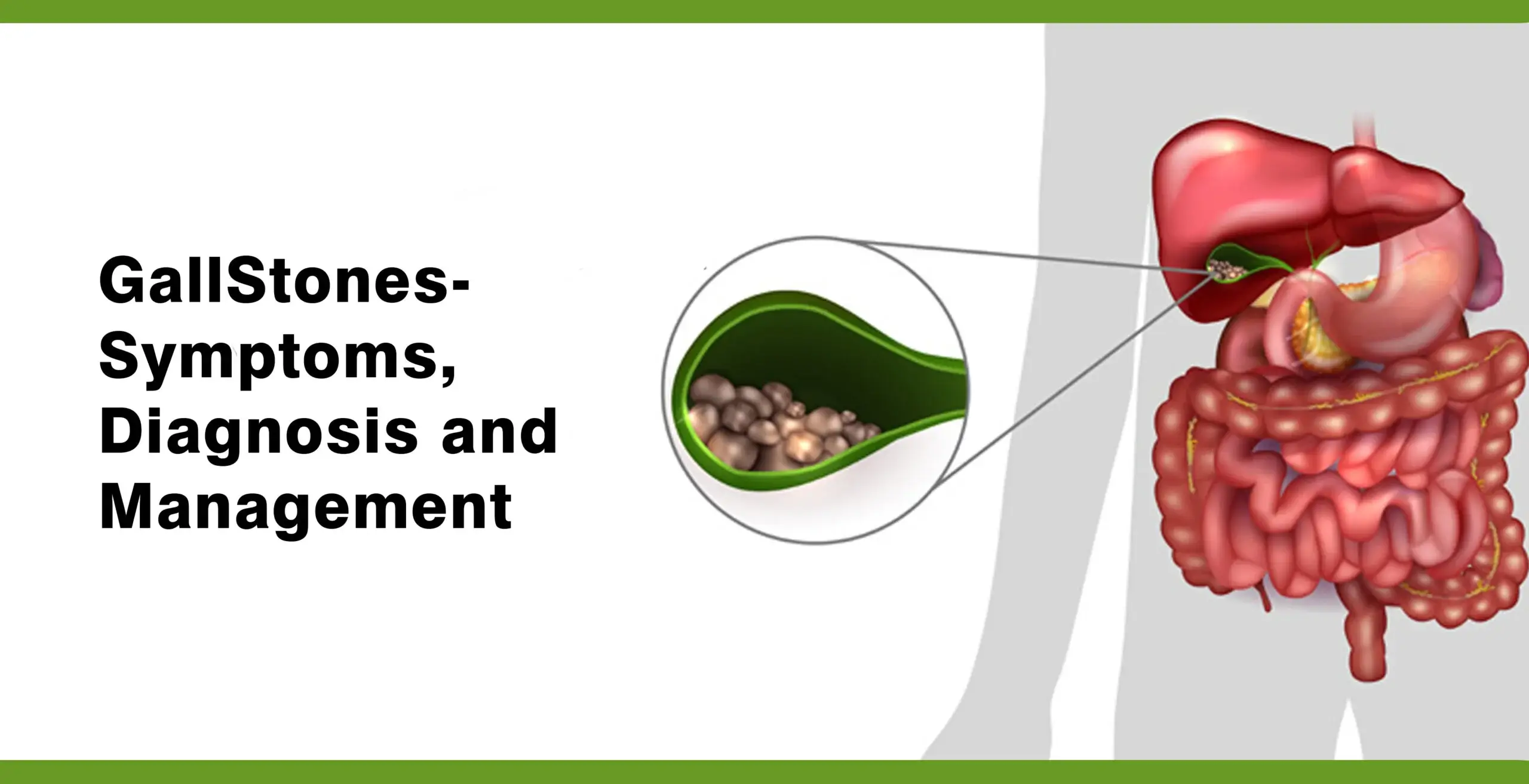
Gallstones: Symptoms, Diagnosis, and Management

Summary
Maybe all of us have heard of gallstones but are often confused about what it means! They are nothing but the hardened digestive fluid that forms in a person's gallbladder. Still, do you have some questions in mind? Okay, let us first share an overview of the gallbladder and gallstones with you. We all know that gallbladder is a pear-shaped organ that stays under the liver, on the right side of the abdomen. The gallbladder acts as a pouch while holding bile juice, a greenish-yellow liquid that helps food digest.
But, issues start creating with your gallbladder when substances like cholesterol stiffen in the bile juice. In that way, most gallstones form and block the bile duct. Unfortunately, stones in gallbladder are generally asymptomatic, and only 10% of people with this issue develop the symptoms over five years. Still, you can feel some trivial unusualness that can be a symptom of gallstones. So, scroll down the page to know about all the signs and treatments of this health condition. Also, we have shared some diagnostic procedures for gallstones.
Symptoms of Gallstones:
As we mentioned earlier, gallstones usually appear asymptomatic. But, if they create a blockage in the bile duct, the situation can lead to a painful health condition. Generally, you can feel pain either in the upper right section of your abdomen or under your breastbone.
Also, the pain can occur only after eating foods with high carbs and fat. Below are all the signs and symptoms:
-
Sudden and quickly escalating pain in the upper right portion of the abdomen and around the stomach area.
-
You can often experience back pain right in the middle of the shoulder blades.
-
If you often go through pain in the right shoulder, it can be gallstones.
-
Nausea and several signs of jaundice can indicate the gallstones issue.
-
Itchy skin, diarrhea, and rapid heartbeat can also be symptoms of stones in the gall bladder.
Diagnosis:
Even though doctors first perform a physical examination of your body, several diagnostic procedures help them offer the proper treatment to the patient. So, the diagnostic tests are-
-
Abdominal ultrasound generates an image of the structure of your abdomen.
-
Endoscopic ultrasound is a more updated process where the sound waves create an accurate image of the surrounding tissues of the gallbladder.
Management:
Since most gallstones patients do not experience symptoms, managements are unnecessary. But, if your doctor feels your health condition is poor depending on your symptoms and the results of diagnostic tests, he can apply the following treatments.
-
Since having no gallbladder in the body does not arise serious issues, doctors can remove your gallbladder to treat the gallstones. As they appear repeatedly, surgical removal can be the best option for the patient.
-
Also, doctors can prescribe oral medications to dissolve the gallstones.
Conclusion:
Gallstones are a common health issue and do not become serious concerns. Even if it gets painful, surgical procedures or medication smoothly help you get rid of gallstones.
Written and Verified by:

Frequently Asked Questions
Gallbladder stones larger than 2 cm are dangerous. The larger-sized stones can cause blockage of the bile duct, also increasing the risk of complications.
Common treatments include medications to dissolve stones, ERCP to clear blocked ducts, and laparoscopic surgery to remove the gallbladder.
Not always, surgery is recommended only if you have severe pain, infection, or complications. Silent gallstones generally don’t need immediate treatment.
Yes, small cholesterol stones can sometimes be managed with oral medicines and lifestyle changes, but this works slowly and is not suitable for large stones.
Miracles Apollo Cradle/Spectra, Gurgaon, has a team of highly experienced general and laparoscopic surgeons. They utilize advanced laparoscopy techniques for safe and advanced care.





Was the information useful?
1 0