


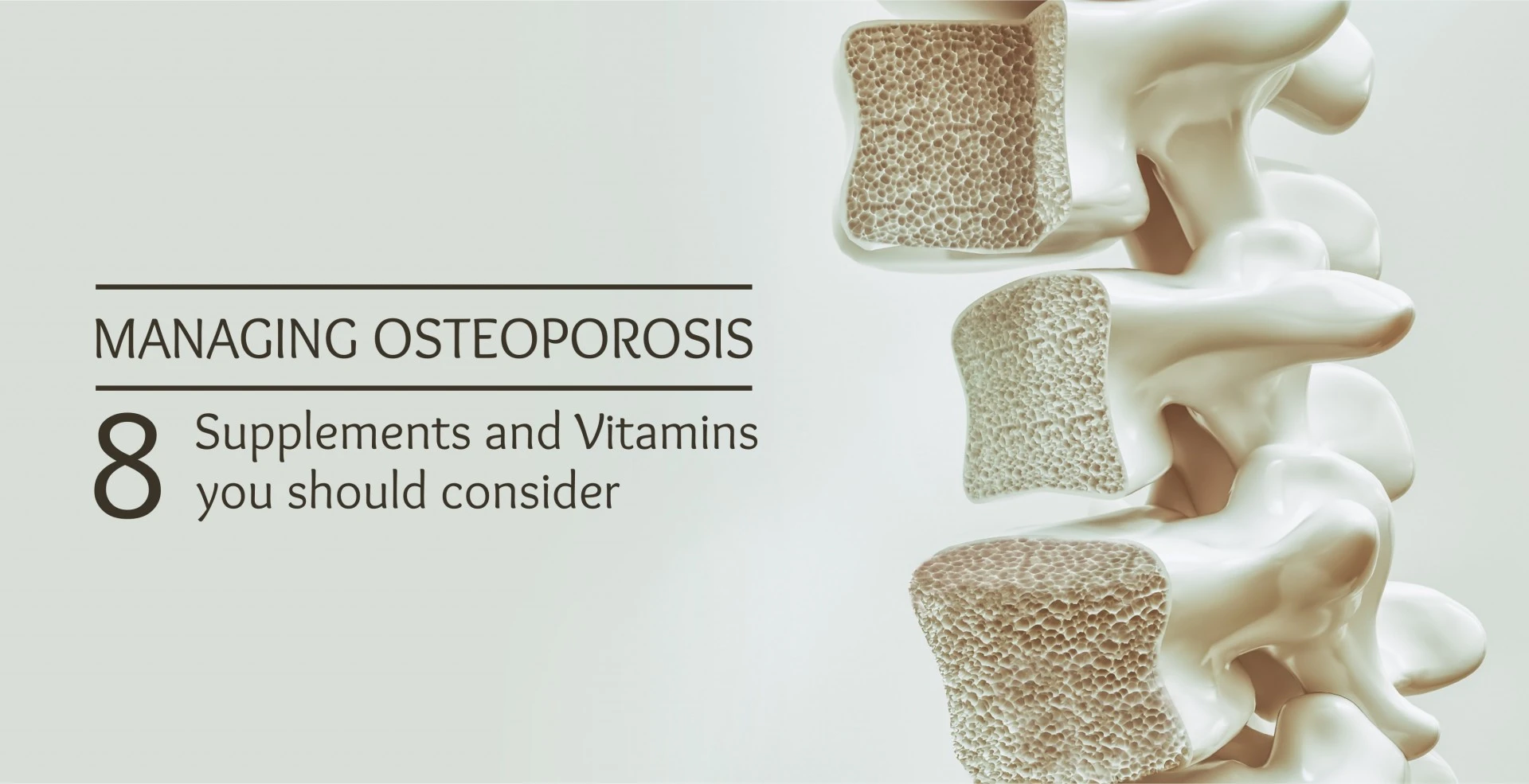
Managing Osteoporosis 8 Supplements and Vitamins You Should Consider
Summary
Osteoporosis is the medical condition in which bones become week and brittle. Prescribed medications and essential vitamins can help in building stronger bones and managing this condition appropriately. These supplements, vitamins and minerals allow your body to absorb key nutrients and maintain stronger bones. If you are suffering from Osteoporosis then visit the best bone doctor and seek medical help immediately.
Let’s now discuss 8 common supplements and vitamins that one must consider while managing Osteoporosis.
1. Calcium
On hearing Osteoporosis, the first vitamin supplement that comes into your mind is none other than calcium. According to the recent studies, women must take 1200mg calcium per day to keep their bones strong and healthy. Usually, you’ll get enough calcium from your diet; however, if don’t then you can take calcium supplements to meet the daily calcium requirement. It is advised to break up your calcium supplement intake over a course of day in order to enhance their absorption. Go for bone mineral density test first and take supplements accordingly.
2. Magnesium
Magnesium is the second most important vitamin you should consider while managing Osteoporosis. This mineral is naturally found in foods such as dark green vegetables, whole-grain bread and nuts. The daily recommended amount of magnesium is about 300 to 500mg. One can also opt for magnesium supplements to cover the daily magnesium need. However, if you take multivitamins then there is no need to take magnesium supplement separately as it is often incorporated with the multivitamins.
3. Vitamin D
Maybe Calcium and Magnesium are the nutrients you think of first, but Vitamin D is as important as both of them to maintain strong bones. However, it is not naturally present and thus you’ll have to take supplements to meet the requirement. Both vitamin D2 and D3 are available in the supplement form. Sun exposures also help your body to make Vitamin D. Undergo BMD test and take these supplements accordingly.
4. Vitamin K
Vitamin K helps calcium to bind your bones and thus make them strong and healthy. The recommended dosage of Vitamin K is 150mg per day. It is important to strike a balance between enough and too much Vitamin K as excess of anything is bad.
5. Silicon
Silicon is yet another vitamin that plays crucial role in the development of the healthy bones as well as tendons and ligaments. It is advised to take as estimated of 25 to 50mg Silicon per day.
6. Boron
Boron enables your body to use calcium effectively. It is a trace material which means that your body doesn’t need large amount of it. Only 3 to 5mg Boron is recommended per day and it is easily found in the foods like apple, pears, peaches, nuts etc.
7. Melatonin
A number of medical studies have proved that the long-term use of melatonin can increase bone density. Start with small dose and check how your body reacts.
8. Strontium
Strontium is a mineral found in seawater and soil and is beneficial for treating Osteoporosis. It is similar to calcium but, it is mainly concerned with how your body makes new bone while slowing down the breakdown of the old bones. You can easily buy strontium supplements; however it is advised to consult the best bone doctor before taking the same.
Conclusion:
In conclusion, managing Osteoporosis effectively requires a combination of proper nutrition, supplements, and regular medical guidance. Essential vitamins and minerals like calcium, magnesium, vitamin D, vitamin K, silicon, boron, melatonin, and strontium play a vital role in improving bone density and preventing further bone loss. However, it is important to remember that self-supplementation without professional advice can do more harm than good. Always consult Dr. Sumit Anand top orthopedic in gurgaon before starting any supplement regimen. With the right medical support, a balanced diet, and a healthy lifestyle, you can strengthen your bones and lead an active, pain-free life even with Osteoporosis.
Written and Verified by:

Frequently Asked Questions
Calcium and Vitamin D are considered the best supplements for osteoporosis as they help strengthen bones and improve calcium absorption.
Supplements such as calcium, vitamin D, magnesium, vitamin K, and strontium are commonly recommended to help manage osteoporosis effectively.
Include calcium- and vitamin D-rich foods, engage in weight-bearing exercises, avoid smoking and alcohol, and consult your doctor for suitable bone-strengthening medications.
Vitamin D3 (cholecalciferol) is more effective than D2 in raising and maintaining vitamin D levels, making it the preferred choice for osteoporosis.
Adults with osteoporosis are usually advised to take 800–1,000 IU of vitamin D daily, though dosage may vary based on blood levels and medical advice.







Was the information useful?
0 0