


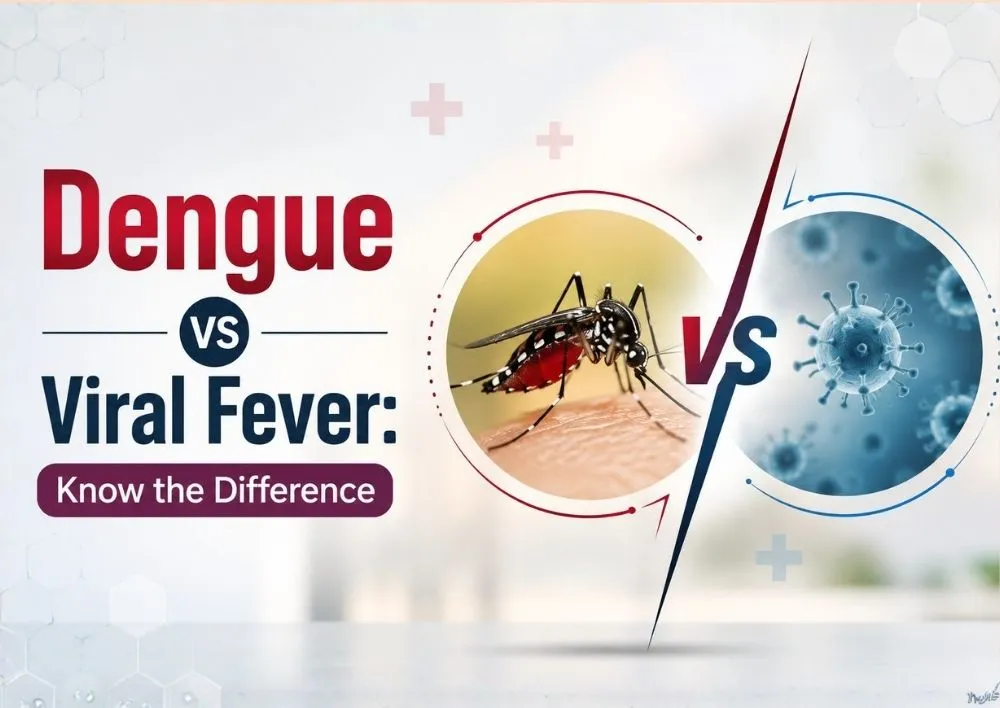
Dengue vs Viral Fever: How to know if it's dengue or viral fever?


- What is Viral Fever
- What is Dengue Fever
- Symptoms of Viral Flu (Common Viral Infection)
- Symptoms of Dengue Fever
- Dengue vs Viral Fever: Key Differences
- Does Dengue Always Cause Low Platelets?
- Can Viral Fever Turn Into Dengue?
- How is Dengue Diagnosed?
- How is Viral Fever Diagnosed?
- Treatment: Dengue Fever and Viral Fever
- How to cure dengue naturally at home
- Viral Fever Treatment at Home
- Who is at Higher Risk of Severe Dengue?
- Who is at Higher Risk of Severe Viral Fever?
- How to Prevent Dengue
- How to Prevent Viral Fever
- When Should You Visit a Doctor?
- Dengue Or Viral Fever? Early Diagnosis Could Be The Deciding Factor
- Expert Care for Fever or Suspected Dengue in Gurgaon
Summary
A fever is one of the most commonly observed reasons behind patients visiting doctors, particularly during the monsoons and post-monsoons. Whereas most fevers are caused by a viral attack and get cured on their own, a few are caused by dengue, which is a virus transmitted by mosquitoes. This illness needs strict monitoring.
Since the early symptoms of both these conditions tend to look alike, it often leads many individuals to assume that they have contracted a viral fever when, in fact, they may have dengue. This tends to make them ignore it for a few days, which might result in complications for them in the future.
However, how do you differentiate between dengue and a viral fever? Knowing the difference in symptoms, warnings, diagnosis, and treatment will help you take appropriate actions. This blog post provides you with all the information that you need to know about dengue fever and viral fever. So, keep reading!
What is Viral Fever
Viral fever is a general name given to a fever occurring because of a viral infection. There are hundreds of different viruses that may cause fever, such as those that cause the common cold, influenza, adenoviruses, and other seasonal infections.
Most viral fevers are mild in nature and heal with time within 3 to 7 days through:
-
Rest
-
Plenty of fluids
-
Healthy food
-
Antipyretic medicines as prescribed by a physician
-
Mostly viral fevers are self-limiting in nature and never cause any severe health problems in healthy people.
Dr. Swati Kapoor, the best general physician in Gurgaon at Miracles Healthcare, says, "The majority of cases related to viral fever disease usually resolve themselves with the help of enough rest and medication. But if your fever persists even after 3 days or there is any sign of warning, then you should visit the doctor."
What is Dengue Fever
Dengue is a viral disease that occurs due to the transmission of the dengue virus through the bite of an infected Aedes mosquito. It is also known as a viral infection. The dengue virus is different from the other viral infections such as the fever virus. This is the reason why dengue virus affects the blood vessels and causes low platelet counts in some patients. Most patients recover without having any complications but others may have severe dengue.
Dr. Swati says, "During the monsoon season, any kind of fever should not be ignored. If you develop a high fever with severe body aches or persistent symptoms, consult a doctor early to rule out dengue and begin appropriate care."
Symptoms of Viral Flu (Common Viral Infection)
The viral fever symptoms depend on the virus involved but commonly include
-
Fever
-
Chills
-
Runny nose
-
Cough
-
Mild headache
-
Fatigue
-
Body aches
-
Nasal congestion
-
Loss of appetite
Many patients also experience mild weakness, which slowly improves as the infection resolves.
Symptoms of Dengue Fever
Dengue often begins suddenly and can cause more intense symptoms than ordinary viral fever.
Common symptoms are
-
Sudden high fever
-
Pain behind the eyes
-
Muscle pain
-
Weakness
-
Nausea
-
Vomiting
-
Skin rash
-
Loss of appetite
However, not all people suffering from dengue fever may have all these symptoms.
Dengue vs Viral Fever: Key Differences
|
Feature |
Viral Fever |
Dengue Fever |
|
Cause |
Different viruses |
Dengue virus |
|
Spread |
Person-to-person or respiratory droplets |
Mosquito bite |
|
Fever |
Moderate to high |
Sudden high fever (often 104°F or higher) |
|
Body Pain |
Mild to moderate |
Severe muscle and joint pain ("breakbone fever") |
|
Headache |
Mild |
Severe |
|
Pain |
Behind Eyes |
Rare |
|
Skin Rash |
Occasionally |
Common after a few days |
|
Platelet Count |
Usually normal |
May decrease |
|
Bleeding |
Rare |
May occur in severe cases |
|
Recovery |
Usually 3–7 days |
1–2 weeks or longer |
Does Dengue Always Cause Low Platelets?
This is one of the biggest myths. Many people believe that
Low platelets mean dengue
This is not always the case.
Important facts include:
Platelets may remain normal during the early stages of dengue. Studies suggest that some viral infections other than dengue can also reduce platelet count.
Instead, diagnosis is based on:
-
Symptoms
-
Physical examination
-
Blood tests
-
Platelet trend
-
Hematocrit levels
-
Dengue-specific laboratory tests
According to Dr. Kapoor, "Only low platelets are not responsible for dengue fever. We first check all the symptoms, the health status of the patient, and then dengue test results."
Wondering why platelet counts drop during dengue? Read our blog to understand the science behind it.
Can Viral Fever Turn Into Dengue?
This is another common question patients ask: Can a viral fever turn into dengue?
The answer is no. Viral fever generally does not transform to dengue disease.
However, someone who initially thinks they have a simple viral fever may actually have dengue from the beginning because the early symptoms overlap.
The medical evaluation is important if:
-
Fever remains high
-
Symptoms worsen
-
There is severe body pain
-
Dengue is circulating in your area
-
You develop warning signs
Dr. Swati says, "Viral fever does not progress into dengue. The confusion arises because both illnesses can start with similar symptoms, making timely medical evaluation and appropriate testing essential for an accurate diagnosis."
How is Dengue Diagnosed?
Common investigations include:
This helps monitor:
-
Platelet count
-
White blood cells
-
Hematocrit
NS1 Antigen Test
Usually useful during the first few days of illness.
Dengue IgM
These become useful later in the course of infection.
Dr. Swati states, "We decide the type of test depending on the days you have had a fever, so timely medical consultation is very important for an accurate diagnosis."
How is Viral Fever Diagnosed?
Most viral fevers are diagnosed clinically.
Doctors evaluate
-
Symptoms
-
Medical history
-
Physical examination
-
Blood tests may only be advised if
-
Fever persists
-
Symptoms are unusual
-
A bacterial infection is suspected
Dengue, malaria, or typhoid needs to be ruled out
Treatment: Dengue Fever and Viral Fever
Viral Fever Treatment
The treatment revolves mostly around the alleviation of symptoms
-
Rest
-
Fluid intake
-
Good diet
-
Medications for fever that your physician prescribes
However, antibiotics do not work well for viral infections, except where there is a bacterial infection involved.
Dengue Fever Treatment
There is no medication for dengue yet.
The treatment includes
-
Close monitoring
-
Adequate fluid intake
-
Fever management
-
Constant blood test
-
Platelets count monitoring, where needed
-
Hospitalization in serious cases
Physicians will advise hospitalization in case of serious warning signs.
How to cure dengue naturally at home
There is no natural cure for dengue. While some home remedies like papaya leaf extract, giloy, kiwi, or herbal drinks are commonly recommended, there is no strong scientific evidence that they cure dengue or reliably increase platelet counts.
Mild dengue can often be managed at home under a doctor's supervision by:
-
Drinking plenty of fluids (water, ORS, coconut water, soups)
-
Getting adequate rest
-
Taking paracetamol for fever, as advised by your doctor
-
Avoiding ibuprofen, aspirin, and other NSAIDs, as they can increase the risk of bleeding
-
Monitoring for warning signs and attending follow-up blood tests if recommended
Dr. Swati says "There is no cure for dengue that is naturally available. The important thing is proper hydration and medical care with regular monitoring for early detection of complications."
Viral Fever Treatment at Home
In most cases of viral fever, the patient recovers within 3-7 days on his own due to supportive treatment. Home treatment includes management of symptoms alongside allowing the body to heal.
You can:
-
Get proper rest
-
Stay hydrated
-
Have light and nutritious meals
-
Take anti-fever drugs such as paracetamol, only under a doctor's instructions
-
Avoid using antibiotics, as they will not help against the viral infection
-
Consult a doctor if you have an uncontrolled fever lasting for more than 3-5 days or if you have associated symptoms such as severe difficulty breathing, continuous vomiting, confusion or dehydration.
Dr. Swati Kapoor says, "Most of the viral fevers recover with proper rest, hydration and symptom management, but if symptoms persist then always consult a doctor."
Who is at Higher Risk of Severe Dengue?
Although anyone can develop dengue, complications are more likely in:
-
Infants
-
Older adults
-
Pregnant women
-
People with weakened immunity
-
Individuals with chronic medical conditions
-
People who have had dengue previously
These individuals should seek medical attention promptly if they develop fever.
Who is at Higher Risk of Severe Viral Fever?
Although the majority of the viral fevers are harmless and resolve spontaneously, certain people may be at a greater risk of developing complications, particularly in case of severe infection.
The high-risk category includes
-
Babies and toddlers
-
Elderly people
-
Expecting mothers
-
Persons suffering from poor immune system
-
Patients who suffer from underlying conditions such as diabetes, heart disease, or lung disorders
If you or your loved ones are one of the patients who are at higher risk of developing severe viral fever, you must consult a general physician near you if you have an unrelenting or high fever, difficulty in breathing, extreme weakness, or symptoms of dehydration.
How to Prevent Dengue
As dengue is transmitted by mosquito bites, therefore, the preventive strategy involves the elimination of mosquitoes.
Some of the basic prevention techniques are:
-
Do not let water accumulate in coolers, planters, buckets, and tires.
-
Clean and empty water sources frequently.
-
Wear long-sleeved clothes.
-
Apply mosquito repellent
-
Install windows screen.
-
Use mosquito nets while sleeping if needed.
-
Keep surroundings clean.
How to Prevent Viral Fever
Viral fever transmission varies according to the nature of viruses, which includes via respiratory droplets, through contaminated surfaces, and by coming in close contact with infected people. Hygiene practices and precautions play a very important role in protecting oneself from infection.
-
Precautions against viral fever
-
Wash hands regularly with soap and water.
-
Try not to come in close contact with infected people.
-
Cover the nose and mouth while sneezing and coughing.
-
Try not to touch eyes, nose, and mouth with unclean hands.
-
Keep surfaces clean.
-
Stay well-hydrated and eat a well-balanced diet.
When Should You Visit a Doctor?
Consult an internal medicine doctor near you if
-
Your fever persists for over 2 to 3 days.
-
Your high fever is associated with severe body ache.
-
You experience pain behind the eyes.
-
Your skin breaks out in a rash.
-
You are experiencing continuous vomiting.
-
You feel very weak or dizzy.
-
You have other health problems.
-
Your family member was recently diagnosed with dengue.
-
Early diagnosis minimizes the chances of any complications and provides proper treatment.
Dengue Or Viral Fever? Early Diagnosis Could Be The Deciding Factor
While dengue and viral fever might appear similar at first sight, both of them are actually different. Dengue fever can develop complications if not diagnosed and treated early. What is important is not to make your own diagnosis. In case of persistent high fever, extreme pain in the body parts, pain around the eyes, rash, and unusual weakness, especially during monsoons or dengue season, see your doctor immediately. Prompt diagnosis, right monitoring and treatment could help avoid any complications.
If you or anyone you know suffers from fever that doesn't go away, schedule a consultation with a general physician near you at Miracles Healthcare, Gurgaon.
Expert Care for Fever or Suspected Dengue in Gurgaon
Miracles Healthcare is a trusted name in Gurgaon for serving families with quality and patient-centric care since 2002.
-
More than 7 Lakh patients have been served with compassion and patient-centric approach,
-
Experienced Panel of 10+ Physicians to diagnose your illness in a precise manner and provide evidence-based treatment.
-
Multispecialty facilities under one roof with availability of Critical Care, Pediatrics, Pulmonology, Gynecology, and other specialities when required.
-
24x7 Advanced Diagnostic Facilities for immediate testing and dengue screening and continuous monitoring.
-
24×7 Emergency services to give prompt attention in case of fever and dengue complications.
-
Located in Sector 14, Sector 56 and Sector 82 and making expert healthcare accessible across Gurgaon.
-
Whether you prefer WhatsApp: +91 98209 65000 , a phone call: 0124-4797600 , online booking, a walk-in consultation, evening OPDs, or a video consultation, we make it easy to reach the right doctor at the right time.
To ensure early detection and effective treatment of dengue, viral fever, and other seasonal ailments, book your consultation with an expert physician nearby at Miracles Healthcare, Gurgaon.
Written and Verified by:

Frequently Asked Questions
Generally, viral fever gets better in 3-7 days. However, if the viral fever does not subside after 7 days or even increases, then visit the doctor.
According to Dr. Swati, someone can suffer from dengue again as there are four serotypes of the dengue virus. Getting infected with one type of virus does not mean that you will not get affected by other serotypes.
The Aedes mosquitoes responsible for transmitting dengue are active in the early mornings and late evenings. Nevertheless, they can bite during other hours also if favorable conditions prevai
Dengue and viral fever share many common symptoms and hence cannot be differentiated at home. A physician can advise undergoing some tests after considering your symptoms and the period of fever.
Dengue generally affects the blood and blood vessels, leading to changes in platelet count and increased capillary permeability. But, in severe cases, it can affect organs like your liver.





Was the information useful?
0 0