



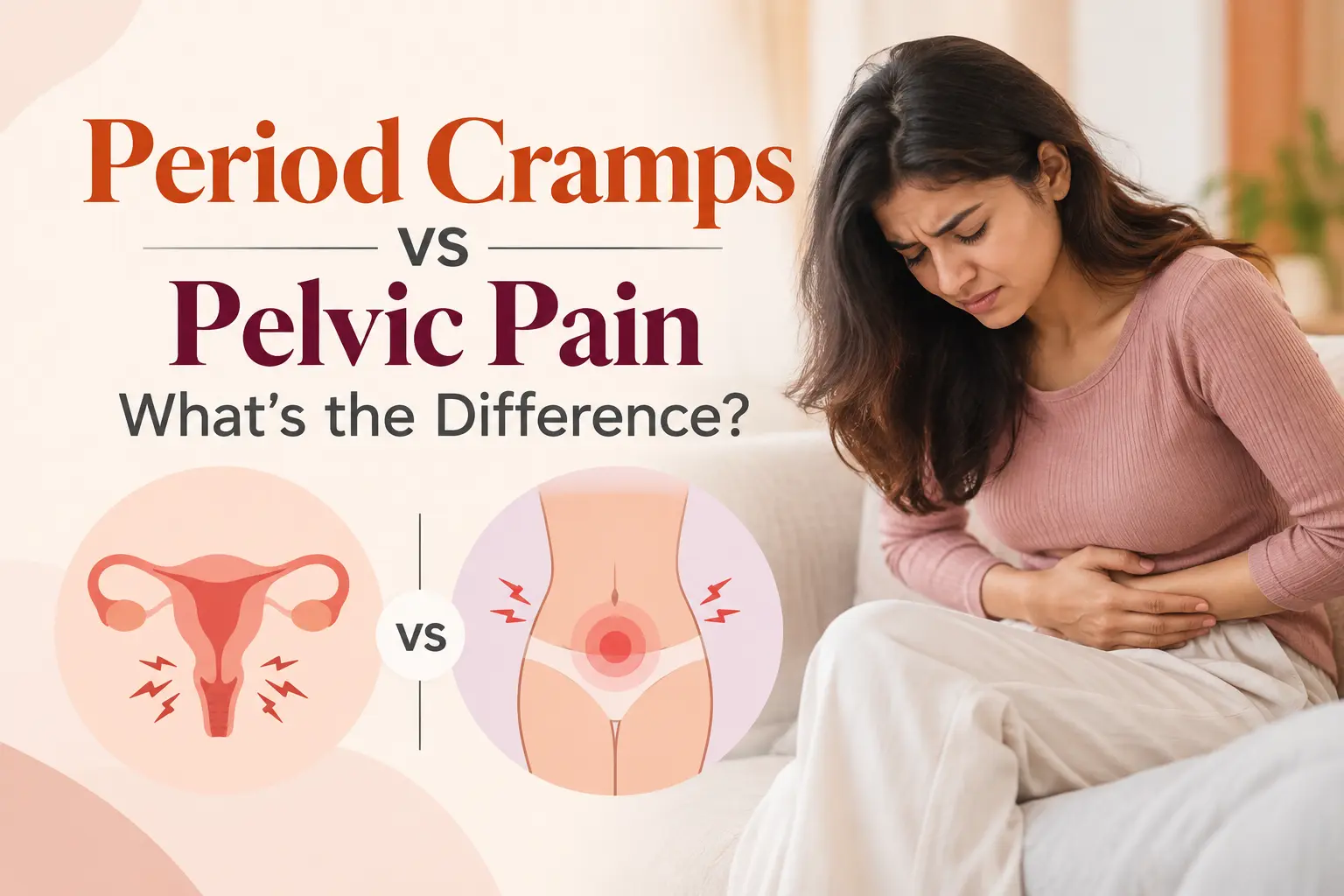
Period Cramps or Pelvic Pain? Know the Difference


- What are Period Cramps?
- What is Pelvic Pain?
- Period Cramps vs Pelvic Pain: What is the Difference?
- What Can Cause Severe Period Cramps?
- What Can Cause Pelvic Pain Outside Your Period?
- When to Consult a Gynaecologist?
- Period Cramps or Pelvic Pain? Don't Ignore a Change
- Expert Gynaecological Care for Period Cramps and Pelvic Pain at Miracles Healthcare
Summary
Period cramps are common, but not every type of lower abdominal or pelvic discomfort is related to menstruation. Understanding the difference between period cramps and pelvic pain can help you recognise changes in your usual pattern. While menstrual cramps are generally linked to uterine contractions during periods, pelvic pain can occur at any time and may be associated with conditions such as endometriosis, ovarian cysts, fibroids, pelvic inflammatory disease, urinary problems, or digestive issues.
Paying attention to when the pain occurs, how it feels, and whether other symptoms are present can help identify when medical advice may be needed. Persistent or worsening pain, discomfort between periods, pain during intercourse, unusual bleeding, abnormal discharge, or urinary and bowel-related symptoms should not be ignored. Consulting a gynecologist can help determine the underlying cause and guide appropriate treatment.
“My lower stomach hurts every month. It’s probably just period cramps.”
For many women, this thought feels completely normal. A little pain before or during your period may seem like something you simply have to deal with. But not every type of pelvic or lower abdominal pain is a period cramp.
Pain that starts days before your period, continues after it ends, occurs between periods, or becomes severe enough to affect your daily routine may need closer attention. While period cramps are usually linked to uterine contractions, pelvic pain can have other causes, including endometriosis, ovarian cysts, fibroids, pelvic infections, or urinary and digestive problems.
That is why the team of 50+ female gynaecologists at Miracles Healthcare recommends paying attention to changes in your usual pain pattern instead of assuming that every episode is a period cramp. If you frequently experience pelvic or lower abdominal pain, understanding the difference can help you know when to seek medical advice. Here, we discuss the key differences between period cramps and pelvic pain, their common causes, symptoms, and when to consult a gynaecologist.
What are Period Cramps?
Period cramps, medically called dysmenorrhea, are painful sensations that occur around menstruation. They commonly begin shortly before or at the start of a period and may continue for a few days.
During menstruation, the uterus contracts to help shed its lining. Chemicals called prostaglandins are involved in these contractions, and higher levels can be associated with more intense menstrual pain.
Period cramps may feel like:
-
A squeezing or tightening sensation in the lower abdomen
-
Dull or throbbing pain
-
Intermittent cramps that come and go
-
Pressure or heaviness in the lower abdomen
-
Pain extending to the lower back or thighs
Some people may also experience nausea, loose stools, headache, tiredness, or dizziness around their period.
Dr. Sadhna Sharma, Best Gynecologist in Gurgaon at Miracles Healthcare, explains that mild cramping around periods can be common, but a noticeable change in pain intensity or pattern should not be ignored.
Mild to moderate menstrual discomfort can be common. However, severe, progressively worsening pain or pain that interferes with everyday activities should not simply be dismissed as normal period pain.
What is Pelvic Pain?
Pelvic pain refers to discomfort felt in the lower abdomen or pelvic region. Unlike period cramps, it does not necessarily follow the menstrual cycle.
The pain can vary considerably from person to person. It may feel:
-
Sharp or stabbing
-
Aching or throbbing
-
Burning
-
Cramping
-
Heavy or pressure-like
-
Constant or intermittent
Pelvic pain can occur on one side, across the lower abdomen, or throughout the pelvic region. It may sometimes spread to the lower back, hips, or thighs.
The possible causes are also broader. Pelvic pain may be related to conditions affecting the uterus, ovaries, fallopian tubes, bladder, bowel, pelvic floor muscles, or other structures in the area.
That is why simply assuming that every lower abdominal pain is a period cramp can sometimes delay diagnosis of the actual problem.
Period Cramps vs Pelvic Pain: What is the Difference?
The easiest way to understand the difference between period cramps and pelvic pain is to look at the timing, pattern, and accompanying symptoms.
|
Feature |
Period Cramps |
Pelvic Pain |
|
Timing |
Usually occurs before or during menstruation |
Can occur at any time during the menstrual cycle |
|
Pattern |
Often follows a predictable menstrual pattern |
May be constant, intermittent, or cycle-related |
|
Sensation |
Usually cramping, squeezing, or throbbing |
May feel sharp, burning, aching, cramping, or pressure-like |
|
Common Location |
Lower abdomen, sometimes extending to the back and thighs |
Pelvis, lower abdomen, back, or surrounding areas |
|
Possible Triggers |
Mainly associated with menstruation |
May be linked to sex, urination, bowel movements, or movement |
|
Possible Causes |
Menstrual contractions or underlying gynaecological conditions |
Gynaecological, urinary, digestive, or musculoskeletal causes |
Period cramps can technically be a type of pelvic pain. However, “pelvic pain” is a broader term describing pain in the pelvic region, while menstrual cramps specifically refer to pain associated with menstruation.
What Can Cause Severe Period Cramps?
Sometimes, painful periods occur without an underlying pelvic condition. This is known as primary dysmenorrhea. However, severe or worsening period pain may be linked to another condition. Understanding the possible causes of period cramps can help identify whether the discomfort is related to menstruation or an underlying health condition, such as:
-
Endometriosis: Tissue similar to the uterine lining grows outside the uterus, causing painful periods and pelvic pain. Pain during sex or bowel movements may also occur.
-
Adenomyosis: Uterine-lining-like tissue grows into the uterine muscle, often causing painful periods and heavy bleeding.
-
Fibroids: These non-cancerous uterine growths may cause heavy periods, pelvic pressure, or painful menstruation.
-
Pelvic inflammatory disease (PID): An infection of the female reproductive organs that may cause pelvic pain, unusual discharge, fever, painful sex, or bleeding between periods.
Dr. Sadhna says, “If period pain is becoming more severe or affecting your daily life, it is important to look beyond pain relief and find out what may be causing it.”
What Can Cause Pelvic Pain Outside Your Period?
Pelvic pain between periods can have several possible causes, including:
-
Ovarian cysts: Many cysts cause no symptoms, but some may cause pelvic pain or discomfort, sometimes on one side.
-
Urinary problems: A urinary tract infection (UTI) may cause lower abdominal discomfort along with burning or frequent urination.
-
Digestive problems: Constipation, irritable bowel syndrome (IBS), and other digestive issues can cause lower abdominal or pelvic discomfort.
-
Pelvic floor dysfunction: Problems with the pelvic floor muscles may contribute to ongoing pelvic pain, particularly during intercourse, prolonged sitting, or physical activity.
When to Consult a Gynaecologist?
Not every episode of period pain requires medical attention, but certain changes should not be ignored. Consider consulting a gynaecologist near you if you experience:
-
Severe or worsening period pain that does not improve with usual measures or affects your daily activities.
-
Pelvic pain between periods or pain that continues after menstruation ends.
-
Pain during or after sexual intercourse.
-
Unusual vaginal discharge, odour, itching, or fever along with pelvic pain.
-
Heavy or irregular menstrual bleeding, especially when accompanied by significant pain.
-
Painful urination, frequent urination, constipation, or pain during bowel movements along with pelvic discomfort.
-
Sudden or severe pelvic pain, particularly if it is mainly on one side or occurs with nausea, vomiting, dizziness, or fainting.
Period Cramps or Pelvic Pain? Don't Ignore a Change
The biggest clue may not be how painful the symptom feels but how different it is from your usual pattern. A familiar cramp that appears around your period and settles within a few days may be typical menstrual pain. Pain that starts appearing between periods, becomes progressively worse, occurs during sex or bowel movements, or comes with abnormal bleeding or discharge deserves a closer look.
Your body does not always give you a clear label such as “period cramp” or “pelvic pain.” Paying attention to the pattern can help your doctor determine whether further evaluation is needed.
If your cramps have changed, your pelvic pain keeps returning, or the discomfort is interfering with your everyday life, consult a gynae doctor in gurgaon at Miracles Healthcare to identify the underlying cause and discuss appropriate treatment options.
Expert Gynaecological Care for Period Cramps and Pelvic Pain at Miracles Healthcare
Miracles Healthcare is the best gynaecology hospital in Gurgaon, providing comprehensive care for period-related concerns, pelvic pain, and a wide range of women's health conditions since 2002. If you experience severe period cramps, persistent pelvic pain, painful periods, or discomfort between periods, our experienced gynaecology team focuses on identifying the underlying cause and providing personalised treatment.
What sets us apart:
-
50+ Female Gynaecologists on board, offering expert care for a wide range of gynaecological concerns.
-
Trusted by 7 Lakh+ Patients, reflecting our commitment to compassionate and patient-centred care.
-
24×7 In-House Diagnostic Facility for timely and convenient evaluation when required.
-
Multispeciality Support, providing access to specialists across multiple medical disciplines when pelvic pain may involve other systems.
-
25,000+ Babies Delivered, reflecting the trust of thousands of families in our maternity and women's healthcare services.
-
Multi-location presence across Gurgaon, making quality women's healthcare easily accessible.
-
Miracles Apollo Cradle, Sec 14, Gurgaon
-
Miracles Mediclinic, Sec 14, Gurgaon
-
Miracles Apollo Cradle/Spectra 82, Gurgaon
-
Miracles Mediclinic, Sec 56, Gurgaon
-
Whether you are experiencing painful periods, recurring pelvic pain, or discomfort that occurs between periods, book an appointment with a gynaecologist near you at Miracles Healthcare. Get the right evaluation, understand the possible cause of your pain, and receive personalised women's healthcare under one roof.
Written and Verified by:

Frequently Asked Questions
Pelvic pain can occur before a period, but it does not always mean menstruation is about to start. Other gynaecological, urinary, digestive, or musculoskeletal conditions can also cause pelvic pain.
Mild to moderate cramps that occur around your period and do not significantly affect daily activities are generally common. Severe, worsening, or disabling pain should be evaluated by a gynaecologist.
Dr. Sadhna clarifies that if you experience pelvic pain without a period, there can be many causes, including ovarian cysts, endometriosis, urinary infections, digestive problems, or pelvic floor issues.
Seek medical advice for severe or persistent pain, pain between periods, unusual bleeding or discharge, fever, painful intercourse, or pain with urination or bowel movements.
Lower abdominal cramps without a period may occur due to hormonal changes, delayed menstruation, ovulation, ovarian cysts, endometriosis, or digestive and urinary problems.
Dr. Sadhna says that there is no single cause of pelvic pain. Menstrual cramps are common, but pelvic pain may also result from gynaecological, urinary, digestive, or musculoskeletal conditions.




Was the information useful?
0 0