


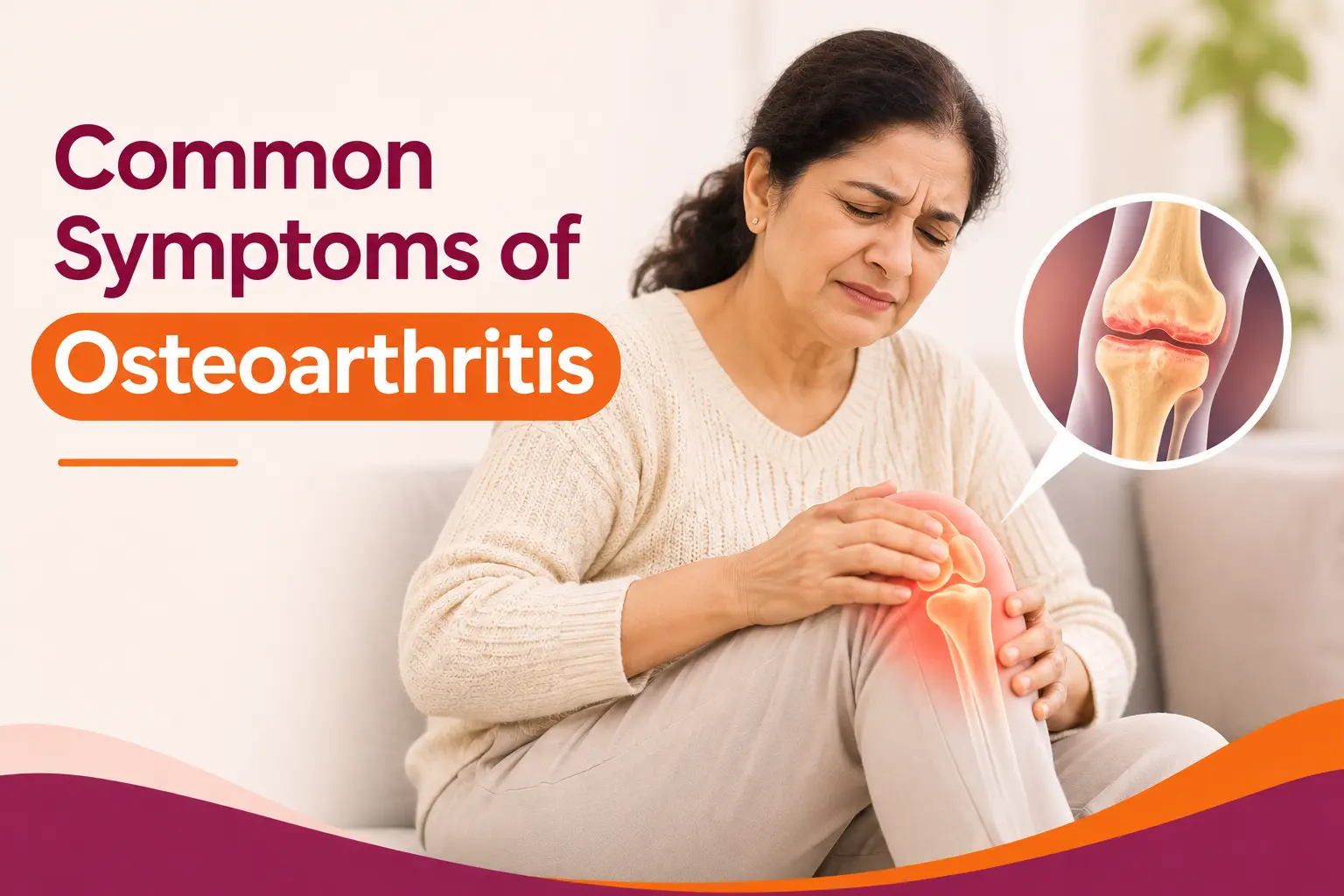
What Are the Common Symptoms of Osteoarthritis?

- Common Symptoms of Osteoarthritis You Should Not Ignore
- How Do Osteoarthritis Symptoms Differ Depending on the Affected Joint?
- Osteoarthritis Symptoms in Females
- Osteoarthritis Symptoms in Males
- How Can Osteoarthritis Symptoms Be Managed?
- When Should You Consult an Orthopaedic Specialist?
- Get Medical Advice for Joint Pain in Gurgaon at Miracles Healthcare
Summary
-
Osteoarthritis is a joint condition that develops due to the gradual breakdown of protective cartilage, causing pain, stiffness and reduced mobility.
-
Early symptoms may include joint pain during movement, morning stiffness and discomfort after prolonged rest.
-
Other common symptoms include joint swelling, tenderness, reduced flexibility, grinding sensations, weakness, instability and changes in joint appearance.
-
The condition commonly affects the knees, hips, hands and spine, with symptoms varying according to the affected joint.
-
Osteoarthritis can affect both men and women, although certain risk factors and patterns may differ.
-
Treatment focuses on managing symptoms and maintaining joint function through exercise, physiotherapy, weight management, medication, and lifestyle modifications.
-
Joint replacement may be considered in selected casephs of advanced osteoarthritis.
-
Persistent joint pain, stiffness, or difficulty with daily activities should be evaluated by an orthopaedic specialist.
-
Miracles Healthcare, Gurgaon has a team of orthopedic doctors for appropriate evaluation and treatment guidance. Call 906-906-8800 to book an appointment.
Osteoarthritis is one of the most common joint conditions, particularly among older adults. However, it is not simply a part of aging that should be ignored. It is a condition that develops when the protective cartilage within a joint slowly breaks down, affecting how the bones move against each other. Over time, this can lead to joint pain, stiffness, swelling, and difficulty performing everyday activities.
The symptoms of osteoarthritis may develop slowly, making them easy to overlook in the early stages. Some people initially notice mild knee pain while climbing stairs, stiffness after waking up, or discomfort after sitting for a long time. Others may experience reduced joint flexibility, swelling, or a grinding sensation during movement.
Recognising the common symptoms of osteoarthritis is important for seeking timely medical advice and understanding the available treatment options. Although osteoarthritis cannot currently be reversed, appropriate medical management, physical activity, weight management and other supportive measures can help manage symptoms and maintain joint function.
Dr. Nakul Khera, orthopaedist specialist in gurgaon at Miracles Healthcare, explains, "Early osteoarthritis symptoms can sometimes be mistaken for routine joint discomfort. Persistent knee pain, stiffness after rest, or difficulty with everyday movements should be evaluated to understand the underlying joint condition."
In this blog, we will discuss the early warning signs of osteoarthritis, the joints commonly affected, how symptoms progress, and when you should consult an orthopaedic specialist.
Common Symptoms of Osteoarthritis You Should Not Ignore
The symptoms of osteoarthritis can differ depending on the affected joint and the extent of joint changes. Some people experience occasional discomfort, while others develop persistent pain that interferes with daily activities.
Here are eight common symptoms of osteoarthritis to watch for.
1. Joint Pain During Movement
Joint pain is one of the earliest and most common symptoms of osteoarthritis. Initially, the discomfort may occur only during physical activities or after putting pressure on the affected joint. For example, people with knee osteoarthritis may experience pain while:
-
Walking for extended periods.
-
Climbing or descending stairs.
-
Standing for a long time.
-
Getting up from a chair.
-
Performing activities that put pressure on the knees.
Similarly, hip osteoarthritis may cause discomfort while walking, bending, or getting in and out of a vehicle. In the early stages, joint pain may improve with rest. However, as the condition progresses, some individuals may experience more frequent discomfort, including pain during rest or at night.
2. Morning Stiffness or Stiffness After Rest
Another common symptom of osteoarthritis is joint stiffness, particularly after waking up in the morning or remaining in one position for an extended period.
You may notice that your knees, hips, or fingers feel stiff when you first start moving. This can make simple activities such as getting out of bed, walking to the bathroom, or holding objects uncomfortable. Osteoarthritis-related morning stiffness generally lasts for a short period, often less than 30 minutes. Movement may slowly help reduce the stiffness.
However, stiffness that lasts for a prolonged period, especially when accompanied by significant swelling or pain in multiple joints, should be medically evaluated because it may indicate another joint condition.
Dr. Nakul Khera explains, "Morning stiffness that gradually improves with movement is commonly seen in osteoarthritis, but persistent stiffness should be evaluated to rule out other joint conditions."
3. Swelling Around the Affected Joint
Swelling is another possible symptom of osteoarthritis. It may develop because of inflammation or changes in the tissues surrounding the affected joint. The joint may appear slightly enlarged or feel puffy and tender when touched.
For instance, people with knee osteoarthritis may notice swelling around the kneecap, particularly after walking or engaging in physical activities.
Swelling may be accompanied by:
-
Discomfort while bending or straightening the joint.
-
A feeling of tightness around the affected area.
-
Tenderness when pressure is applied.
-
Reduced flexibility.
Persistent or sudden swelling should not automatically be attributed to osteoarthritis. A hot, red, and significantly swollen joint, particularly with fever, requires prompt medical assessment to rule out infection or other conditions.
4. Reduced Joint Flexibility and Range of Motion
Osteoarthritis can slowly affect how freely a joint moves. As changes occur within the joint, bending, stretching, and rotating the affected area may become increasingly difficult.
For example:
-
Knee osteoarthritis may make it difficult to bend or fully straighten the leg.
-
Hip osteoarthritis may affect movements such as bending forward or rotating the hip.
-
Hand osteoarthritis may make it difficult to bend fingers or move the thumb comfortably.
-
Neck osteoarthritis may cause difficulty turning the head from side to side.
Reduced joint flexibility can affect everyday independence. Activities such as wearing shoes, opening jars, climbing stairs and getting out of bed may become challenging.
Early assessment and an appropriate joint-strengthening and mobility programme may help maintain functional movement.
5. Grinding, Clicking or Crackling Sensation in the Joints
Some people with osteoarthritis experience a grinding or crackling sensation when moving the affected joint. This is medically known as crepitus.
It may feel as though something is rubbing or catching inside the joint. In some cases, an audible clicking or crunching sound may also occur.
This symptom is particularly noticeable in people with knee osteoarthritis when they bend or straighten their knees.
However, joint sounds alone do not necessarily indicate osteoarthritis. Clicking and cracking can occur in otherwise healthy joints as well. Medical assessment is important when these sounds are accompanied by pain, swelling, or restricted movement.
6. Joint Tenderness and Sensitivity
Joint tenderness refers to discomfort or pain when pressure is applied to the affected area.
People with osteoarthritis may notice tenderness around the knee, hip, fingers or other affected joints. The area may feel sensitive during activities such as kneeling, gripping objects, or touching the joint.
For example, hand osteoarthritis may cause discomfort when:
-
Holding a cup or bottle.
-
Opening a tight jar.
-
Turning a key.
-
Writing for an extended period.
-
Using household tools.
Tenderness may fluctuate depending on activity levels and the severity of symptoms.
7. Joint Weakness or Feeling of Instability
Osteoarthritis can affect the muscles surrounding the joint, particularly when pain leads to reduced physical activity. Over time, the muscles supporting the affected joint may become weaker, affecting balance, stability, and movement.
People with knee osteoarthritis may experience a sensation that their knee is giving way while walking or standing. Some may feel less confident using stairs or walking on uneven surfaces.
This instability can increase the risk of falls, particularly in older adults.
A healthcare professional may recommend suitable strengthening exercises and physiotherapy to improve muscle support, balance, and joint function.
8. Changes in Joint Shape or Appearance
As osteoarthritis progresses, structural changes may develop in the affected joint.
Some individuals may notice that their fingers appear enlarged or develop firm bumps around the joints. In more advanced knee osteoarthritis, changes in joint alignment may also occur.
Common visible changes include:
-
Enlargement of the finger joints.
-
Bony bumps near the fingertips or middle finger joints.
-
Changes in the shape or alignment of the knee.
-
Persistent swelling around the affected joint.
These changes may develop slowly and can be associated with discomfort or reduced movement. Their presence should be assessed by a medical professional to understand the underlying cause.
According to Dr. Nakul Khera, "Joint pain, swelling, and reduced flexibility are important symptoms to pay attention to. Their frequency, duration, and impact on daily activities help us understand the extent of joint-related problems."
How Do Osteoarthritis Symptoms Differ Depending on the Affected Joint?
Osteoarthritis does not affect every joint in the same way. The location of the condition plays an important role in determining the symptoms a person experiences.
-
Knee Osteoarthritis: Common symptoms include knee pain during walking, stiffness after rest, swelling, grinding sensations, and difficulty climbing stairs or standing up from a seated position.
-
Hip Osteoarthritis: It may cause pain in the groin, outer hip, or thigh, along with stiffness and difficulty walking, bending, putting on socks, or getting into a car.
-
Hand Osteoarthritis: Symptoms may include finger joint pain, stiffness, swelling, bony bumps, and difficulty gripping, writing, or performing everyday tasks.
-
Spinal Osteoarthritis: It may cause neck or lower back pain and stiffness. In some cases, changes around the spine can irritate nearby nerves and cause radiating pain, tingling, or weakness.
Osteoarthritis Symptoms in Females
Osteoarthritis can affect women at different stages of life, with the risk generally increasing with age. Women, particularly after menopause, may experience a higher likelihood of developing osteoarthritis, especially in the knees and hands.
Hormonal changes, ageing, joint structure, genetics and other health factors may contribute to differences in osteoarthritis risk between females and males.
Some common symptoms of osteoarthritis in females include:
-
Knee pain: Discomfort while walking, climbing stairs, squatting or standing for extended periods.
-
Morning joint stiffness: Stiffness in the knees, hips or fingers after waking up or sitting for a long time.
-
Hand joint swelling: Enlargement or tenderness around the finger joints, sometimes accompanied by difficulty gripping objects.
-
Hip discomfort: Pain around the groin or outer hip that may make walking and bending uncomfortable.
-
Reduced mobility: Difficulty performing everyday activities such as household work, walking, or getting up from a seated position.
-
Joint tenderness: Sensitivity around affected joints, particularly after physical activity.
Women may also notice changes in joint comfort and mobility around menopause. However, not all joint pain during this stage is caused by osteoarthritis.
Understanding these symptoms and seeking an appropriate medical evaluation can help identify the cause of joint discomfort and determine suitable management options.
Osteoarthritis Symptoms in Males
Osteoarthritis can also affect men, particularly as they grow older. Previous sports injuries, physically demanding occupations, excess body weight, and repetitive stress on joints may contribute to the development of the condition.
In males, osteoarthritis commonly affects weight-bearing joints such as the knees and hips, although the hands and spine can also be involved.
Some common symptoms of osteoarthritis in males include:
-
Knee pain during physical activity: Discomfort while walking, running, climbing stairs or standing for long periods.
-
Joint stiffness after rest: Difficulty moving the knees or hips immediately after waking up or sitting for an extended period.
-
Hip pain and restricted movement: Discomfort while bending, walking, rotating the hip or performing routine activities.
-
Swelling around the joints: Mild enlargement, tenderness or puffiness around the affected area.
-
Grinding sensations: Clicking, crackling, or grinding sounds when bending or straightening the knees.
-
Reduced physical performance: Difficulty participating in sports, exercising, lifting objects or performing physically demanding tasks.
Men who have experienced previous joint injuries may also develop osteoarthritis-related symptoms later in life. Therefore, persistent joint discomfort should not be dismissed as ordinary muscle fatigue or an effect of physical activity.
Dr. Nakul Khera explains, "Men who experience recurring joint pain or stiffness, particularly after physical activity, should not ignore these symptoms. Timely evaluation can help identify joint changes and guide appropriate treatment to maintain mobility."
How Can Osteoarthritis Symptoms Be Managed?
Although osteoarthritis is a long-term condition, several treatment approaches can help manage pain, improve mobility, and support everyday activities.
The treatment plan depends on the affected joint, symptom severity, overall health, and individual needs.
1. Regular Exercise and Physiotherapy
Appropriate physical activity is an important part of osteoarthritis management. A physiotherapist may recommend exercises to strengthen the muscles around the affected joint, improve flexibility, and support better movement.
Depending on individual abilities, suitable activities may include:
-
Walking.
-
Stationary cycling.
-
Swimming.
-
Gentle stretching.
-
Muscle-strengthening exercises.
Exercises should be selected according to the individual's condition and physical capacity.
2. Maintaining a Healthy Body Weight
For individuals who are overweight or living with obesity, weight management may help reduce pressure on weight-bearing joints, particularly the knees and hips.
A balanced diet and appropriate physical activity can support healthy weight management and overall joint health.
3. Medications for Pain Management
Depending on the symptoms and medical history, doctors may recommend medications to help manage osteoarthritis pain.
Topical anti-inflammatory medicines may be considered, particularly for knee osteoarthritis. Oral medications may be appropriate in selected cases after evaluating potential side effects and individual risk factors.
Medicines should only be taken under appropriate medical guidance. Avoid prolonged self-medication for joint pain.
4. Lifestyle and Activity Modifications
Small changes in daily activities may help reduce unnecessary joint strain.
These may include:
-
Avoiding prolonged periods in one position.
-
Taking breaks during repetitive activities.
-
Using supportive footwear.
-
Following an appropriate exercise routine.
-
Avoiding activities that repeatedly aggravate joint pain.
5. Surgical Treatment in Advanced Cases
When osteoarthritis causes significant pain and mobility limitations, and non-surgical treatments do not provide adequate relief, surgery may be considered.
For selected patients with severe hip or knee osteoarthritis, joint replacement surgery may be an option.
The decision depends on the impact of symptoms on quality of life, clinical examination, overall health, and the individual's treatment preferences. Surgery is not necessary for everyone with osteoarthritis.
Dr. Nakul Khera highlights, "Osteoarthritis treatment should focus on the individual's symptoms, joint function, and overall health. Appropriate exercises, lifestyle modifications, and medical treatment can help patients manage discomfort and maintain mobility."
When Should You Consult an Orthopaedic Specialist?
Occasional joint discomfort after physical activity does not necessarily indicate osteoarthritis. However, persistent or recurring symptoms should not be ignored.
Consider consulting an orthopaedist specialist near you if you experience:
-
Joint pain that continues or repeatedly returns.
-
Morning stiffness that affects everyday movement.
-
Swelling or tenderness around a joint.
-
Difficulty walking, climbing stairs, or bending.
-
Reduced flexibility in your knees, hips, or fingers.
-
A feeling that your knee is unstable or giving way.
-
Joint pain that interferes with sleep or daily activities.
Seek prompt medical attention if you develop sudden severe joint pain, a hot or red swollen joint, fever accompanying joint symptoms, or sudden inability to bear weight. These symptoms may indicate a condition other than routine osteoarthritis and require timely assessment.
Early medical evaluation can help identify the cause of joint problems and determine an appropriate management plan.
Get Medical Advice for Joint Pain in Gurgaon at Miracles Healthcare
Joint pain, stiffness, and reduced mobility can slowly affect your ability to perform everyday activities. Recognising the symptoms of osteoarthritis and seeking appropriate medical advice can help you understand your joint health and explore suitable treatment options.
At Miracles Healthcare, Gurgaon, individuals experiencing persistent joint discomfort can consult a team of Orthopedist specialists for clinical evaluation and guidance based on their symptoms and medical needs.
Whether you are experiencing knee pain while walking, hip stiffness, difficulty moving your fingers, or recurring joint discomfort, a timely consultation can help determine the underlying cause and appropriate next steps. To book your appointment, call 906-906-8800
Written and Verified by:

Frequently Asked Questions
Osteoarthritis treatment depends on the affected joint and severity of symptoms. Exercise, physiotherapy, weight management, and prescribed medications can help manage pain and maintain mobility.
Osteoarthritis can develop at any age, but it is more common after 45–50 years. Previous joint injuries, obesity, and repetitive joint stress may increase the risk.
Yes, many people with osteoarthritis can lead active and fulfilling lives with appropriate treatment, regular exercise, and lifestyle modifications.
Limit highly processed foods, sugary drinks, excess added sugar, and foods high in saturated or trans fats. A balanced diet can support overall joint health.
Osteoarthritis is commonly described in five stages, ranging from stage 0 (no visible signs) to stage 4 (severe changes). Symptoms and progression can vary between individuals.
Foods rich in omega-3 fatty acids, antioxidants, and fibre, such as fatty fish, leafy greens, berries, nuts, and olive oil, can support overall health. No specific food can cure osteoarthritis.






Was the information useful?
0 0