


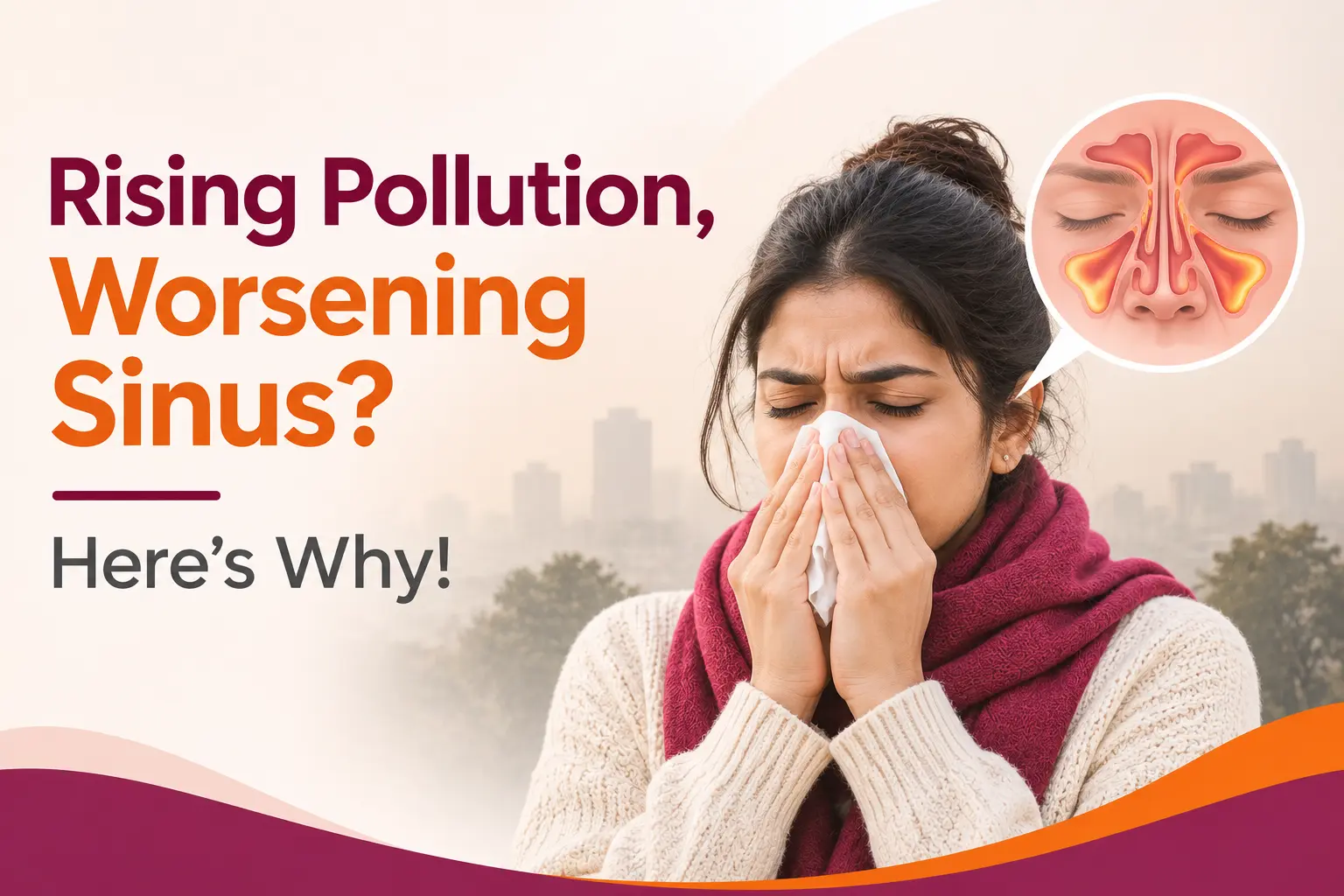
Why Does Sinus Get Worse When Pollution Rises?

- What is the Connection Between Pollution and Sinus Health?
- Which Air Pollutants Can Affect Your Sinuses?
- Common Sinus Symptoms That May Worsen Due to Pollution
- Pollution-Induced Sinusitis vs Allergic Rhinitis: What is the Difference?
- How Does Air Pollution Affect People With Chronic Sinusitis?
- Practical Ways to Protect Your Sinus Health During High Pollution
- When Should You Consult an ENT Specialist?
- How Can an ENT Specialist Help With Pollution-Related Sinus Problems?
- Conclusion
Summary
-
Air pollution, including vehicle emissions, construction dust, smoke, and fine particulate matter, can irritate the nasal lining and aggravate existing sinus problems.
-
Research suggests that exposure to particulate matter may be associated with chronic rhinosinusitis and increased symptom severity.
-
Common symptoms include nasal congestion, sneezing, runny nose, facial pressure, postnasal drip, headaches, and reduced sense of smell.
-
Pollution-related irritation, allergic rhinitis, and sinusitis can have similar symptoms, so persistent or recurring complaints may require an ENT assessment.
-
Checking the Air Quality Index (AQI), reducing exposure to polluted air, wearing a well-fitting N95 mask, and using saline nasal rinses safely may help manage irritation.
-
Consult an ENT doctor if sinus symptoms persist, recur frequently, or interfere with daily activities.
-
Miracles Healthcare, a NABH-accredited ENT hospital in Gurgaon offering ENT services since 2002, provides specialist consultations to help assess and manage sinus and other ENT concerns. Call 906-906-8800 to schedule a consultation.
Air pollution is generally associated with coughing, breathing difficulties, and throat irritation. However, its effects can also extend to the nose and sinuses, the air-filled spaces around the nose, cheeks, forehead, and eyes. Exposure to dust, vehicle emissions, smoke, and other airborne pollutants may irritate the nasal lining, increase inflammation, and aggravate existing sinus problems.
For people living in areas with heavy traffic, construction activity, or seasonal smog, symptoms such as nasal congestion, facial pressure, sneezing, and headaches may become more noticeable when air quality deteriorates. But does pollution directly cause sinus infection, or can it make an existing sinus condition worse?
Understanding the connection between pollution and sinus health can help you recognise potential triggers, adopt practical preventive measures, and know when to seek medical advice from an ENT specialist.
What is the Connection Between Pollution and Sinus Health?
The nose acts as the body's first line of defence against airborne pollutants. Mucus and tiny hair-like structures called cilia help trap and remove dust, allergens, microorganisms, and other irritants from the nasal passages. The sinuses, which are connected to the nasal cavity through small openings, rely on this natural clearance mechanism to drain mucus effectively.
When pollutants such as fine particulate matter enter the nasal passages, they may irritate the nasal lining and trigger inflammation. This swelling can narrow the sinus openings, interfere with normal mucus drainage, and potentially worsen existing sinus problems.
Research suggests that exposure to air pollution, particularly particulate matter, may be associated with chronic rhinosinusitis and increased disease severity. These findings highlight the importance of reducing exposure to environmental pollutants, especially for people who experience recurring sinus symptoms.
Air pollution may affect sinus health in several ways:
-
Irritation of the nasal lining: Fine particles and irritating gases can affect the delicate tissues inside the nose.
-
Increased inflammation: Pollutants may trigger or worsen inflammation in the nasal passages and surrounding airways.
-
Impaired mucus clearance: Inflammation may interfere with the normal movement of mucus and trapped particles out of the nasal passages.
-
Worsening of existing conditions: People with allergic rhinitis or chronic rhinosinusitis may experience more troublesome symptoms when exposed to polluted air.
Dr. Priyanjana Acharyya, ENT Specialist in Gurgaon at Miracles Healthcare, explains, “Pollution can irritate the delicate lining of the nose and aggravate existing nasal or sinus inflammation. If you notice recurring symptoms during periods of poor air quality, identifying your triggers is an important step towards managing them.”
It is important to understand that pollution does not automatically cause a sinus infection. However, exposure to polluted air may aggravate sinus inflammation and make symptoms more difficult to manage, particularly in people who already have nasal or sinus conditions.
Which Air Pollutants Can Affect Your Sinuses?
Different pollutants can affect the respiratory tract in different ways. Some irritate the nasal lining directly, while others may contribute to inflammation or worsen existing allergies.
1. PM2.5 and PM10 (Particulate Matter)
Particulate matter consists of tiny airborne particles released by sources such as vehicle exhaust, construction dust, industrial emissions, and smoke. PM2.5 refers to particles measuring 2.5 micrometres or less in diameter, while PM10 includes particles measuring 10 micrometres or less.
Research suggests that exposure to fine particulate matter may be associated with more severe chronic rhinosinusitis.
2. Vehicle Exhaust and Nitrogen Dioxide
Traffic-related pollution contains gases and particles that can irritate the nasal passages. Nitrogen dioxide, produced mainly through fuel combustion, is one of the pollutants that can affect respiratory health.
Repeated exposure may aggravate nasal irritation, particularly in people with sensitive nasal passages or pre-existing respiratory conditions.
3. Industrial Emissions and Smoke
Industrial emissions and smoke from burning materials may contain irritating gases and fine particles. Repeated exposure can contribute to respiratory irritation and may worsen existing nasal symptoms.
4. Construction Dust
Dust released during construction, demolition, and roadwork can contain fine particles that irritate the nasal passages and trigger symptoms such as sneezing, nasal congestion, and a runny nose. People who live or work near construction sites may be more likely to experience these symptoms, particularly if they have existing allergies or sensitive nasal passages.
The research by the World Health Organization (WHO) highlights particulate matter and other air pollutants as significant environmental health risks. Reducing exposure to airborne dust and pollution can help protect respiratory health and may reduce irritation in people prone to nasal and sinus problems.
Common Sinus Symptoms That May Worsen Due to Pollution
Pollution-related irritation can produce symptoms similar to those seen in allergic rhinitis and sinusitis. The pattern, duration, and severity of symptoms help determine the likely cause.
Common symptoms of sinus issues include:
-
Nasal congestion: A blocked nose that makes breathing through the nostrils difficult.
-
Runny nose: Increased nasal discharge following exposure to dust, smoke, or irritating gases.
-
Facial pressure or pain: Discomfort around the forehead, cheeks, or eyes, particularly when sinus inflammation is present.
-
Frequent sneezing: Repeated sneezing after exposure to polluted air or airborne irritants.
-
Postnasal drip: Mucus flowing down the back of the throat, sometimes causing irritation or coughing.
-
Reduced sense of smell: Swelling inside the nose may interfere with the ability to smell normally.
-
Headaches: Some people experience headaches alongside nasal congestion and facial pressure.
These symptoms do not necessarily mean you have a sinus infection. Similar complaints can occur with allergies, viral infections, and other nasal conditions.
Dr. Priyanjana Acharyya explains, “Frequent sneezing, nasal blockage, and irritation after exposure to dust or smoke may indicate that your nasal passages are reacting to environmental triggers. Persistent or recurring symptoms should be assessed rather than repeatedly treated with over-the-counter medicines.”
The research highlights that nasal congestion, runny nose, facial pain or pressure, headache, and postnasal drip are common symptoms of sinus infection. However, these symptoms can overlap with other nasal conditions, so an assessment may be necessary to determine the cause.
Pollution-Induced Sinusitis vs Allergic Rhinitis: What is the Difference?
Pollution-related nasal irritation, allergic rhinitis, and sinusitis can overlap, but they are not the same condition.
|
Features |
Pollution-Related Nasal Irritation |
Allergic Rhinitis |
Sinusitis |
|
Main trigger |
Dust, smoke, and airborne pollutants |
Allergens such as pollen, dust mites, or pet dander |
Often follows a viral infection; other causes are possible |
|
Common symptoms |
Burning, congestion, sneezing, irritation |
Sneezing, itchy nose, watery eyes, runny nose |
Congestion, facial pressure, reduced smell, nasal discharge |
|
Fever |
Not typical |
Not typical |
May occur, depending on the cause |
|
Symptom pattern |
May worsen during or after exposure |
Often recurs with allergen exposure |
May persist beyond the initial infection |
Pollution can aggravate allergic rhinitis and sinusitis, so symptoms may not fit neatly into one category. A blocked nose after a polluted day does not automatically indicate an infection, and the colour of nasal mucus alone cannot confirm a bacterial infection.
Dr. Priyanjana Acharyya advises, “Not every blocked nose is sinusitis, and not every episode of nasal congestion requires antibiotics. The cause of your symptoms, how long they have lasted, and your clinical examination help determine the most appropriate treatment.”
How Does Air Pollution Affect People With Chronic Sinusitis?
Chronic rhinosinusitis is a condition involving prolonged inflammation of the nose and sinuses. Symptoms generally persist for at least 12 weeks and may include nasal blockage, discharge, facial pressure, and reduced smell.
Research indicates that environmental pollutants may affect the nasal lining's protective barrier and its ability to clear mucus.
When the normal protective mechanisms of the nose are disrupted, people with existing sinus disease may find their symptoms harder to control.
Pollution may also affect daily life by contributing to:
-
Persistent nasal discomfort and congestion.
-
Disturbed sleep due to difficulty breathing through the nose.
-
Reduced concentration and productivity when symptoms are troublesome.
-
Repeated episodes of worsening symptoms.
-
Greater difficulty managing pre-existing nasal allergies.
However, not everyone exposed to polluted air develops chronic sinusitis. Genetics, allergies, nasal anatomy, infections, smoking, and other environmental exposures may also influence an individual's risk.
Dr. Priyanjana Acharyya explains, “People with recurring sinus problems should pay attention to patterns in their symptoms, including whether they worsen during high-pollution days. This information can help an ENT specialist assess possible triggers and recommend an appropriate management plan.”
Practical Ways to Protect Your Sinus Health During High Pollution
Although you cannot control outdoor air quality completely, a few practical steps may help reduce exposure and manage irritation.
1. Check the Air Quality Index (AQI)
Check your local AQI before planning outdoor activities. When air quality is poor, consider reducing the duration and intensity of outdoor exercise, especially near busy roads or construction sites.
2. Wear a Well-Fitting N95 Mask Outdoors
A properly fitted N95 respirator can reduce inhalation of many airborne particles when worn correctly. It does not remove every harmful gas, so it should be considered one part of a broader pollution-reduction strategy.
3. Keep Indoor Air Cleaner
Keep windows and doors closed when outdoor pollution levels are high, where practical. Use an appropriately sized air purifier with a HEPA filter if available, and avoid indoor smoke from cigarettes, incense, or other burning materials.
4. Consider Saline Nasal Irrigation
Saline nasal sprays or rinses may help remove mucus and irritants from the nasal passages. If using a nasal irrigation device, use distilled, sterile, or previously boiled and cooled water, and clean the device according to its instructions. Do not use untreated tap water.
5. Avoid Self-Medicating With Nasal Decongestants
Some nasal decongestant sprays can cause rebound congestion when used for longer than recommended. Consult a healthcare professional about appropriate treatment, particularly if symptoms are frequent or persistent.
6. Maintain Good Hydration and Sleep Habits
Drink enough fluids and maintain a regular sleep routine. These measures support general well-being, although they do not prevent pollution-related sinus inflammation on their own.
7. Reduce Exposure at Work and Home
If you live near construction activity or work in a dusty environment, follow appropriate workplace safety measures. Improve ventilation when outdoor air is cleaner, and avoid unnecessary exposure to smoke and chemical fumes.
Dr. Priyanjana Acharyya recommends, “Simple measures, such as checking the AQI, limiting exposure to polluted air, and using saline nasal rinses safely, may help reduce irritation. If symptoms of sinus disease continue despite these precautions, seek medical advice instead of relying only on home remedies.”
These steps may reduce irritation, but they cannot guarantee that sinus symptoms will be prevented.
When Should You Consult an ENT Specialist?
Occasional sneezing or mild nasal irritation after exposure to polluted air may improve once you move away from the trigger. However, persistent or recurring symptoms deserve medical attention.
Consider consulting an ENT specialist near you if experiencing:
-
Nasal congestion or facial pressure that does not improve.
-
Repeated episodes of suspected sinusitis.
-
Persistent loss or reduction of smell.
-
Symptoms that repeatedly interfere with sleep or daily activities.
-
Nasal blockage that is mainly on one side.
-
Persistent or recurrent headache, ear pain/heaviness.
Seek urgent medical attention if you develop swelling or redness around the eyes, vision changes, a severe or unusual headache, confusion, or other rapidly worsening symptoms.
An ENT specialist may assess your medical history, examine your nasal passages, and recommend further investigations if needed. Treatment depends on the underlying cause and may involve saline irrigation, appropriate nasal medication, allergy management, or other treatment. Antibiotics are not routinely required for every episode of sinusitis, and surgery is considered only in selected cases.
How Can an ENT Specialist Help With Pollution-Related Sinus Problems?
An ENT specialist can help distinguish pollution-related irritation from allergic rhinitis, recurrent sinusitis, nasal polyps, or structural problems such as a deviated nasal septum.
Depending on your symptoms, the assessment may include:
-
Reviewing your symptoms, exposure history, and previous treatments.
-
Examining the nose and nasal passages.
-
Identifying possible allergy triggers or other contributing conditions.
-
Recommending appropriate medical treatment and preventive measures.
-
Advising on further tests or imaging when clinically indicated.
If you are experiencing frequent sinus symptoms during periods of poor air quality, a personalised assessment can help identify suitable treatment options instead of relying on temporary symptom relief.
Conclusion:
The link between pollution and sinus health is important, particularly for people who experience recurring nasal congestion, allergies, or chronic rhinosinusitis. Airborne particles, traffic emissions, smoke, and construction dust may irritate the nasal lining and aggravate existing inflammation.
Experiencing sinus discomfort whenever pollution levels rise? Schedule a consultation with an ENT doctor near you at Miracles Healthcare to discuss your symptoms and explore appropriate care.
Miracles Healthcare is a NABH-accredited ENT hospital in Gurgaon that has been offering ENT services supported by a team of specialists since 2002. The hospital focuses on assessing and managing a range of ear, nose, and throat conditions with care tailored to individual patient needs.
Book a consultation with an ENT specialist at Miracles Healthcare, call 906-906-8800 and take the next step towards better sinus health.
Written and Verified by:

Frequently Asked Questions
Pollution can irritate the nasal lining, trigger inflammation, and worsen existing sinus conditions. Fine particles, smoke, and dust may contribute to nasal congestion and sinus discomfort.
Air pollution can irritate the eyes and respiratory tract and contribute to respiratory and cardiovascular problems. Prolonged exposure to pollutants such as fine particulate matter can increase health risks.
Reduce exposure to pollution, avoid cigarette smoke, manage allergies, and practise good hand hygiene. Saline nasal rinses using sterile, distilled, or previously boiled and cooled water may help clear mucus and irritants.
Viral infections, particularly those associated with the common cold, are the most common cause of acute sinus infections. Some cases may develop into bacterial infections.
Many viral sinus infections improve on their own with rest, adequate fluids, warm compresses, and saline nasal rinses. Home remedies may relieve symptoms but do not reliably eliminate bacterial infections.
Vitamin D deficiency may be associated with chronic sinus inflammation in some people. However, sinus problems can have several causes, and vitamin deficiency alone is not considered a primary cause of sinusitis.






Was the information useful?
0 0