


When Does Constipation in Pregnancy Start? Causes, Symptoms & Relief Tips

- When Does Constipation Start in Pregnancy?
- Why Does Constipation Happen During Pregnancy?
- Common Symptoms of Constipation in Pregnancy
- Is Constipation in Early Pregnancy a Sign of Pregnancy?
- How Long Does Constipation Last in Pregnancy?
- How to Get Relief from Constipation During Pregnancy
- Foods to Avoid for Constipation Relief
- When to See a Doctor for Pregnancy Constipation
- Quick Summary: Constipation in Pregnancy
- Why Choose Miracles Healthcare for Your Pregnancy Care?
- Book a Consultation with Our Gynaecology Experts
Summary
Pregnancy brings many changes to your body, and digestive discomfort is one of the earliest and most common. If you've been feeling bloated, heavy, or struggling with bowel movements, you're not alone. Many expecting mothers ask, " When does constipation in pregnancy start, and how long does it last?
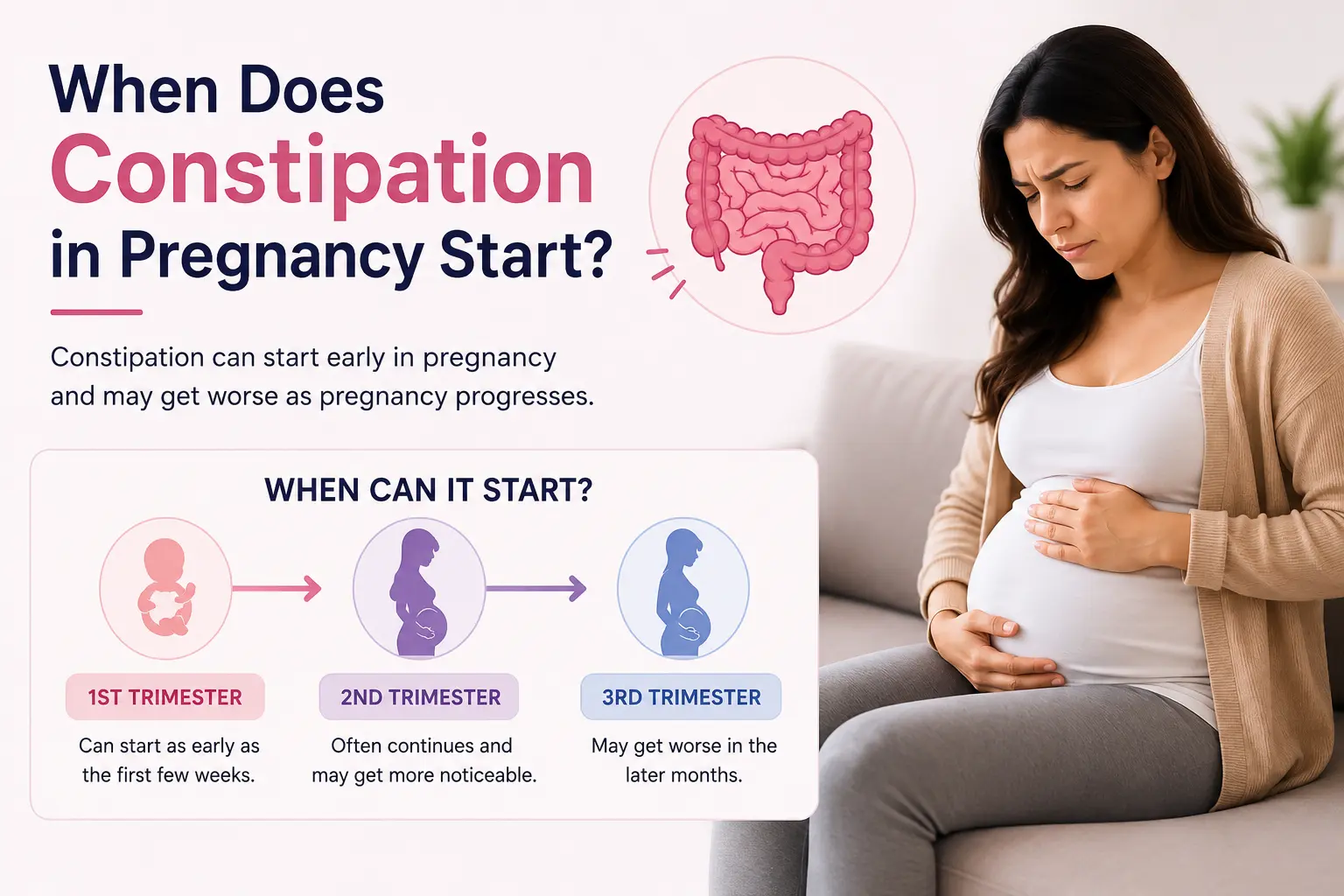
Constipation in pregnancy can start as early as the 2nd to 3rd month (around weeks 6–12), mainly due to rising progesterone levels. It often continues throughout pregnancy and may become more noticeable in the second and third trimesters as the growing uterus puts pressure on the intestines.
For over two decades, Miracles Healthcare has been a familiar name for family-centred maternity care in Gurgaon. Backed by a team of 150+ specialists and a strong focus on safe, personalised pregnancy journeys, our gynaecologists guide expecting mothers through every common discomfort, including constipation, with practical, evidence-based advice.
When Does Constipation Start in Pregnancy?
Constipation can begin at different stages for different women, but here's a general timeline:
-
Early Pregnancy (Weeks 6–12): Many women experience constipation as one of the earliest pregnancy symptoms, even before they confirm pregnancy.
-
Second Trimester (Weeks 13–26): Hormonal changes continue, and constipation may worsen due to iron supplements.
-
Third Trimester (Weeks 27–40): The growing baby presses against the intestines, slowing digestion further.
In short, constipation can start as early as 4–6 weeks into pregnancy and may persist on and off until delivery.
Why Does Constipation Happen During Pregnancy?
Several factors contribute to constipation during pregnancy:
1. Rise in Progesterone Hormone
Progesterone relaxes the muscles in your body, including those in the digestive tract. This slows down digestion, allowing more water to be absorbed from food, which makes stools harder.
2. Iron and Calcium Supplements
Prenatal vitamins are essential, but iron supplements can cause hard stools and bloating, making constipation worse.
3. Growing Uterus
As your baby grows, the uterus puts pressure on the rectum and intestines, slowing bowel movements.
4. Reduced Physical Activity
Many women reduce exercise during pregnancy, which can also slow digestion.
5. Low Fibre and Water Intake
Diet plays a big role. Low water intake, processed foods, and a lack of fibre can trigger constipation.
6. Stress and Anxiety
Pregnancy can be emotionally overwhelming, and stress can affect gut movement.
Common Symptoms of Constipation in Pregnancy
You may be experiencing pregnancy-related constipation if you notice:
-
Fewer than 3 bowel movements per week
-
Hard, dry, or lumpy stools
-
Straining while passing stools
-
Feeling of incomplete bowel emptying
-
Bloating and abdominal discomfort
-
Gas and acidity
-
Loss of appetite.
Is Constipation in Early Pregnancy a Sign of Pregnancy?
Yes, constipation is often one of the early signs of pregnancy, alongside nausea, fatigue, and breast tenderness. It usually appears around the time of a missed period due to rising hormone levels.
However, constipation alone is not a confirmed sign of pregnancy. A urine test or blood test, followed by an ultrasound, is needed for confirmation.
How Long Does Constipation Last in Pregnancy?
For many women, constipation continues on and off throughout pregnancy. It may ease in some weeks and return in others. After delivery, it usually settles within a few weeks, although postpartum constipation is also common.
How to Get Relief from Constipation During Pregnancy
The good news is that pregnancy constipation can be managed safely with simple lifestyle changes.
1. Increase Your Fibre Intake
Add these fibre-rich foods to your daily diet:
-
Whole grains (oats, brown rice, whole wheat)
-
Fresh fruits (apple, pear, papaya, only if ripe and approved, guava)
-
Leafy greens and vegetables
-
Pulses and legumes
-
Flaxseeds and chia seeds
2. Drink Plenty of Water
Aim for 8–12 glasses of water daily. Warm water in the morning can help stimulate bowel movements.
3. Stay Physically Active
Gentle activities such as walking, prenatal yoga, and stretching help keep your digestive system moving.
4. Eat Smaller, Frequent Meals
Large meals can strain digestion. Smaller, more frequent meals are easier on your stomach.
5. Don't Ignore the Urge
Going to the toilet as soon as you feel the urge prevents stools from becoming harder.
6. Discuss Your Iron Supplements
If iron is worsening your constipation, your gynaecologist may suggest a different formulation or adjust the dosage.
7. Try Natural Remedies (With Doctor's Approval)
-
Soaked raisins or prunes
-
A spoon of ghee in warm milk at night
-
Stewed apples or pears
-
Isabgol (psyllium husk), only if recommended by your doctor.
Foods to Avoid for Constipation Relief
Limit or avoid these foods that may worsen constipation:
-
Processed and fried foods
-
White bread, maida, and refined flour items
-
Excess dairy products
-
Bananas (in some cases)
-
Caffeine and aerated drinks
-
Spicy and oily food.
When to See a Doctor for Pregnancy Constipation
Mild constipation is normal, but consult your gynaecologist if you experience:
-
Severe abdominal pain or cramping
-
Blood in stools
-
Constipation lasting more than a week
-
Painful piles or haemorrhoids
-
Alternating constipation and diarrhoea
-
Vomiting along with constipation
Untreated constipation can lead to haemorrhoids, anal fissures, and unnecessary discomfort during pregnancy.
Quick Summary: Constipation in Pregnancy
|
Aspect |
Details |
|
When it starts |
As early as 6–12 weeks |
|
Main cause |
Rise in progesterone hormone |
|
Common triggers |
Iron supplements, low fibre, low water intake |
|
Duration |
On and off throughout pregnancy |
|
Best relief |
Fibre, water, exercise, doctor-approved remedies |
|
When to consult |
Severe pain, bleeding, or persistent symptoms |
Why Choose Miracles Healthcare for Your Pregnancy Care?
Miracles Healthcare is your neighbourhood family hospital in Gurgaon, trusted by over 7 lakh patients since 2002. We provide complete maternity care, including nutrition counselling and management of common pregnancy concerns like constipation, acidity, and nausea.
What makes us different:
-
25,000+ successful baby deliveries
-
150+ specialist doctors across departments
-
NABH-accredited maternity centres for safety and quality
-
Level III NICU with 24x7 neonatologists
-
In-house dieticians and lactation counsellors
-
Dedicated PROs for personalised, end-to-end pregnancy care
-
Highest Google rating of 4.9 for patient satisfaction
We proudly serve families from Huda City Centre, Cyber City, Palam Vihar, Manesar, Sohna, and Old Gurgaon.
Book a Consultation with Our Gynaecology Experts
Struggling with pregnancy discomforts? Don't suffer in silence. Speak to our gynaecologists at Miracles Healthcare for safe, personalised guidance.
Call: 0124-4797600
WhatsApp / Mobile: 98209-65000
Miracles Apollo Cradle Hospital SCO 1, 2 & 3, Delhi Road, Sector 14, Gurugram, Haryana 122007 Baby Delivery, High-Risk Pregnancy Care, Level III NICU, Gynae & Multi-Specialty Surgeries
0124-4797600
Miracles Mediclinic SCO 1, 2 & 3, Sector 14, Gurugram, Haryana 122007 Consultations, Diagnostics, Lab Tests, Health Checks
0124-4797600
Miracles Mediclinic SCO 68-69, More Market, Block B, Sector 56, Gurugram, Haryana 122011 Consultations, Diagnostics, Lab Tests, Health Checks, MRI & CT Scans
906-906-8800
Miracles Apollo Cradle / Spectra Plot No. 45, Vatika India Next, Sector 82, Gurugram, Haryana 122012 Baby Delivery, High-Risk Pregnancy Care, Level III NICU, Multi-Specialty Surgeries, Diagnostics, MRI & CT Scans
0124-352-8282
Written and Verified by:

Frequently Asked Questions
Constipation can start as early as 6–12 weeks of pregnancy due to rising progesterone levels. It may continue on and off throughout pregnancy.
Yes, constipation is one of the early signs of pregnancy, but it should be confirmed with a urine test, blood test, or ultrasound.
Eat fibre-rich foods, drink plenty of water, stay active, and try natural remedies like soaked raisins or prunes after consulting your doctor.
Yes, iron supplements are a common cause of constipation. Your gynaecologist may adjust the dose or suggest an alternative.
Mild constipation is not harmful, but severe or untreated constipation can cause discomfort, haemorrhoids, and reduced nutrient absorption.
Pears, apples, guavas, oranges, and prunes are excellent fibre sources to ease constipation safely.
You can visit Miracles Healthcare in Sector 14, Gurgaon, for expert maternity care, nutritional guidance, and management of pregnancy-related concerns.






Was the information useful?
0 0