


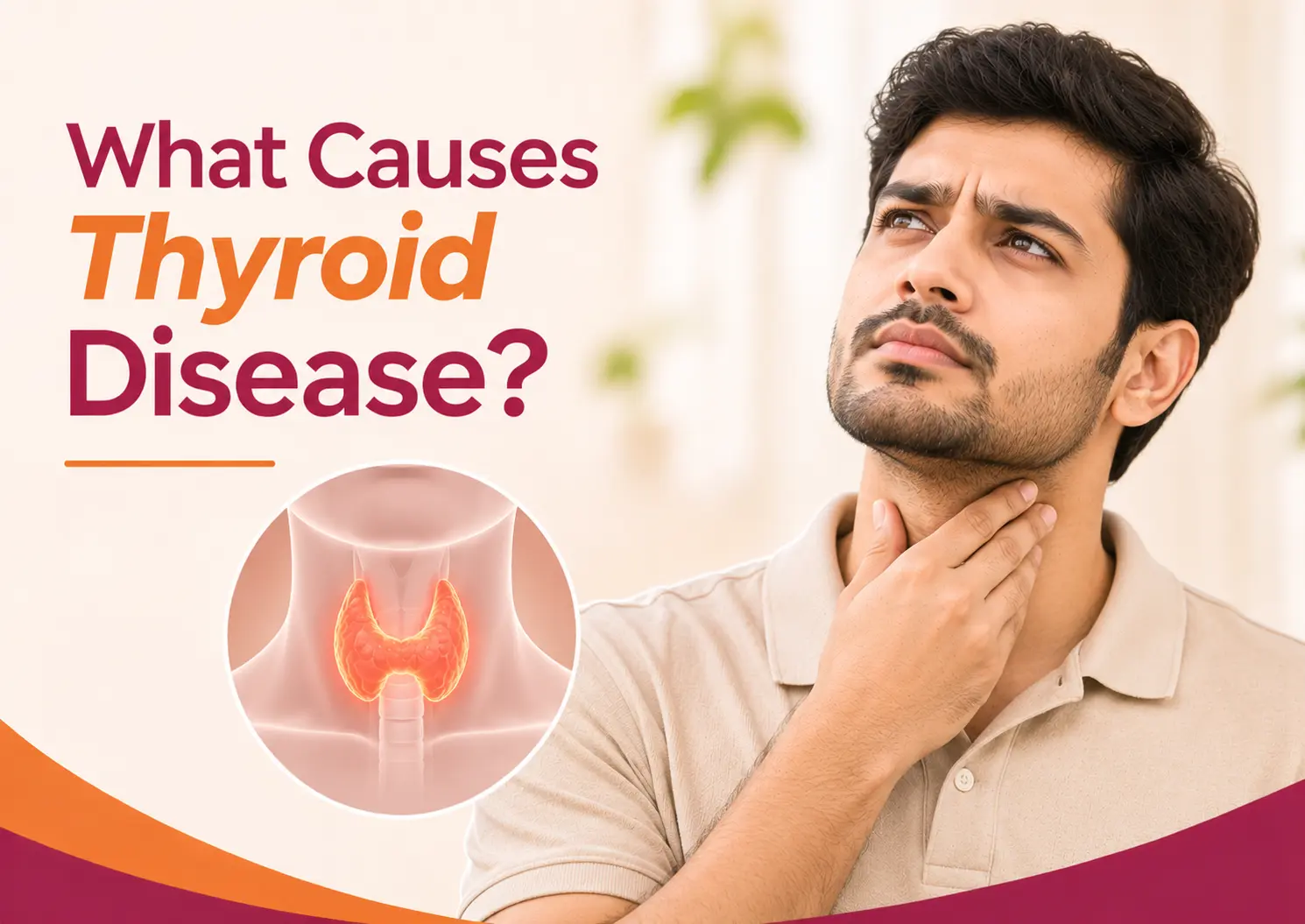
What Are the Reasons for Thyroid Disease

Summary
-
Thyroid disease may develop due to autoimmune disorders such as Hashimoto’s thyroiditis and Graves’ disease.
-
Both iodine deficiency and excessive iodine intake can affect thyroid function.
-
Family history and genetic susceptibility may increase the risk of thyroid disorders.
-
Pregnancy-related hormonal changes and postpartum thyroiditis may contribute to thyroid dysfunction.
-
Inflammation of the thyroid gland can temporarily or persistently affect hormone production.
-
Certain medications, including amiodarone and lithium, may interfere with thyroid function.
-
Previous thyroid surgery, radioactive iodine treatment, or neck radiation may reduce thyroid hormone production.
-
Thyroid nodules and goitre may affect the gland’s structure and, in some cases, hormone production.
-
Rarely, pituitary gland or hypothalamic disorders can disrupt thyroid hormone regulation.
-
Other autoimmune conditions, such as type 1 diabetes and coeliac disease, may increase the risk of autoimmune thyroid disorders.
-
Persistent fatigue, unexplained weight changes, sensitivity to heat or cold, and neck swelling may require medical evaluation.
-
Identifying the underlying cause through appropriate medical assessment and thyroid function tests helps guide suitable treatment and management.
-
Miracles Healthcare, Gurgaon, has a team of ENT specialists to evaluate relevant symptoms and guide patients regarding appropriate investigations and further care. To book a consultation, you can call 906-906-8800.
Thyroid disease can develop when the immune system, iodine intake, hormonal balance, or other medical factors affect the thyroid gland. The thyroid is a small, butterfly-shaped gland located at the front of the neck. It produces hormones that help regulate metabolism, energy levels, body temperature, and heart rate.
Understanding the causes of thyroid disease matters because different causes can affect thyroid function in different ways. While some thyroid disorders develop due to autoimmune conditions, others may be associated with iodine imbalance, family history, certain medications, or previous medical treatments.
Let’s understand the thyroid disease reason and the factors that may contribute to its development.
What is the main cause of thyroid problems?
1. Autoimmune Disorders
Autoimmune disorders are among the most common reasons for thyroid disease. These conditions occur when the immune system mistakenly attacks the body’s own tissues, affecting the thyroid gland’s ability to function normally.
Two major autoimmune thyroid conditions are:
-
Hashimoto’s thyroiditis: In this condition, the immune system attacks the thyroid gland, slowly reducing its ability to produce sufficient thyroid hormones. It is a common cause of hypothyroidism, or an underactive thyroid.
-
Graves’ disease: This condition occurs when antibodies stimulate the thyroid gland to produce excessive hormones, resulting in hyperthyroidism, or an overactive thyroid.
The exact reason why these autoimmune reactions develop is not fully understood. Genetic susceptibility and environmental factors may contribute to their development.
According to Dr. Priyanjana Acharyya, an ENT specialist in Gurgaon at Miracles Healthcare, understanding the underlying cause is an important part of thyroid evaluation. Autoimmune thyroid disorders may require regular monitoring because hormone levels can change over time.
2. Iodine Deficiency or Excess Iodine Intake
Iodine is an essential mineral required by the thyroid gland to produce thyroid hormones. Both inadequate and excessive iodine intake can contribute to thyroid dysfunction.
Iodine deficiency can prevent the thyroid from producing enough hormones and may cause the gland to enlarge, resulting in a condition called goitre.
On the other hand, excessive iodine intake may trigger or worsen hypothyroidism or hyperthyroidism in susceptible individuals. This can occur with certain supplements, iodine-containing medications, or products containing very high amounts of iodine.
Using iodised salt appropriately can help meet dietary iodine requirements. However, taking additional iodine supplements without medical advice is not recommended because excessive intake can also affect thyroid function.
Dr. Priyanjana Acharyya explains that iodine intake needs to be balanced, as both deficiency and excess may affect thyroid function. Supplements should only be taken when recommended by a qualified healthcare professional.
3. Family History and Genetic Factors
A family history of thyroid disease can increase the likelihood of developing certain thyroid conditions. This is particularly relevant to autoimmune disorders such as Hashimoto’s disease and Graves’ disease.
Genetic factors may influence how the immune system functions and how susceptible a person is to thyroid disorders. However, having a family history does not necessarily mean that someone will develop thyroid disease.
Other factors, including environmental influences, age, and existing medical conditions, may also contribute to the development of thyroid problems.
According to Dr. Acharyya, people with a family history of thyroid disorders should share this information during medical consultations. A healthcare professional can assess their individual risk and determine whether thyroid testing is appropriate.
4. Hormonal Changes During Pregnancy and After Childbirth
The causes of thyroid in females during pregnancy may include changes in hormonal requirements, pre-existing thyroid disorders, and autoimmune conditions. Pregnancy changes how the thyroid gland functions, as the body needs to produce sufficient thyroid hormones to support maternal health and the developing baby.
Some women develop postpartum thyroiditis, an inflammation of the thyroid gland that occurs after childbirth. It may initially cause a temporary increase in thyroid hormone levels, followed by a period of reduced hormone production.
The exact cause of postpartum thyroiditis is not completely understood, but autoimmune activity is believed to play an important role.
Women with a history of thyroid disorders or autoimmune conditions may benefit from discussing thyroid monitoring with their healthcare professional during pregnancy planning, pregnancy, and after delivery.
5. Inflammation of the Thyroid Gland
Inflammation of the thyroid gland, known as thyroiditis, is another reason for thyroid dysfunction. It can affect how thyroid hormones are released and produced.
Different forms of thyroiditis include:
-
Subacute thyroiditis: Often associated with a painful or tender thyroid gland and sometimes occurring after a viral illness.
-
Painless thyroiditis: May occur due to autoimmune activity without significant neck pain.
-
Postpartum thyroiditis: Develops in some women after childbirth.
-
Drug-induced thyroiditis: Certain medications may cause thyroid inflammation or interfere with thyroid function.
In some cases, inflammation causes stored thyroid hormones to enter the bloodstream, temporarily increasing hormone levels. As the condition progresses, hormone levels may decrease.
The effect depends on the type of thyroiditis and the individual’s health. Some cases resolve over time, while others require medical monitoring or treatment.
6. Certain Medications
Some medicines can interfere with thyroid hormone production, release, or regulation. Depending on the medication and individual risk factors, this may lead to an underactive or overactive thyroid.
For Example
-
Amiodarone: A medicine used to treat certain heart rhythm problems that may affect thyroid function because of its high iodine content.
-
Lithium: A medicine used for certain mental health conditions that can interfere with thyroid hormone production.
-
Certain cancer treatments: Some immunotherapies and targeted therapies may cause thyroid inflammation or dysfunction.
-
Iodine-containing medicines: These may affect thyroid function in susceptible individuals.
Not everyone taking these medicines develops thyroid disease. The risk depends on factors such as dosage, duration of treatment, and pre-existing thyroid conditions.
Prescribed medicines should not be stopped or changed without consulting the treating doctor.
7. Previous Thyroid Surgery or Radiation Treatment
Medical treatments involving the thyroid gland can sometimes lead to changes in hormone production.
For example, thyroid surgery that removes part or all of the gland may reduce its ability to produce sufficient hormones. Radioactive iodine treatment, which is used for certain thyroid conditions, may also lead to hypothyroidism.
Radiation therapy involving the neck can damage thyroid tissue in some cases, increasing the risk of developing an underactive thyroid later.
People who have undergone these treatments may require long-term monitoring of thyroid function, depending on the procedure and their medical history.
Dr. Priyanjana Acharyya highlights that a history of thyroid surgery, radioactive iodine treatment, or neck radiation is relevant when assessing thyroid health. Sharing previous treatment details can help the doctor plan appropriate follow-up.
8. Thyroid Nodules and Goitre
Thyroid nodules are lumps that develop within the thyroid gland, while goitre refers to enlargement of the gland. Both can occur for several reasons, including iodine imbalance, autoimmune conditions, and changes in thyroid tissue.
Most thyroid nodules are noncancerous, and many do not affect hormone production. However, some nodules can produce excessive thyroid hormones, contributing to hyperthyroidism.
Goitre may develop when the thyroid gland responds to changes in hormone requirements or stimulation. Its presence does not automatically indicate that thyroid hormone levels are abnormal.
A healthcare professional may recommend thyroid blood tests, an ultrasound, or other investigations to determine the underlying cause.
9. Disorders Affecting the Pituitary Gland
The pituitary gland, located at the base of the brain, produces thyroid-stimulating hormone (TSH). This hormone signals the thyroid gland to produce thyroid hormones.
In rare cases, disorders affecting the pituitary gland or hypothalamus can disrupt this process. As a result, the thyroid may not receive the signals required to maintain normal hormone production.
This can lead to a form of hypothyroidism known as central hypothyroidism. Unlike the more common forms of thyroid disease, which originate in the thyroid gland itself, this condition results from problems with the body’s hormone-regulating system.
Additional blood tests and specialist assessment may be necessary to identify this cause.
10. Other Autoimmune Conditions and Associated Health Factors
People with certain autoimmune conditions may have a greater likelihood of developing autoimmune thyroid disease. Examples include type 1 diabetes and coeliac disease.
This association occurs because autoimmune conditions can share underlying genetic and immune-system risk factors. However, having another autoimmune condition does not automatically mean a person will develop thyroid disease.
Other factors, including age, previous thyroid problems, and certain medical treatments, may also influence an individual’s risk.
When Should You Consult a Doctor?
Consider consulting an ENT doctor near you if you experience any of the following:
-
Persistent fatigue or unexplained changes in weight.
-
Rapid or irregular heartbeat.
-
Unusual sensitivity to heat or cold.
-
Swelling or a lump at the front of your neck.
-
Symptoms that persist or interfere with your daily activities.
Seek urgent medical care if you experience severe breathing difficulty, chest pain, fainting, or a sustained rapid or irregular heartbeat accompanied by significant symptoms.
Early medical assessment can help identify the underlying cause and determine whether thyroid function test or further treatment are needed.
Get Expert Thyroid Care and Guidance in Gurgaon
The reasons for thyroid disease vary from person to person and may include autoimmune disorders, iodine imbalance, genetic factors, thyroid inflammation, hormonal changes, certain medications, or previous thyroid treatments. Identifying the underlying cause is important for determining the appropriate evaluation and management approach.
If you are experiencing symptoms that may be associated with a thyroid disorder, consider consulting a qualified healthcare professional for an assessment. At Miracles Healthcare, Gurgaon, a team of ENT doctors can evaluate relevant symptoms and advise whether thyroid function tests or further investigations may be needed.
To book a consultation with a specialist at Miracles Healthcare, call 906-906-8800 to discuss your symptoms, understand your test results, and explore appropriate management options based on your individual medical needs.
Written and Verified by:

Frequently Asked Questions
Thyroid disorders can be managed with appropriate medication, a balanced diet, and regular monitoring of thyroid hormone levels. Consult a healthcare professional for a treatment plan based on your condition.
Hypothyroidism symptoms can often improve with prescribed thyroid hormone replacement therapy, such as levothyroxine. Regular follow-ups help ensure the dosage is appropriate for your needs.
A balanced diet containing adequate protein, fruits, vegetables, whole grains, and iodine-rich foods in appropriate amounts can support overall health. No specific diet can cure hypothyroidism.
There is no universal list of foods to avoid for thyroid disease. Limit excessive iodine supplements and highly processed foods, and discuss soy foods or high-fibre meals with your doctor if they affect your thyroid medication absorption.
Early signs may include fatigue, increased sensitivity to cold, constipation, dry skin, unexplained weight gain, and difficulty concentrating. Symptoms can develop gradually and vary between individuals.
Water and unsweetened drinks, such as herbal tea, can support hydration and overall health. No specific drink treats thyroid disease, and thyroid medication should be taken as directed by your doctor.




Was the information useful?
0 0