


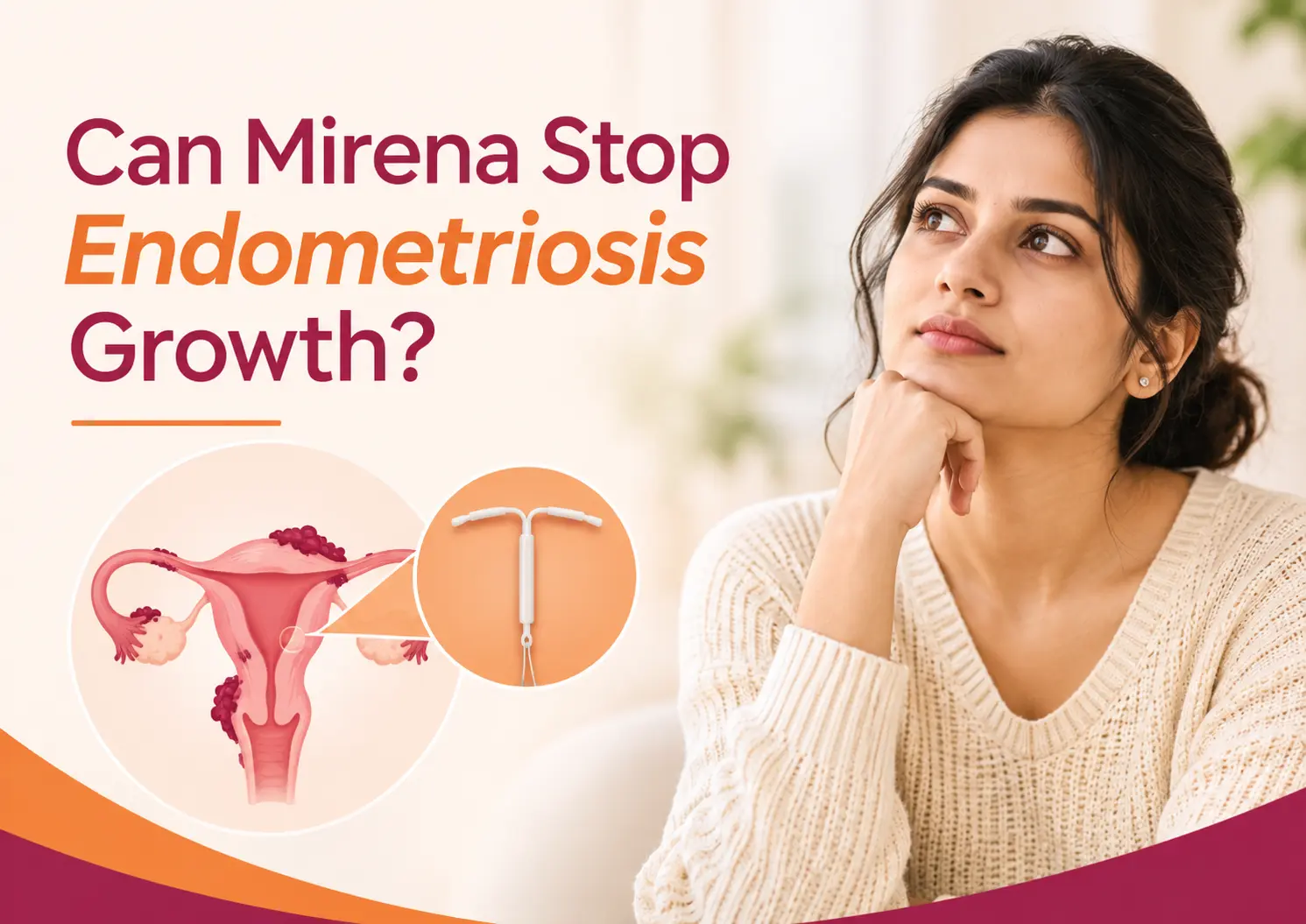
Does Mirena Stop Endometriosis Growth?

- What is Mirena?
- Does Mirena Stop Endometriosis From Growing?
- How Does Mirena Help With Endometriosis?
- Can Endometriosis Get Worse While Using Mirena?
- How Long Does Mirena Take to Help Endometriosis Symptoms?
- What are the Limitations of Mirena for Endometriosis?
- What are the Possible Side Effects of Mirena?
- What are the Alternatives to Mirena for Endometriosis?
- When Should You Consult a Gynaecologist?
- Conclusion
Summary
-
Mirena is a hormonal intrauterine system that releases levonorgestrel and may help manage endometriosis-associated pain and menstrual bleeding.
-
Mirena does not guarantee that endometriosis lesions will stop growing, shrink, or disappear.
-
Mirena for endometriosis may help reduce painful periods and heavy menstrual bleeding in selected patients.
-
The effectiveness of Mirena in endometriosis depends on symptom severity, disease characteristics, and individual response to hormonal treatment.
-
Menstrual bleeding may become lighter or stop completely, but this does not mean endometriosis has been cured.
-
Endometriosis symptoms may persist or worsen despite Mirena, requiring further medical assessment.
-
Possible side effects include irregular bleeding, cramping, headaches, breast tenderness, and acne. Rare complications include device expulsion, uterine perforation, and pelvic infection.
-
Alternative treatments include oral progestins, combined hormonal contraceptives, GnRH-based medicines, pain management, and laparoscopic surgery, depending on individual needs.
-
Mirena is a contraceptive method while in place and is not intended to improve fertility. Patients planning pregnancy should discuss alternative management options with their specialist.
-
Consult a gynaecologist near you if you experience severe period pain, persistent pelvic discomfort, or worsening symptoms despite treatment.
-
Miracles Healthcare has a team of 50+ female gynae doctors to provide you with personalized guidance to help you understand your treatment options and manage endometriosis according to your individual needs.
Endometriosis is a chronic gynaecological condition in which tissue similar to the lining of the uterus grows outside the uterus. It can cause painful periods, persistent pelvic pain, discomfort during intercourse, and fertility-related concerns. Hormonal treatments such as Mirena may help manage some of these symptoms. However, an important question remains: does Mirena stop endometriosis growth?
Understanding the relationship between Mirena and endometriosis is important because Mirena may help reduce endometriosis-associated pain and menstrual bleeding, but it does not guarantee that endometriosis lesions will stop growing, shrink, or disappear. Its effectiveness varies depending on individual symptoms, disease characteristics, and response to hormonal treatment.
Understanding how Mirena works, its benefits, and its limitations can help you make informed decisions about managing endometriosis.
What is Mirena?
Mirena is a hormonal intrauterine system (IUS) placed inside the uterus by a trained healthcare professional. It releases levonorgestrel, a type of progestin that acts primarily within the uterus.
Mirena is commonly used for contraception and heavy menstrual bleeding. It may also be considered by healthcare professionals for managing endometriosis-associated pain in selected patients.
The hormone released by Mirena helps thin the uterine lining and reduce menstrual bleeding. Its hormonal effects may help relieve period-related symptoms, although it does not directly treat every endometriosis lesion located outside the uterus.
Does Mirena Stop Endometriosis From Growing?
Mirena may help control endometriosis symptoms, but evidence does not establish that it reliably stops the growth or progression of all endometriosis lesions. Mirena in endometriosis is primarily considered for managing symptoms such as pelvic pain and painful periods, rather than as a guaranteed way to prevent disease progression.
Endometriosis is a complex condition influenced by hormonal activity, inflammation, and other biological factors. Progestin-based treatments may help reduce pain and menstrual symptoms in some individuals. However, symptom improvement does not necessarily mean that the underlying lesions have disappeared.
According to Dr. Sadhna Sharma, Senior Gynaecologist in Gurgaon at Miracles Healthcare, “Mirena may help manage endometriosis-associated pain, but symptom relief does not necessarily mean that existing lesions have stopped growing or disappeared. Treatment decisions should be based on the individual’s symptoms, medical history, and reproductive goals.”
The effectiveness of Mirena for endometriosis may depend on several factors, including:
-
The location and extent of endometriosis.
-
The severity and pattern of pelvic pain.
-
Whether symptoms are primarily related to menstruation.
-
The presence of deep endometriosis, ovarian endometriomas, or pelvic adhesions.
-
Individual response to hormonal treatment.
Some people experience substantial relief while using Mirena, whereas others continue to have pain or require additional treatment. Existing lesions may persist even when menstrual bleeding becomes very light or stops completely.
Therefore, Mirena in endometriosis should be considered a potential option for symptom management rather than a guaranteed method of preventing endometriosis growth.
How Does Mirena Help With Endometriosis?
Mirena may offer several benefits for people experiencing endometriosis-associated symptoms.
1. May Reduce Menstrual Pain
Painful periods are a common symptom of endometriosis. By reducing menstrual bleeding and altering the hormonal environment within the uterus, Mirena may help decrease period-related pelvic pain.
However, pain caused by deep lesions, adhesions, or other pelvic conditions may continue despite treatment.
Dr. Sadhna Sharma explains that hormonal treatments can help some patients manage painful periods and other endometriosis-related symptoms. However, the response varies, and persistent pelvic pain may require further evaluation to determine whether additional treatment is needed.
2. May Reduce Heavy Menstrual Bleeding
Some people with endometriosis experience heavy menstrual bleeding. Mirena can reduce menstrual blood loss and may help improve symptoms associated with heavy periods. However, heavy bleeding can have several causes. Persistent or unusually heavy bleeding should be evaluated by a healthcare professional to identify the underlying reason.
3. May Make Periods Lighter or Stop Them
Mirena can cause lighter periods and, in some individuals, periods may stop altogether. The absence of menstrual bleeding does not mean endometriosis has been cured. Lesions outside the uterus may remain, and symptoms can persist even when periods stop.
4. Provides Sustained Hormonal Treatment
Mirena releases levonorgestrel over an extended period, so it does not require daily medication. This may be convenient for people who are suitable candidates for a long-acting hormonal option. Its suitability and duration of use depend on the indication and current product guidance. A healthcare professional can explain whether this option is appropriate for your circumstances.
Can Endometriosis Get Worse While Using Mirena?
Yes. Endometriosis symptoms may persist or worsen while using Mirena because the treatment does not control the condition completely in every patient.
Possible reasons include:
-
Endometriosis lesions that do not respond adequately to hormonal treatment.
-
Deep endometriosis affecting nearby organs.
-
Adhesions or scar tissue that continue to cause pain.
-
Other conditions, such as adenomyosis or ovarian cysts.
-
Pelvic pain caused by a separate condition.
“Endometriosis symptoms should not be ignored simply because a patient is using hormonal treatment,” says Dr. Sadhna, “If pain persists or worsens, a gynaecological assessment can help identify the possible cause and guide further management.”
If symptoms continue or worsen, a gynaecologist may reassess the diagnosis, review the treatment response, and recommend further evaluation when appropriate.
Depending on the findings, alternative hormonal medicines, pain management, specialist assessment, or surgery may be considered. Do not stop or change your treatment without discussing the next steps with your healthcare professional.
How Long Does Mirena Take to Help Endometriosis Symptoms?
The time needed to experience symptom relief varies between individuals. Some people notice changes in menstrual bleeding or pain within the first few months, while others may require more time to assess the treatment’s effectiveness.
Irregular spotting and bleeding are common during the initial months after insertion. These changes may slowly improve as the body adjusts to the device.
If pain remains significant, interferes with daily activities, or becomes worse, consult a gynaecologist rather than waiting indefinitely for improvement.
What are the Limitations of Mirena for Endometriosis?
Although Mirena may help manage symptoms, it has important limitations.
-
It does not guarantee disease suppression: Existing lesions may remain despite improvement in pain.
-
It may not relieve every type of pelvic pain: Pain caused by deep endometriosis or adhesions may require additional management.
-
It does not cure endometriosis: Symptoms may return or persist, and further treatment may be necessary.
-
It is not a fertility treatment: Mirena prevents pregnancy while in place and is not intended to improve fertility.
Dr. Sadhna Sharma highlights the importance of considering reproductive goals when selecting an endometriosis treatment. Mirena is a contraceptive method while it is in place and is not intended to improve the chances of conception during its use. Patients planning pregnancy should discuss their fertility goals and endometriosis management options with their specialist.
Treatment decisions should account for symptom severity, medical history, previous treatments, and future pregnancy plans.
What are the Possible Side Effects of Mirena?
Mirena may cause side effects, although not everyone experiences them.
Possible side effects include:
-
Irregular bleeding or spotting, especially during the first few months.
-
Changes in menstrual bleeding patterns.
-
Pelvic discomfort or cramping after insertion.
-
Headaches, breast tenderness, or acne.
-
Ovarian cysts, which are often temporary but may require evaluation if symptomatic.
Rare complications include expulsion of the device, uterine perforation during insertion, and pelvic infection. Seek prompt medical attention if you experience severe or worsening pelvic pain, fever, unusual or foul-smelling vaginal discharge, very heavy bleeding, or a positive pregnancy test while using Mirena.
What are the Alternatives to Mirena for Endometriosis?
If Mirena does not provide sufficient relief, other treatment options may be considered according to the individual’s symptoms, medical history, and reproductive goals.
1. Oral Progestins
These hormonal medicines may help control endometriosis-associated pain by reducing hormonal stimulation. The appropriate medicine and dose depend on individual circumstances.
Dr. Sadhna Sharma explains that hormonal treatment for endometriosis should be selected according to the patient's symptoms, response to previous medicines, and overall health. If pain continues despite treatment, a medical review may help determine whether an alternative approach is needed.
2. Combined Hormonal Contraceptives
Combined hormonal contraceptives may help manage menstrual symptoms and endometriosis-associated pain in suitable patients. They are not appropriate for everyone, so medical assessment is necessary before use.
3. GnRH-Based Treatments
These medicines reduce ovarian hormone production and may be considered for selected patients whose symptoms are not adequately controlled by other treatments. They require medical supervision because of potential side effects.
According to Dr. Sadhna Sharma, treatment decisions should also consider the possible side effects of hormonal medicines and the patient's long-term management needs. Regular follow-up helps assess whether the chosen treatment is providing adequate symptom relief.
4. Pain Management
Appropriate pain-relief medicines and other supportive approaches may help manage discomfort. The choice of medication depends on the individual’s medical history and other health considerations.
5. Laparoscopic Surgery
Laparoscopic surgery may be considered when symptoms remain significant despite medical treatment or when specific complications require intervention. The decision depends on the location and extent of the disease, previous treatments, and reproductive goals.
Dr. Sadhna Sharma emphasises that endometriosis management should be individualised. The choice of treatment depends on pain severity, previous treatment response, the extent of the disease, and future pregnancy plans. Regular follow-up can help determine whether the current approach is providing adequate symptom relief.
When Should You Consult a Gynaecologist?
Consult a gynaecologist near you if you experience any of the following:
-
Severe period pain that interferes with daily activities.
-
Persistent pelvic discomfort during or between menstrual periods.
-
Pain during intercourse or discomfort that affects your quality of life.
-
Bowel or urinary symptoms that worsen around menstruation.
-
Worsening symptoms while using Mirena or inadequate relief from treatment.
-
Pregnancy planning concerns that require guidance on endometriosis management.
A gynaecology doctor may recommend the following based on your symptoms:
-
Review of your medical history and symptoms.
-
A physical examination, when appropriate.
-
Ultrasound or other investigations, if indicated.
Note: A normal ultrasound does not always rule out endometriosis, particularly superficial disease. Seeking medical assessment can help identify possible causes of symptoms and guide appropriate treatment.
Conclusion:
Mirena may help reduce endometriosis-associated pain and menstrual bleeding, but it cannot be relied upon to stop all endometriosis growth or eliminate existing lesions. Its primary benefit in this context is symptom management, and the results vary from person to person.
If symptoms persist despite treatment, consult the best gynaecologist in Gurgaon at Miracles Healthcare for further assessment, which may help determine whether another hormonal approach, additional investigation, or surgery is appropriate. Treatment should be individualised according to the extent of symptoms, medical history, and reproductive goals.
Written and Verified by:

Frequently Asked Questions
Mirena may help reduce endometriosis-associated pain and menstrual bleeding, but it does not guarantee that existing lesions will stop growing or disappear.
Hormonal treatments, including progestins and certain GnRH-based medicines, may help control endometriosis symptoms and hormonal activity. However, no treatment guarantees that the disease will stop progressing in every patient.
Possible disadvantages include irregular bleeding, cramping, headaches, acne, and breast tenderness. Rare complications include device expulsion, uterine perforation, and pelvic infection.
Mirena is generally used to help manage endometriosis-associated pain, but symptoms may persist or worsen in some patients. Worsening pain should be evaluated by a gynaecologist.
The duration of Mirena's use depends on the approved indication and individual treatment plan. Its effectiveness for endometriosis symptoms should be reviewed regularly with a gynaecologist.
Oestrogen can stimulate the growth and activity of endometriosis-like tissue. Endometriosis is a complex condition, however, and its development is not controlled by a single hormone alone.




Was the information useful?
0 0