


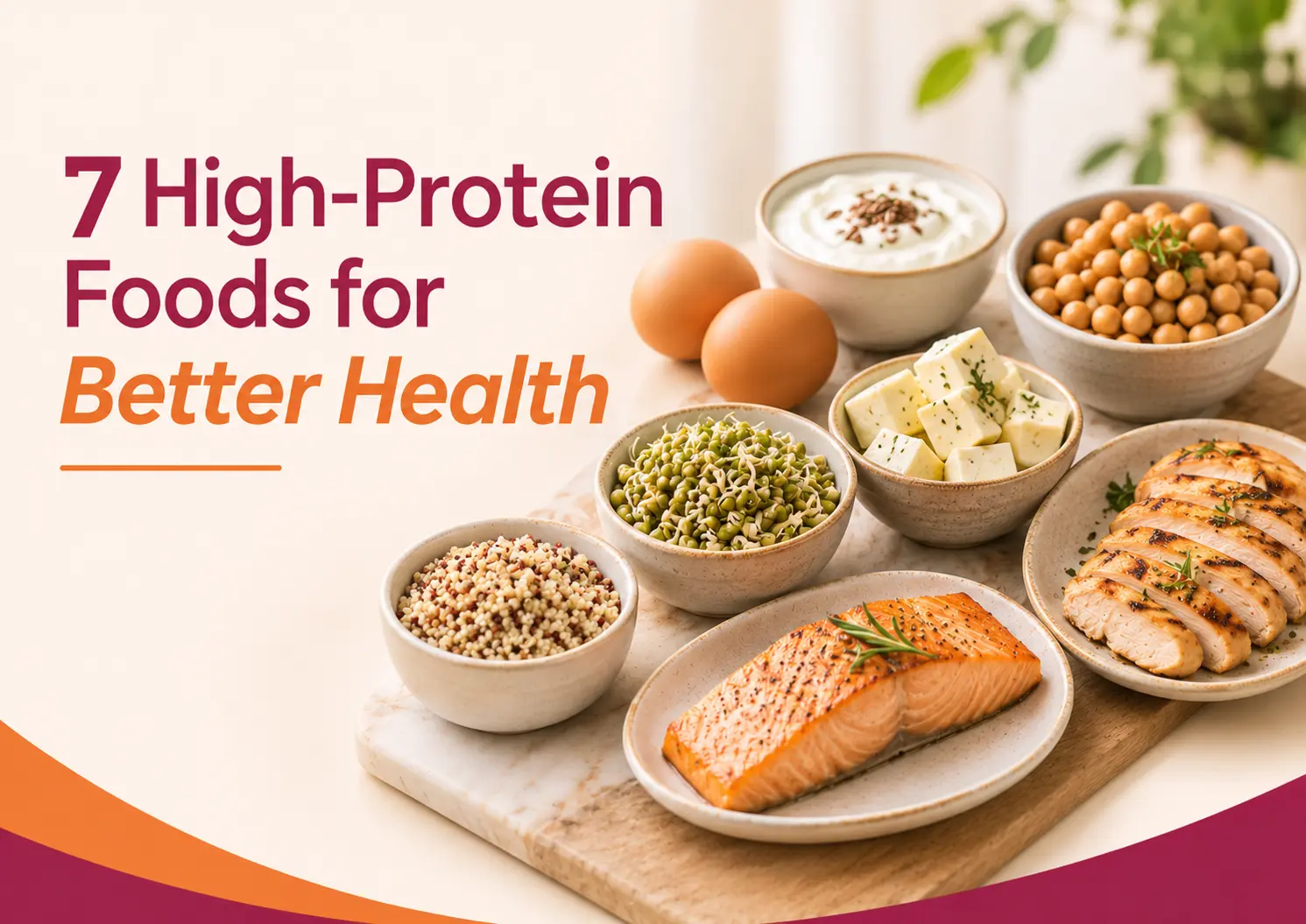
7 High-Protein Foods That May Support Overall Health Naturally

- 7 High-Protein Foods That May Support Overall Health Naturally
- What are the Benefits of Protein-Rich Foods?
- How Much Protein Does the Body Need Every Day?
- Simple Ways to Include More Protein in Your Daily Diet
- Are Protein Supplements Necessary for Everyone?
- Who Should Pay Particular Attention to Protein Intake?
- When Should You Consult a Doctor About Your Protein Intake?
- Conclusion
Summary
-
Protein is an essential nutrient that supports muscle maintenance, tissue repair, immune function, and overall health.
-
Eggs provide complete protein along with essential nutrients such as vitamin B12, selenium, and choline.
-
Lentils and pulses offer plant-based protein, dietary fibre, and important minerals.
-
Milk, curd, and paneer are valuable vegetarian protein sources that also provide calcium and other nutrients.
-
Soybeans and tofu provide complete plant-based protein and are suitable options for vegetarian and vegan diets.
-
Fish and chicken provide high-quality animal-based protein and essential amino acids.
-
Nuts and seeds offer protein, healthy fats, fibre, vitamins, and minerals.
-
Adequate protein intake depends on age, body weight, physical activity, and overall health.
-
Including protein-rich foods in breakfast, lunch, dinner, and snacks can help meet daily nutritional requirements.
-
Protein supplements are not necessary for everyone, as many people can meet their requirements through a balanced diet.
-
People with persistent muscle weakness, unexplained weight loss, or existing medical conditions should seek professional guidance.
-
Miracles Healthcare offers access to internal medicine doctors, dietitians and nutritionists for personalized nutritional guidance.
Protein is one of the essential nutrients the body needs to function properly. From maintaining muscle strength and supporting tissue repair to producing enzymes and hormones, protein contributes to several important processes that keep the body working efficiently. However, many people focus primarily on carbohydrates and fats while planning their meals and may not pay enough attention to their daily protein intake.
Including a variety of high-protein foods in your everyday diet can help support nutritional balance and overall well-being. Fortunately, getting enough protein does not necessarily require expensive supplements or complicated meal plans. Everyday foods such as lentils, eggs, milk, paneer, soybeans, nuts, and fish can provide valuable amounts of this essential nutrient.
The important thing is to choose suitable protein sources, maintain dietary variety, and consume them in appropriate quantities according to your body’s nutritional requirements.
Let’s look at seven high-protein foods that can become part of a balanced diet and support your overall health naturally.
7 High-Protein Foods That May Support Overall Health Naturally
Here are seven protein-rich foods to eat daily that can help improve the protein content of your meals.
1. Eggs
Eggs are among the most convenient and versatile high-protein foods. They contain all nine essential amino acids, making them a complete protein source. They also provide nutrients such as vitamin B12, selenium, and choline.
Protein in eggs supports muscle maintenance, tissue repair, and several essential functions in the body. The yolk contains important nutrients, while the egg white provides a significant proportion of the egg’s protein.
How to include eggs in your diet:
-
Have boiled eggs as part of breakfast.
-
Prepare a vegetable omelette.
-
Add boiled eggs to salads.
-
Include eggs in homemade sandwiches.
Eggs can be a useful addition to a balanced diet for people who consume animal-based foods.
2. Lentils and Pulses
Lentils and pulses are among the most accessible protein sources in Indian households. Foods such as moong dal, masoor dal, chana dal, urad dal, rajma, and chickpeas provide plant-based protein along with dietary fiber and important minerals.
One of their major advantages is that they can contribute to both protein and fibre intake. Fibre supports digestive health and helps maintain normal bowel function.
Combining pulses with cereals such as rice, wheat, or millets can also improve the overall amino acid profile of a meal. This makes traditional Indian combinations such as dal-chawal and rajma-chawal useful components of a varied diet.
How to include lentils and pulses in your diet:
-
Prepare different varieties of dal.
-
Include rajma or chole in lunch.
-
Add boiled chickpeas to salads.
-
Prepare moong dal chilla for breakfast.
-
Include sprouts as part of a balanced meal.
Dr. Saurabh Jindal, an internal medicine doctor in Gurgaon at Miracles Healthcare, says, “Protein intake should not be limited to expensive or specialised foods. Traditional Indian meals already offer several nutritious options, including lentils and pulses, that can contribute to daily protein requirements.”
3. Milk, Curd and Paneer
Milk and milk products are valuable sources of protein and provide other essential nutrients, including calcium and vitamin B12. They can be particularly useful for people looking for vegetarian protein options.
Milk contains two major types of protein: casein and whey. Both provide essential amino acids that contribute to the body’s protein requirements.
Curd is another convenient option that can be included in everyday meals. It provides protein and calcium, while some varieties also contain live cultures that support gut health.
Paneer is especially popular in Indian diets and can be used in several preparations. However, its calorie and fat content may vary depending on how it is prepared and the type of milk used.
How to include dairy products in your diet:
-
Drink a glass of milk as part of breakfast.
-
Include plain curd with lunch.
-
Prepare homemade paneer bhurji.
-
Add paneer cubes to vegetable dishes.
-
Use plain curd as a base for healthy dips.
People with lactose intolerance can discuss suitable alternatives, including lactose-free dairy products or fortified plant-based options.
4. Soybeans and Tofu
Soybeans are an important plant-based protein source. Unlike many other plant foods, soy provides all nine essential amino acids, making it a complete protein.
Soybeans also contain dietary fibre, unsaturated fats, and other beneficial plant compounds. Tofu, made from soybeans, is another convenient option for people following vegetarian or vegan diets.
For individuals who prefer plant-based meals, soy products can help add protein variety without relying entirely on dairy products.
How to include soy in your diet:
-
Add boiled soybeans to salads.
-
Prepare tofu stir-fry with vegetables.
-
Include tofu in homemade curries.
-
Use soy chunks in pulao or vegetable preparations.
-
Add soy-based foods to your weekly meal plan.
Dr. Saurabh Jindal says, “Vegetarian diets can provide adequate protein when they include a variety of foods. Soybeans, pulses, dairy products, nuts, and seeds can all contribute to a balanced nutritional intake.”
5. Fish
Fish is a nutrient-rich animal-based protein source. It provides essential amino acids required for muscle maintenance, tissue repair, and several other bodily functions.
Certain varieties of fish, particularly oily fish, also contain omega-3 fatty acids. These fatty acids play a role in normal heart and brain function.
Fish additionally provides nutrients such as vitamin D, vitamin B12, iodine, and selenium, depending on the variety.
Choosing fish as part of a balanced diet can provide nutritional variety, particularly for people who consume non-vegetarian foods.
How to include fish in your diet:
-
Prepare grilled or baked fish.
-
Include lightly cooked fish curry.
-
Add fish to homemade meals with vegetables.
-
Choose cooking methods that require less added oil.
It is advisable to select fresh, properly stored fish and follow safe cooking practices.
6. Chicken
Chicken is another popular high-protein food that provides all nine essential amino acids. Skinless chicken breast is generally considered a lean source of protein because it contains relatively little fat compared with some other cuts.
Protein from chicken contributes to muscle maintenance, tissue repair, and normal body functions. It can be particularly useful for individuals who need to include animal-based protein in their meals.
However, the nutritional value of a chicken-based meal depends on its preparation. Deep-fried chicken and heavily processed chicken products may contain additional fats, sodium, and other ingredients.
How to include chicken in your diet:
-
Prepare homemade grilled chicken.
-
Add boiled or grilled chicken to salads.
-
Include lightly cooked chicken curry.
-
Prepare chicken soup with vegetables.
-
Use skinless chicken in homemade wraps.
Choose fresh chicken and ensure it is cooked thoroughly to reduce the risk of foodborne infections.
7. Nuts and Seeds
Nuts and seeds are useful additions to a balanced diet. Although they are not as protein-dense as some pulses, dairy products, or animal-based foods, they provide protein along with healthy fats, fibre, vitamins, and minerals.
Almonds, peanuts, pistachios, pumpkin seeds, chia seeds, flaxseeds, and sesame seeds are examples of nutritious choices.
They also contain different micronutrients and plant compounds that contribute to overall dietary quality.
However, nuts and seeds are relatively calorie-dense, so portion sizes should be considered when including them in daily meals.
How to include nuts and seeds in your diet:
-
Eat a small portion of unsalted nuts as a snack.
-
Add pumpkin or sunflower seeds to salads.
-
Include chia seeds in curd or smoothies.
-
Sprinkle flaxseeds over breakfast preparations.
-
Use ground nuts in homemade chutneys.
Dr. Saurabh says, “Nuts and seeds offer more than just protein. They also provide healthy fats, fibre, and essential micronutrients. Including moderate portions as part of a varied diet can improve the overall nutritional quality of meals.”
What are the Benefits of Protein-Rich Foods?
Protein is an essential nutrient that plays an important role in maintaining overall health and supporting several vital functions in the body. It is made up of amino acids, which act as building blocks for muscles, tissues, enzymes, and certain hormones. While the body can produce some amino acids on its own, essential amino acids must be obtained through the foods we eat.
Understanding the protein-rich food benefits can help you make informed dietary choices and ensure your body receives the nutrients it needs. Including adequate amounts of protein-rich foods in your daily diet offers several health benefits:
-
Supports muscle strength and maintenance: Protein provides essential amino acids that help maintain muscle tissue, support muscle recovery, and preserve muscle strength.
-
Promotes tissue repair and recovery: It helps repair damaged tissues and supports the body’s natural recovery processes after injuries, illness, or physical activity.
-
Supports immune function: Protein is required to produce antibodies and other components that help the immune system function effectively.
-
Helps produce enzymes and hormones: Several enzymes and hormones depend on proteins for their formation and play important roles in digestion, metabolism, and other bodily processes.
-
Contributes to healthy growth and development: Adequate protein intake is particularly important during childhood, adolescence, pregnancy, and other stages when the body’s nutritional requirements increase.
-
Helps maintain nutritional balance: Protein-rich foods often provide additional nutrients such as iron, calcium, zinc, fibre, and healthy fats, depending on the food source.
Dr. Saurabh says, “Protein is not just important for building muscles; it is essential for several functions that keep the body healthy. Including adequate protein through a variety of natural food sources helps support muscle maintenance, tissue repair, and normal body functions.”
How Much Protein Does the Body Need Every Day?
The amount of protein your body needs each day depends on factors such as body weight, age, physical activity, and overall health. While a healthy adult generally requires around 0.83 grams of protein per kilogram of body weight daily, people with higher physical activity levels or specific nutritional needs may require more.
Here is a general guide to daily protein requirements:
-
Sedentary Adults: Approximately 0.83 grams per kilogram of body weight per day. For example, a person weighing 60 kg needs around 50 grams of protein daily.
-
Physically Active Adults: Approximately 1.2–1.6 grams per kilogram may be appropriate for people who exercise regularly, depending on the intensity and type of activity.
-
Strength Training Individuals: Around 1.4–2.0 grams per kilogram may help support muscle growth and recovery, depending on individual training goals.
-
Older Adults (60+ years): Approximately 1.0–1.2 grams per kilogram may help support muscle maintenance and reduce the risk of age-related muscle loss.
-
Pregnant Women: Protein requirements increase during pregnancy to support the growth and development of the baby. The recommended intake should be adjusted according to the stage of pregnancy and individual nutritional needs.
-
Breastfeeding Women: Additional protein is required to support milk production and maternal nutritional needs.
These values are general estimates and may vary depending on individual nutritional requirements. People with kidney disease or other medical conditions should consult a qualified dietitian or healthcare professional before increasing their protein intake. A balanced diet with adequate protein, carbohydrates, healthy fats, vitamins, and minerals is essential for maintaining overall health.
Simple Ways to Include More Protein in Your Daily Diet
Improving protein intake does not require completely changing your eating habits. Small adjustments to everyday meals can make a meaningful difference.
Here are some practical suggestions:
-
Start your day with protein: Include eggs, milk, curd, paneer, or moong dal chilla for breakfast.
-
Make lunch more balanced: Add dal, rajma, chickpeas, paneer, or chicken alongside vegetables and whole grains.
-
Choose nutritious snacks: Replace frequently consumed packaged snacks with roasted chana, unsalted nuts, or plain curd.
-
Include protein at dinner: Add tofu, paneer, lentils, eggs, or fish to your evening meal.
-
Maintain food variety: Rotate different vegetarian and non-vegetarian protein sources rather than depending on a single food.
-
Pay attention to portion sizes: Choose quantities according to your nutritional requirements and overall calorie needs.
Dr. Jindal says, “A healthy diet is not about focusing on one nutrient or following restrictive food trends. It is about making consistent food choices that provide the body with the nutrients it needs.”
Are Protein Supplements Necessary for Everyone?
Protein supplements are widely available and are often marketed for muscle development, fitness, and general wellness. However, they are not essential for everyone.
Many people can meet their protein requirements through a varied diet containing pulses, dairy products, soy, eggs, nuts, seeds, fish, and poultry.
Whether a supplement is required depends on an individual’s dietary intake, nutritional status, activity level, and health requirements. Unnecessary supplementation may add extra calories and ingredients without providing additional benefits.
People with kidney disease or other medical conditions affecting protein metabolism should seek medical or dietetic advice before increasing their protein intake or starting supplements.
Who Should Pay Particular Attention to Protein Intake?
Although protein is important throughout life, certain groups may have specific nutritional requirements.
-
Children and adolescents: Protein supports normal growth and development.
-
Older adults: Adequate protein intake is important for maintaining muscle mass and physical function.
-
Physically active individuals: Protein contributes to muscle repair and recovery after exercise.
-
Pregnant and breastfeeding women: Nutritional requirements increase during these stages, including the need for adequate protein.
-
People recovering from illness: Protein may be an important part of nutritional support during recovery, depending on the underlying condition.
People with chronic medical conditions should avoid making major dietary changes without professional guidance.
When Should You Consult a Doctor About Your Protein Intake?
While protein is essential for overall health, individual requirements may vary depending on age, lifestyle, and medical conditions. Consult a qualified general physician near you if you experience:
-
Persistent muscle weakness: Ongoing weakness or reduced muscle strength.
-
Unintentional weight loss: Losing weight without changes in diet or physical activity.
-
Poor recovery: Prolonged weakness after illness or injury.
-
Dietary restrictions: Difficulty meeting protein requirements through your regular diet.
-
Existing health conditions: Kidney or liver disorders that may require specific protein intake recommendations.
A healthcare professional can assess your nutritional needs and suggest suitable dietary changes to support your overall health.
Conclusion:
Protein plays an important role in maintaining overall health, supporting muscle strength, tissue repair, immune function, and other essential bodily processes. Including a variety of high-protein foods such as eggs, lentils, dairy products, soybeans, fish, chicken, nuts, and seeds can help meet your daily nutritional requirements.
Rather than relying on a single food or protein supplement, focus on a balanced diet, appropriate portion sizes, and diverse protein sources. Since protein requirements vary according to age, body weight, activity level, and health conditions, choosing the right foods and quantities is equally important.
At Miracles Healthcare, Gurgaon, our team of experienced general physician doctors, dietitians, and nutritionists can help you understand your nutritional needs and make informed dietary choices. Consult our specialists for personalised guidance on maintaining a balanced diet and supporting your overall health.
Written and Verified by:

Frequently Asked Questions
Include a variety of protein-rich foods such as eggs, milk, paneer, lentils, soybeans, fish, chicken, nuts, and seeds to meet your daily protein requirements.
No. Two eggs provide approximately 12–13 grams of protein, which is usually not enough to meet an adult's daily protein requirement.
There is no universally recognised scientific 3-3-3 protein rule. It may refer to a dietary approach involving three protein-focused meals, but its meaning varies.
Consume adequate protein according to your body weight, age, and activity level, and include a variety of protein sources in a balanced diet.
Protein can be consumed throughout the day. Including it in breakfast, lunch, and dinner helps distribute your protein intake across meals.
The kidneys are particularly important because they eliminate waste products from protein metabolism. Excessive protein intake may be a concern for people with existing kidney disease.






Was the information useful?
0 0