


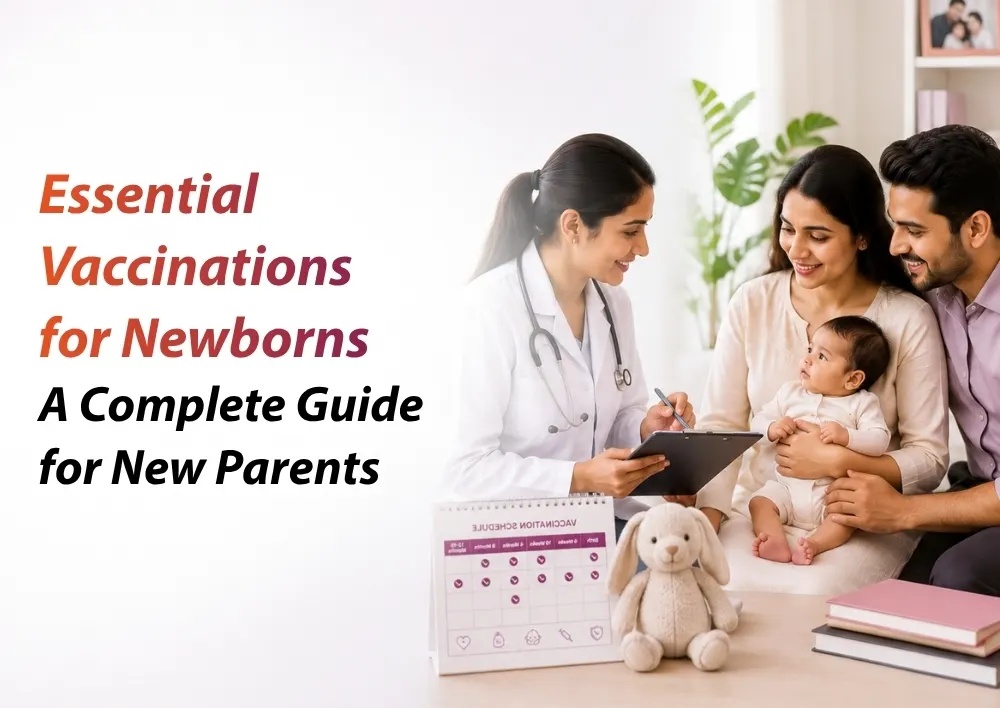
Essential Vaccinations for Newborns: A Complete Guide for New Parents

- Vaccinations for Newborns: Your Baby's First Shield Against Serious Diseases
- Why Are Vaccinations Important for Newborns?
- Essential Newborns Vaccinations at Birth
- What is a Vaccination Schedule for Babies?
- Age-Based Newborn Vaccination Schedule Chart
- When Should Parents Contact a Pediatric Doctor?
- Can Vaccines Be Delayed?
- Vaccination Day Tips by Miracles Healthcare Pediatricians
- Tips to Care for Your Child Post-Vaccination
- Common Myths About Newborn Vaccination
- Guided Immunization Care for Newborns and Children in Gurgaon
- Protect Your Child with Timely Vaccination
Summary
Vaccinations for Newborns: Your Baby's First Shield Against Serious Diseases
Your baby's first vaccine could be one of the most important gifts you give them. Long before they learn to walk or speak, vaccines start protecting them against serious diseases that can be life-threatening during the early months of life. Since a newborn's immune system is still developing, timely immunization plays a very important role in building strong immunity and reducing the risk of infections such as tuberculosis, hepatitis B, polio, and pneumonia.
It is completely natural for new parents to have questions about their baby's vaccination journey.
-
Which vaccines are given at birth?
-
Are they safe?
-
What if a dose is delayed?
Having the right medical guidance can make these decisions much easier. If you are in Gurgaon and looking for the best hospital for child vaccination, don't forget to count on Miracles Healthcare. Since 2002, this multispeciality hospital has been supporting families with every stage of newborn care. With a team of 10+ experienced pediatricians, dedicated vaccination services, and a Level III NICU for babies requiring advanced neonatal care, parents can access comprehensive care close to their home. Recognized among the Best Mother & Child Hospitals in Gurgaon and Faridabad by The Times of India, this hospital continues to help families give their little ones the healthiest possible start.
In this blog, you will learn about the essential vaccinations for newborns, the recommended immunization schedule, the diseases these vaccines help prevent, possible side effects, and why staying on track with timely vaccination is one of the most important steps you can take to protect your baby's future health.
So, keep reading!
Before exploring the essential vaccinations your newborn needs, let's first understand why timely immunization is so important during the early months of life.
Protect Your Baby with Timely Vaccinations
Give your newborn the best start in life with expert vaccination guidance and pediatric care.
Call Now: 1244797600 | WhatsApp: 9820965000
Why Are Vaccinations Important for Newborns?
A newborn receives some antibodies from the mother during pregnancy, but this protection is temporary. As these antibodies gradually decrease, babies become susceptible to infections.
According to Dr. Gaurav Mandhan, a senior child specialist in Gurgaon at Miracles Healthcare, "The first few months of life are when babies are most vulnerable to infections. Timely vaccination helps build early immunity and protects against many serious diseases before a child's immune system fully matures."
Vaccination helps protect babies from diseases such as
-
Tuberculosis
-
Hepatitis B
-
Polio
-
Diphtheria
-
Tetanus
-
Pertussis (Whooping Cough)
-
Pneumonia
-
Rotavirus diarrhea
-
Measles
-
Rubella
-
Mumps
Studies suggest that children who are not vaccinated are significantly more likely to develop severe infections, leading to hospitalization, permanent disability, or even death from largely preventable diseases.
Essential Newborns Vaccinations at Birth
As part of the newborn immunization schedule, doctors recommend a few basic vaccines before your baby leaves the hospital. These vaccines help protect against serious infections that can cause severe illness or long-term complications during infancy.
Dr. Gaurav says, "The birth dose vaccines are the first step in protecting a newborn against life-threatening infections. Receiving these vaccines on time helps provide early immunity when babies are most vulnerable."
1. BCG Vaccine
The BCG vaccine is the newborn's first vaccination, usually administered within the first 24 hours after birth or as early as possible.
Protects Against:
Severe forms of Tuberculosis (TB), especially TB meningitis and widespread tuberculosis.
Why is it important?
Tuberculosis is a serious bacterial infection that can affect the lungs, brain, and other organs. Although the BCG vaccine does not prevent every type of TB, it provides strong protection against the most severe forms of the disease in infants.
Common side effects include:
-
A small swelling at the injection site
-
Mild redness
-
A small scar after healing, which is completely normal
2. Hepatitis B Vaccine (Birth Dose)
The first dose should be given within 24 hours of birth, regardless of the mother's hepatitis B status.
Protects Against:
Hepatitis B virus (HBV) infection.
Why is it important?
A baby can develop hepatitis B during childbirth if the mother is infected. Without timely vaccination, infants have a high risk of developing chronic hepatitis B, which can lead to serious liver diseases later in life.
The birth dose helps prevent:
-
Chronic hepatitis B infection
-
Liver cirrhosis
-
Liver failure
-
Liver cancer
3. OPV (Oral Polio Vaccine) Zero Dose
The OPV zero dose is administered at birth as part of the national immunization program.
Protects Against:
Polio, a highly infectious viral disease that affects the nervous system.
Why is it important?
Polio can cause irreversible paralysis and lifelong disability. Although many countries have successfully reduced polio cases, vaccination remains essential to keep children protected and prevent the disease from returning.
The birth dose provides:
-
Early protection against poliovirus
-
A stronger immune response for future polio vaccine doses
-
Support in maintaining a polio-free community
A Quick Note for Parents
These birth vaccines are considered safe, effective, and are recommended by pediatricians worldwide. They are usually administered before your baby is discharged from the hospital, ensuring protection begins from the very first day of life. Keeping your baby's vaccination record updated and following the recommended immunization schedule is one of the simplest yet most important steps you can take for their long-term health.
Also read “Measles in Kids” to discover why timely immunization is essential for every child.
What is a Vaccination Schedule for Babies?
A vaccination schedule, also known as an immunization schedule, is a recommended timeline that outlines which vaccines your baby should receive and when. This schedule is carefully designed by medical experts to protect at the age when infants are most vulnerable to serious infections and when each vaccine works most effectively. Following the vaccination schedule on time helps build your baby's immunity, reduces the risk of life-threatening diseases, and ensures they receive the right protection at every stage of early childhood. If a vaccine is delayed, consult a pediatrician near you about a catch-up schedule rather than skipping the dose altogether.
Age-Based Newborn Vaccination Schedule Chart
|
Age |
Recommended Vaccine(s) |
Protects Against |
|
At Birth (within 24 hours) |
BCG |
Severe forms of Tuberculosis (TB) |
|
Hepatitis B (Birth Dose) |
Hepatitis B infection, chronic liver disease, liver cancer |
|
|
OPV Zero Dose |
Polio |
|
|
6 Weeks |
DTaP/DTP – 1st Dose |
Diphtheria, Tetanus, Pertussis (Whooping Cough) |
|
IPV/OPV – 1st Dose |
Polio |
|
|
Hib – 1st Dose |
Haemophilus influenzae type b infections (Meningitis, Pneumonia) |
|
|
Hepatitis B – 2nd Dose* |
Hepatitis B |
|
|
Rotavirus – 1st Dose |
Severe diarrhea caused by Rotavirus |
|
|
Pneumococcal Conjugate Vaccine (PCV) – 1st Dose |
Pneumonia, Meningitis, Bloodstream infections |
|
|
10 Weeks |
DTaP/DTP – 2nd Dose |
Diphtheria, Tetanus, Pertussis |
|
IPV/OPV – 2nd Dose |
Polio |
|
|
Hib – 2nd Dose |
Hib infections |
|
|
Rotavirus – 2nd Dose |
Rotavirus diarrhea |
|
|
PCV – 2nd Dose |
Pneumococcal diseases |
|
|
14 Weeks |
DTaP/DTP – 3rd Dose |
Diphtheria, Tetanus, Pertussis |
|
IPV/OPV – 3rd Dose |
Polio |
|
|
Hib – 3rd Dose |
Hib infections |
|
|
Rotavirus – 3rd Dose (if required by vaccine brand) |
Rotavirus diarrhea |
|
|
PCV – Booster/3rd Dose (as per schedule) |
Pneumococcal diseases |
|
|
6 Months |
Influenza (Flu) Vaccine (Annual, first dose) |
Seasonal Influenza |
|
Hepatitis B – 3rd Dose* |
Hepatitis B |
|
|
9 Months |
Measles-Rubella (MR) or MMR (as per pediatrician's recommendation) |
Measles, Mumps, Rubella |
|
9–12 Months |
Typhoid Conjugate Vaccine (TCV) |
Typhoid Fever |
|
12 Months |
MMR (if not given earlier/2nd Dose as recommended) |
Measles, Mumps, Rubella |
|
Hepatitis A – 1st Dose |
Hepatitis A |
|
|
Varicella (Chickenpox) Vaccine |
Chickenpox |
|
|
PCV Booster (if applicable) |
Pneumococcal diseases |
Note: The exact vaccination schedule may vary slightly depending on the national immunization program of the country and the pediatrician's recommendations. So, it is advisable to consult the child's specialist to ensure your baby receives vaccines according to the most appropriate schedule.
When Should Parents Contact a Pediatric Doctor?
Seek immediate medical attention if your baby experiences any of the following symptoms after vaccination
-
High fever
-
Difficulty breathing
-
Persistent crying for more than three hours
-
Severe swelling
-
Seizures
-
Poor feeding
-
Extreme drowsiness
-
Signs of an allergic reaction such as facial swelling or hives
Although these reactions are uncommon, prompt evaluation is important.
Can Vaccines Be Delayed?
This is a very common question asked by parents; sometimes illness or unavoidable circumstances may delay a vaccine. Regardless, delaying vaccinations without any medical advice can leave your baby unprotected against serious infections.
If, for any reason, a dose is missed, consult your pediatrician about a catch-up schedule. In most cases, the vaccination series does not need to be restarted.
Vaccination Day Tips by Miracles Healthcare Pediatricians
To help ensure a smooth vaccination visit
-
Carry your baby's vaccination record.
-
Feed your baby before the appointment if appropriate.
-
Dress your baby in loose-fitting clothes.
-
Inform the doctor about any allergic reactions.
-
Stay calm to help comfort your baby.
Tips to Care for Your Child Post-Vaccination
After your baby's vaccination
-
Continue breastfeeding or regular feeding.
-
Keep your baby hydrated.
-
Comfort your baby with cuddling and skin-to-skin contact.
-
Monitor for fever or swelling.
-
Follow your pediatrician's advice regarding fever medicines if needed.
-
Avoid applying home remedies or ointments to the injection site unless advised.
Common Myths About Newborn Vaccination
Here are some common myths around the vaccination for babies
-
Myth 1: Vaccines overload the baby's immune system.
Fact: Babies encounter thousands of germs daily. Vaccines expose them to only a tiny fraction of antigens and do not overwhelm their immune system.
-
Myth 2: Natural infection is always better than vaccination.
Fact: Natural infections can lead to severe complications, hospitalization, or death. Vaccination protects without exposing babies to these risks.
-
Myth 3: Vaccines cause autism.
Fact: Extensive scientific research has found no link between vaccines and autism.
-
Myth 4: Healthy babies don't need vaccines.
Fact: Even healthy newborns are at risk of contracting infectious diseases. Vaccination is important regardless of a baby's overall health.
Guided Immunization Care for Newborns and Children in Gurgaon
Vaccination is the most effective way to protect children from serious infectious diseases. While most healthy babies follow the routine immunization schedule, premature infants and newborns with medical conditions may need closer monitoring and individualized vaccination planning.
Serving families in Gurgaon since 2002, Miracles Healthcare is a trusted multispeciality hospital that provides vaccination services under experienced pediatricians. We ensure that every child is assessed before immunization and parents receive clear guidance on post-vaccination care.
For newborns requiring specialized medical support, 24x7 Neonatologist availability and a Level III NICU with advanced respiratory support, including CPAP, High-Flow Nasal Cannula (HFNC), and ventilator facilities, help ensure that even medically vulnerable babies can receive timely vaccinations when they are clinically ready.
With decades of experience caring for newborns, including extremely premature babies born as early as 25 weeks and weighing just 650–850 grams, the team is well-equipped to manage the immunization needs of both healthy and high-risk infants.
In addition to vaccination services, families have the advantage of multispecialty pediatric support under one roof. If a child has an underlying medical condition, allergies, developmental concerns, or requires consultation with other specialists, coordinated care is readily available, helping parents avoid multiple hospital visits.
To make healthcare more accessible for families, services are available across multiple centers in Gurgaon, Sector 14, Sector 56, and Sector 82, helping parents consult pediatricians, access specialist care, and manage their child’s healthcare needs closer to home without compromising continuity of care.
-
Miracles Apollo Cradle, Sector 14: SCO 1, 2 & 3, Delhi Road, Sector 14, Gurugram, Haryana
-
Miracles Mediclinic, Sector 56: SCO-68-69, More Market, Sector 56, Gurugram, Haryana
-
Miracles Apollo Cradle/Spectra, Sector 82: Plot No. 45, Vatika India Next, Sector 82, Gurugram, Haryana
Protect Your Child with Timely Vaccination
Every vaccine is a step toward a healthier future. Staying on schedule helps protect your child from serious infectious diseases and builds strong immunity from the very beginning.
If you are looking for a child specialist in Gurgaon, consult Dr. Gaurav Mandhan, an experienced pediatrician near you at Miracles Healthcare. Get expert guidance on the newborn vaccines schedule and ensure they receive the right vaccines at the right time. Book your appointment today and give your little one the best start to a healthy life.
Written and Verified by:

Dr. Gaurav Mandhan Exp: 11
DM (Neonatology), MD (Paediatrics), MRCPCH (UK), Fellow Neonatology (IAP)
Meet the Doctor
Frequently Asked Questions
Yes. Receiving multiple vaccines during a single visit is safe and recommended. It reduces the number of clinic visits while ensuring timely protection.
Vaccines such as MMR (Measles, Mumps, and Rubella), Varicella (Chickenpox), and Hepatitis A are not given at birth. They are administered later according to the recommended childhood immunization schedule.
In the answer to this question, Dr. Gaurav says, ” At the time of birth, newborns are typically recommended to receive BCG, Hepatitis B (birth dose), and the OPV zero dose (as per national immunization guidelines).”
No. Without vaccination, babies are at a much higher risk of developing serious and potentially life-threatening diseases such as polio, hepatitis B, tuberculosis, and measles. Timely vaccination is one of the safest and most effective ways to protect your child's health.






Was the information useful?
0 0