


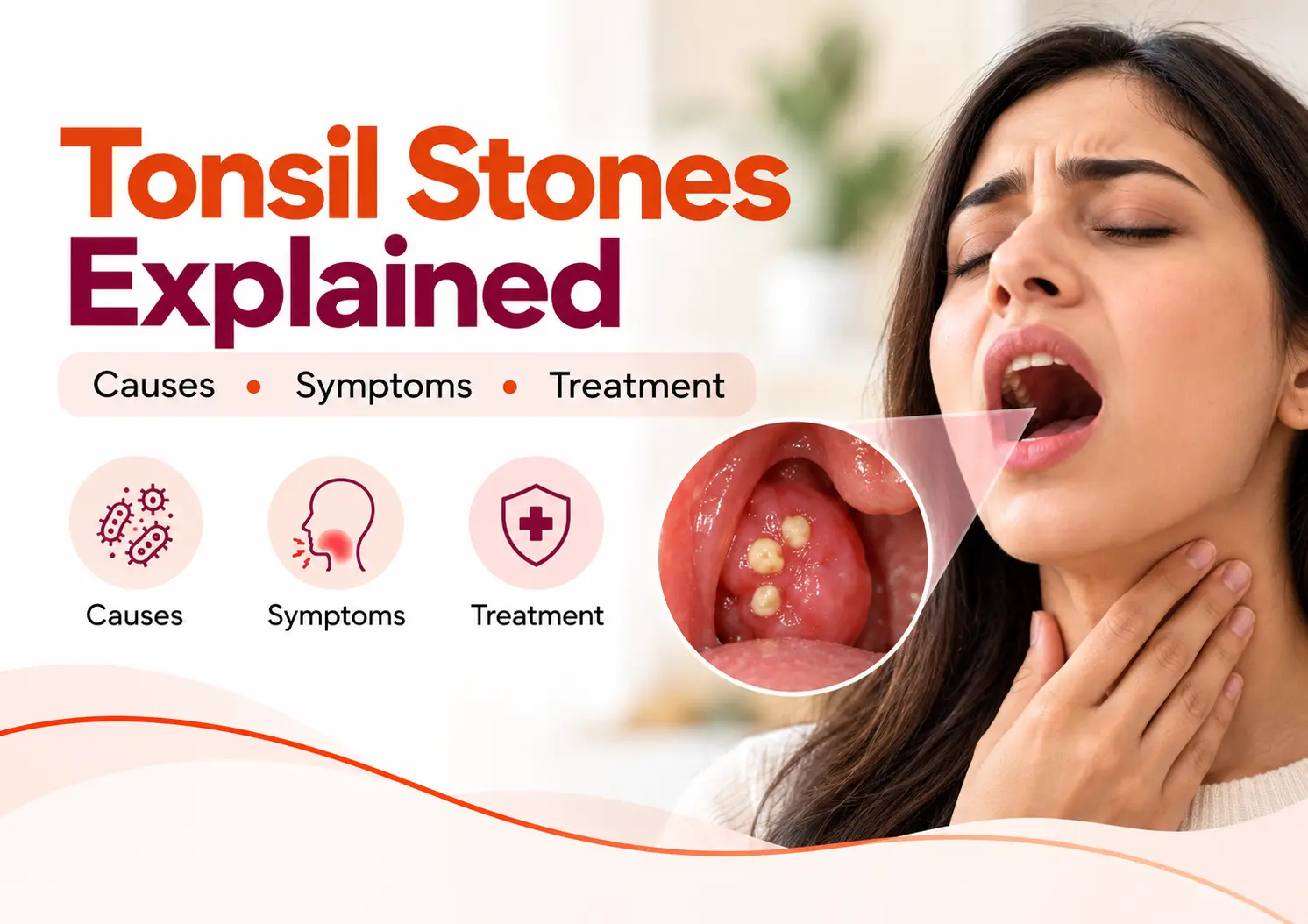
Tonsil Stones: Causes, Symptoms, Home Remedies, and Treatment

- What are Tonsil Stones?
- Tonsils vs Tonsil Stones: What is the Difference?
- What Causes Tonsil Stones?
- Symptoms of Tonsil Stones
- How are Tonsil Stones Diagnosed?
- How to Cure Tonsil Stones Fast at Home?
- Medical Treatment for Tonsil Stones
- When Should You See an ENT Specialist?
- How Can Tonsil Stones Be Prevented?
- Don’t Let Tonsil Stones Keep Coming Back
- Get Expert Care for Recurrent Tonsil Stones in Gurgaon
- Choose the Consultation Option That Works for You
Summary
Tonsil stones, also known as tonsilloliths, are small, hardened deposits that develop when food particles, mucus, dead cells, and bacteria become trapped in the pockets of the tonsils. They may appear as white or yellow spots and can cause symptoms such as persistent bad breath, throat irritation, difficulty swallowing, an unpleasant taste, or a feeling that something is stuck in the throat. Deep tonsil crypts, poor oral hygiene, postnasal drip, dehydration, and recurrent tonsillitis can increase the risk of developing tonsil stones.
Small tonsil stones may sometimes clear naturally or improve with warm salt-water gargles, good oral hygiene, tongue cleaning, and adequate hydration. However, forcefully removing them with sharp objects can injure the tonsils and cause bleeding or infection. Persistent, large, painful, or recurrent tonsil stones may require professional removal or treatment of an underlying tonsil condition. An ENT specialist can examine the throat, identify the cause of recurring tonsil stones, and recommend the most suitable treatment.
Have you ever noticed small white or yellow lumps in your tonsils along with bad breath or an uncomfortable feeling in your throat? These may be tonsil stones. Although tonsil stones are usually not dangerous, they can be bothersome and may keep coming back in some people.
Tonsil stones, also called tonsilloliths, develop when food particles, mucus, dead cells, and bacteria become trapped in the small folds or pits of the tonsils. Over time, this material can harden and form small stones.
Understanding the causes, symptoms, home remedies, and treatment for tonsil stones can help you manage them safely and know when it is time to consult an ENT specialist.
What are Tonsil Stones?
Tonsil stones are hard, calcified deposits that form inside the crypts or small pockets of the tonsils. They can be tiny and difficult to notice, or large enough to become visible as white or yellow spots on the tonsils.
Dr. Lakshmi Goswami, ENT Specialist in Gurgaon at Miracles Healthcare, explains, “Tonsil stones can develop when food particles, mucus, bacteria, and other debris become trapped in the small pockets of the tonsils and slowly harden.”
Some people have tonsil stones without any symptoms. Others may experience persistent bad breath, throat irritation, or the sensation that something is stuck in the throat.
Tonsils vs Tonsil Stones: What is the Difference?
Many people get confused between tonsils and tonsil stones, especially when they notice white spots or lumps at the back of the throat. The two are quite different: tonsils are a normal part of the immune system, while tonsil stones are hardened deposits that form inside the small pockets of the tonsils.
|
Tonsils |
Tonsil Stones |
|
Normal tissue at the back of the throat |
Hardened deposits trapped in tonsil crypts |
|
Part of the immune system |
Form from trapped food particles, mucus, bacteria, and dead cells |
|
Present naturally |
May develop over time |
|
Usually do not appear as white or yellow spots |
Often appear as white or yellow spots on the tonsils |
Tonsils are a normal part of the body, while recurring tonsil stones may cause bad breath, throat irritation, or a feeling of something stuck in the throat.
What Causes Tonsil Stones?
Tonsil stones form when debris gets trapped in the tonsil crypts and slowly becomes hardened. Many factors can increase the likelihood of developing them.
Dr. Lakshmi says, “People with deep tonsil crypts may be more prone to tonsil stones because debris can get trapped more easily.”
Common reason for tonsil stone include:
-
Poor oral hygiene: Bacteria and food debris can accumulate in the mouth and tonsils.
-
Deep tonsil crypts: Naturally deep folds in the tonsils can trap debris more easily.
-
Frequent tonsillitis: Repeated inflammation may enlarge or deepen the tonsil crypts.
-
Postnasal drip: Excess mucus from the nose or sinuses can collect around the tonsils.
-
Dehydration: A dry mouth may encourage bacterial growth and accumulation of debris.
-
Large tonsils: Larger tonsils may have more areas where particles can become trapped.
Having tonsil stones does not necessarily mean that your oral hygiene is poor. Some people are simply more prone to them because of the structure of their tonsils.
Symptoms of Tonsil Stones
Small tonsil stones may not cause noticeable symptoms. However, larger or recurrent stones can lead to several complaints.
Common tonsil stone symptoms include:
-
Persistent or unpleasant bad breath
-
White or yellow spots on the tonsils
-
Feeling that something is stuck in the throat
-
Irritated or sore throat
-
Difficulty or discomfort while swallowing
-
Ear discomfort or pain in some cases
-
Coughing or frequent throat clearing
-
Unpleasant taste in the mouth
-
Visible tonsil stones
Bad breath caused by tonsil stones is especially common because bacteria trapped within the stones can produce foul-smelling compounds.
How are Tonsil Stones Diagnosed?
Many tonsil stones can be identified during a routine examination of the throat. An ENT specialist may examine the tonsils using a light and other instruments to determine whether the white spots are actually tonsil stones.
If the symptoms are persistent, recurrent, or unusual, the doctor may also evaluate for conditions such as chronic tonsillitis, throat infection, postnasal drip, or other causes of throat discomfort.
How to Cure Tonsil Stones Fast at Home?
If the stones are small and not causing significant symptoms, certain home remedies for tonsil stones may help improve oral hygiene and reduce discomfort.
-
Gargle With Warm Salt Water: Gargling with warm salt water may help soothe throat irritation and loosen debris around the tonsils. It can also support general oral hygiene.
-
Maintain Good Oral Hygiene: Brush your teeth twice a day and clean your tongue regularly. Flossing can also help remove food particles that may contribute to bacterial buildup.
-
Stay Hydrated: Drinking enough water helps prevent dry mouth and keeps the mouth moist. Good hydration may also help reduce the accumulation of mucus and debris. Dr. Lakshmi says, “Staying well hydrated helps maintain a healthy oral environment and may reduce the buildup of mucus and debris around the tonsils.”
-
Use an Alcohol-Free Mouthwash: An appropriate alcohol-free mouthwash may help reduce bacteria and improve breath. However, mouthwash alone may not remove an established tonsil stone.
-
Gargle After Eating: Rinsing or gargling with water after meals may help remove food particles before they become trapped in the tonsil crypts.
Medical Treatment for Tonsil Stones
Treatment depends on the size, frequency, and symptoms associated with the stones.
-
Observation: If tonsil stones are small and do not cause symptoms, treatment may not be necessary. Maintaining good oral hygiene and monitoring the tonsils may be enough.
-
Professional Removal: An ENT specialist may remove larger or persistent tonsil stones during an examination. This can be considered when stones cause recurrent discomfort, bad breath, or throat irritation.
-
Treatment of Underlying Problems: If tonsil stones are associated with recurrent tonsillitis, postnasal drip, or other throat and nasal conditions, treating the underlying problem may help reduce recurrence.
-
Tonsillectomy: For people with severe, recurrent tonsil problems or persistent tonsil stones that significantly affect their quality of life, an ENT specialist may discuss tonsillectomy, which is the surgical removal of the tonsils. This is not usually required for occasional small tonsil stones.
When Should You See an ENT Specialist?
Occasional small tonsil stones may not require medical treatment. However, you should consider consulting an ENT specialist near you if you have:
-
Frequent or large tonsil stones
-
Persistent bad breath despite good oral hygiene
-
Recurrent tonsillitis or throat infections
-
Significant throat pain or difficulty swallowing
-
Bleeding after attempting to remove a stone
-
Persistent swelling or a lump that does not go away
-
Symptoms that are getting worse
An ENT evaluation can help determine whether the problem is caused by tonsil stones or another throat condition.
How Can Tonsil Stones Be Prevented?
Tonsil stones cannot always be completely prevented, especially if you naturally have deep tonsil crypts. However, maintaining good oral and throat hygiene can help reduce the buildup of food particles, bacteria, mucus, and other debris.
Some simple habits that may help include:
-
Brush your teeth regularly: Brush twice a day to reduce bacteria and food debris in the mouth.
-
Floss daily: Flossing helps remove food particles from between the teeth that may otherwise contribute to bacterial buildup.
-
Clean your tongue: Gently cleaning the tongue can help reduce bacteria and debris in the mouth.
-
Stay hydrated: Drinking enough water helps prevent dry mouth and may reduce mucus and debris accumulation.
-
Rinse after meals: Gargling or rinsing your mouth with water after eating may help clear food particles from around the tonsils.
-
Manage postnasal drip: If allergies or sinus problems cause excess mucus, treating the underlying condition may help reduce debris reaching the tonsils.
-
Maintain regular dental check-ups: Good dental and oral health can help control bacterial buildup that may contribute to tonsil stone formation.
Dr. Lakshmi says, “Good oral hygiene and adequate hydration can help reduce the debris and mucus that may contribute to tonsil stone formation.”
Don’t Let Tonsil Stones Keep Coming Back
Tonsil stones are often harmless, but when they become recurrent, painful, or cause persistent bad breath or throat discomfort, it is worth getting them checked. Simple oral hygiene and hydration can help, but recurring stones may need expert evaluation.
If tonsil stones are becoming a repeated problem, consult an ENT doctor near you at Miracles Healthcare, Gurgaon, for an evaluation and personalised treatment plan.
Get Expert Care for Recurrent Tonsil Stones in Gurgaon
Miracles Healthcare is a leading ENT hospital in Gurgaon that provides comprehensive ENT care to help patients with recurring tonsil stones, persistent throat discomfort, bad breath, and other ear, nose, and throat concerns.
-
Trusted by 7,00,000+ patients across multiple specialties.
-
150+ specialist doctors, including experienced ENT doctors.
-
Advanced ENT evaluation and diagnostic support to identify the cause of persistent or recurrent symptoms and guide appropriate treatment.
-
Multispeciality care under one roof when related sinus, allergy, throat, or other medical concerns also require attention.
-
Convenient locations across Gurgaon at Sector 14, Sector 56, and Sector 82.
If tonsil stones keep coming back or are affecting your comfort and daily life, consult an ear nose throat specialist near you in Gurgaon at Miracles Healthcare for personalised evaluation and treatment guidance.
Choose the Consultation Option That Works for You
-
WhatsApp: Share your symptoms and relevant medical reports with our team on WhatsApp: 9820965000.
-
Online Consultation: Speak with an ENT specialist from the comfort of your home.
-
In-Person Visit: Visit your nearest Miracles Healthcare centre for a detailed ENT examination.
-
Phone Appointment: Call 9069068800 to schedule a consultation with an ENT specialist.
Written and Verified by:

Frequently Asked Questions
Small tonsil stones may come out with warm salt-water gargles, good oral hygiene, and hydration. Avoid forcefully removing them with sharp objects.
There is no specific drink that dissolves tonsil stones. Warm water or salt-water gargles may help loosen small stones and clear debris.
Milk is generally fine during tonsillitis if it feels comfortable, but it does not treat the infection or reduce inflammation.
Tonsil stones are common and usually harmless, especially in people with deep tonsil crypts. Recurrent or troublesome stones may need ENT evaluation.
There is no specific diet proven to prevent tonsil stones. Staying hydrated and maintaining good oral hygiene are more important than avoiding particular foods.
No, tonsil stones are not cancerous. However, persistent or unusual tonsil changes, swelling, bleeding, or symptoms that do not improve should be evaluated by an ENT specialist.





Was the information useful?
0 0