


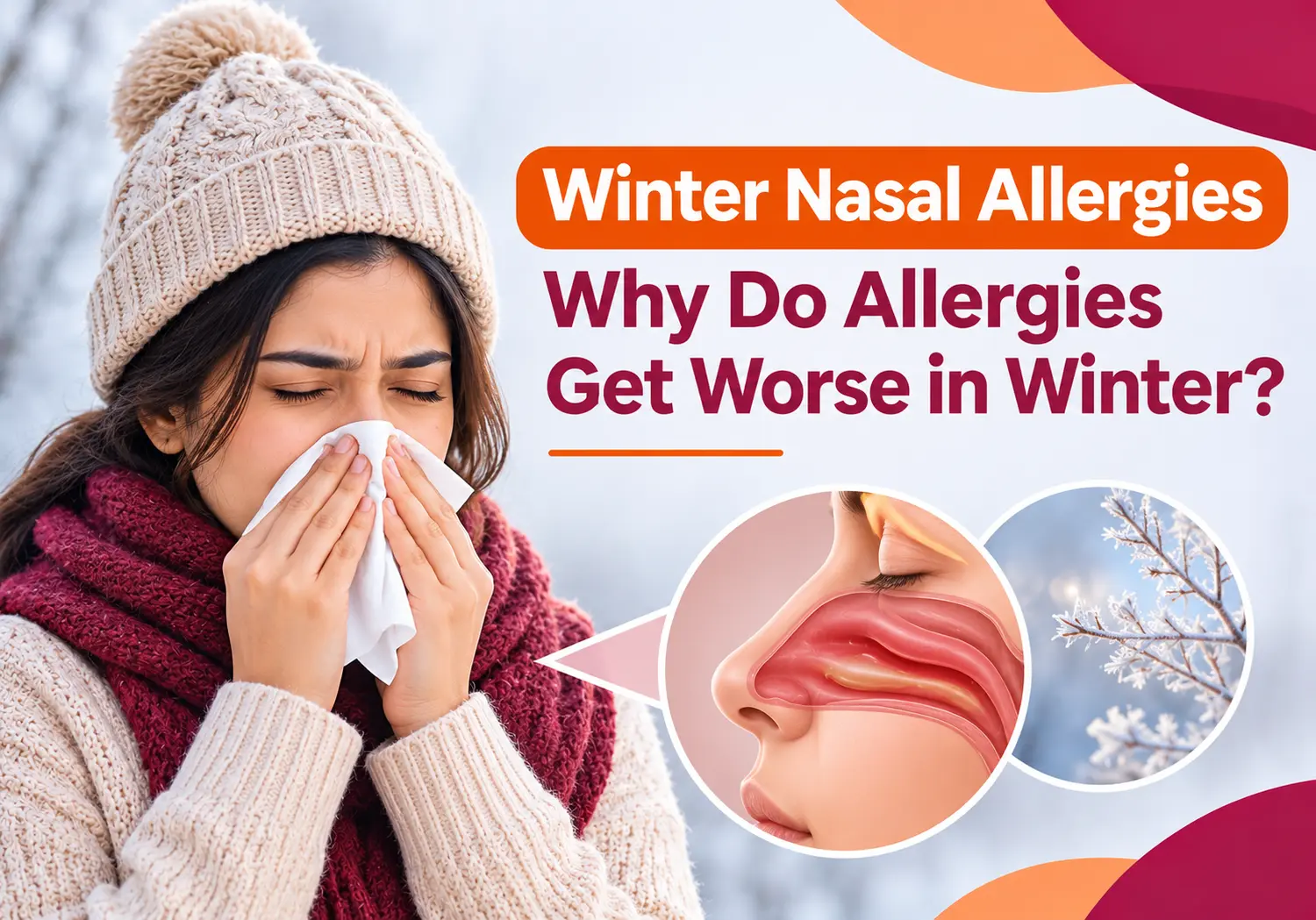
Why Do Nasal Allergies Become More Troublesome During Winter?

Summary
-
Nasal allergies can become more troublesome during winter because increased exposure to indoor allergens, cold and dry air, mould, and sudden temperature changes can trigger or aggravate nasal symptoms.
-
These allergies can resemble a common cold, but symptoms such as nasal itching, frequent sneezing, and watery eyes are more commonly associated with allergies.
-
Maintaining clean bedding, reducing indoor dust, addressing dampness, and limiting exposure to polluted air can help manage winter allergy triggers.
-
Saline nasal rinses and appropriate medication, as advised by a doctor, may help relieve symptoms. Avoid prolonged or unsupervised use of decongestant nasal sprays.
-
Persistent sneezing, nasal congestion, or sleep disturbances warrant an ENT evaluation to identify the underlying cause and determine an appropriate treatment plan.
Winter brings cooler temperatures, dry air, and changes in daily routines. While many people look forward to the season, others experience frequent sneezing, a runny nose, nasal congestion, and persistent irritation. These symptoms may become particularly troublesome during winter, affecting sleep, concentration, and everyday activities. For some, these could be signs of a winter allergy, which may worsen with exposure to seasonal and indoor allergens.
Nasal allergies, medically known as allergic rhinitis, can be triggered by allergens present throughout the year. However, winter conditions may increase exposure to certain indoor allergens and aggravate existing nasal sensitivity. Understanding the common triggers can help people recognise their symptoms and take appropriate steps to manage them.
What Are Nasal Allergies?
Nasal allergies, or allergic rhinitis, occur when the immune system reacts to substances such as dust mites, pollen, mould spores, or pet dander. When a person with an allergy comes into contact with these allergens, the body releases chemicals, including histamine, which can cause inflammation and irritation in the nasal passages.
Common symptoms of nasal allergy include:
-
Repeated sneezing, particularly in the morning
-
Runny or blocked nose
-
Itching in the nose, throat, or eyes
-
Watery eyes
-
Postnasal drip
-
Reduced sense of smell
-
Nasal congestion that may interfere with sleep
Dr. Anuj Girdhar, ENT Specialist in Gurgaon at Miracles Healthcare, says, “Repeated sneezing, nasal itching, and congestion should not always be dismissed as a seasonal cold. When these symptoms occur frequently or continue for several weeks, an underlying nasal allergy may need medical evaluation.”
Why Can Nasal Allergies Become More Troublesome During Winter?
Winter does not necessarily cause allergic rhinitis, but seasonal changes can influence allergen exposure and make nasal symptoms more noticeable. Several factors that may contribute to nasal allergic reactions are
1. Increased Exposure to Indoor Dust Mites
During colder months, people tend to spend more time indoors and keep windows closed for longer periods. Bedding, mattresses, carpets, upholstered furniture, and blankets can collect dust and dust mites.
Dust mites are microscopic organisms that commonly live in household dust. Their waste particles can trigger allergic reactions in sensitive individuals.
People with dust mite allergies may experience:
-
Sneezing after waking up
-
Nasal congestion during the night
-
Itching in the nose and eyes
-
Symptoms while cleaning or handling stored bedding
Regularly washing bedding, cleaning household surfaces, and reducing dust accumulation can help minimise exposure.
2. Cold and Dry Air Can Irritate the Nasal Passages
Winter air often contains less moisture than warm-season air. Cold and dry conditions can irritate the lining of the nose, making it feel dry, uncomfortable or congested.
Some people may also experience sneezing or a runny nose when exposed to sudden changes in temperature. This reaction is not always caused by an allergy. It may be associated with non-allergic rhinitis, a condition in which the nasal passages react to environmental triggers without an allergic immune response.
Dr. Anuj Girdhar shares, “Cold air can make the nose more sensitive, but not every winter-related nasal symptom is an allergy. Identifying whether the symptoms are allergic or non-allergic is important for choosing the right approach to care.”
3. Indoor Mould and Dampness May Trigger Allergies
Mould grows in damp areas with limited ventilation. Bathrooms, kitchens, walls affected by seepage, and poorly ventilated storage spaces can provide suitable conditions for mould growth. Mould releases tiny spores into the air, which may trigger allergic symptoms in sensitive individuals.
Possible symptoms include:
-
Sneezing and nasal irritation
-
Runny or blocked nose
-
Itchy or watery eyes
-
Symptoms that become worse in damp indoor spaces
Addressing water leaks, improving ventilation, and cleaning visible mould safely can help reduce exposure.
4. Winter Pollution Can Aggravate Nasal Irritation
Air pollution can affect the respiratory system throughout the year. During winter, certain weather conditions may contribute to the accumulation of pollutants near ground level. Exposure to particulate matter, smoke, and other airborne irritants can aggravate nasal inflammation and make existing allergy symptoms more uncomfortable.
It is important to understand that air pollution does not directly cause allergic rhinitis. However, it can irritate the nasal lining and worsen symptoms in people who already have sensitive airways or allergies.
Dr. Anuj Girdhar says, “People who experience frequent nasal congestion or sneezing may notice increased discomfort when exposed to smoke, dust, and polluted air. Reducing exposure to these irritants can be a useful part of managing nasal symptoms.”
5. Sudden Temperature Changes Can Trigger Nasal Symptoms
Moving between a warm indoor environment and cold outdoor air can trigger nasal reactions in some individuals. Sudden temperature changes may stimulate the nerves inside the nose, leading to sneezing, watery discharge, or congestion.
This response may be related to non-allergic rhinitis rather than an allergic reaction. People who experience these symptoms frequently should pay attention to their triggers and discuss persistent discomfort with an ENT specialist.
Also Read: How Pollution Affects Sinus Health: An Expert Guide
How to Differentiate Winter Nasal Allergies from a Common Cold?
Winter allergies and the common cold can cause similar symptoms, particularly sneezing and a runny or blocked nose. However, certain differences may help identify the likely cause.
|
Symptoms |
Nasal allergies |
Common cold |
|
Sneezing |
Often frequent |
May occur |
|
Nasal itching |
Common |
Less common |
|
Watery eyes |
Can occur |
Less common |
|
Fever |
Not typical |
Sometimes present |
|
Nasal discharge |
Usually clear and watery |
May change during the illness |
|
Duration |
May continue as long as exposure to allergens persists |
Usually improves within 7–10 days |
|
Trigger |
Exposure to allergens |
Viral infection |
These differences are general indicators and cannot confirm a diagnosis. A healthcare professional can assess the symptoms and recommend appropriate evaluation.
How Can You Manage Nasal Allergies During Winter?
Managing winter nasal allergies involves identifying triggers, reducing allergen exposure, and following appropriate medical advice.
-
Keep Bedding and Blankets Clean: Wash bedsheets, pillow covers, and blankets regularly, following their care instructions. Clean mattresses and pillows periodically to reduce dust accumulation. Avoid storing unwashed winter bedding for long periods.
-
Maintain Better Indoor Air Quality: Clean frequently used surfaces, vacuum carpets, and remove dust from curtains and furniture. Clean air-conditioning filters as recommended by the manufacturer. Address dampness and water leakage to prevent mould growth.
-
Reduce Exposure to Outdoor Irritants: Check local air-quality updates before spending extended periods outdoors. On days with poor air quality, consider limiting outdoor activities. A well-fitting N95 respirator can reduce exposure to particulate matter, although it does not protect against every allergen or airborne irritant.
-
Avoid Sudden Exposure to Cold Air: Covering the nose and mouth with a scarf or mask during cold weather may help reduce direct exposure to cold air. Try to avoid abrupt temperature changes when possible.
-
Consider Saline Nasal Rinses: Saline nasal sprays or rinses may help clear mucus and irritants from the nasal passages. If using a nasal irrigation device, always use sterile, distilled, or previously boiled and cooled water. Keep the device clean and follow the product instructions.
-
Avoid Unsupervised or Prolonged Medication Use: Antihistamines and nasal corticosteroid sprays may be recommended for certain types of allergic rhinitis. However, the appropriate medicine depends on the individual’s symptoms and medical history. Avoid using decongestant nasal sprays for longer than recommended, as prolonged use can lead to rebound nasal congestion. Consult a doctor before starting or changing medication.
Dr. Anuj Girdhar recommends, “Repeated nasal symptoms should not always be managed with over-the-counter medication. A proper evaluation can help identify whether the underlying cause is allergic rhinitis, non-allergic rhinitis, or another nasal condition.”
Also Read: How to Keep Kids Safe from Winter Allergies
When Should You Consult an ENT Specialist?
Occasional sneezing or a mild runny nose may not require extensive evaluation. However, recurring or persistent symptoms should not be ignored, particularly when they affect sleep, work, or daily activities.
Speak to an ENT doctor near you if you experience
-
Frequent sneezing or nasal congestion
-
Persistent nasal itching or watery discharge
-
Difficulty breathing comfortably through the nose
-
Reduced sense of smell
-
Repeated episodes of nasal symptoms during winter
-
Sleep disturbances due to nasal blockage
-
Symptoms that do not improve with routine precautions
An ENT specialist may examine the nose and review the pattern of symptoms. Depending on the clinical findings, allergy testing or other investigations may be recommended to identify possible triggers and guide treatment.
Dr. Anuj Girdhar adds, “Persistent nasal symptoms deserve attention, especially when they interfere with sleep or everyday activities. A proper assessment helps distinguish allergic rhinitis from other nasal conditions and supports a more suitable treatment plan.”
Get the Right Guidance for Persistent Nasal Allergies
Winter nasal allergies can affect comfort and daily routines, but understanding the triggers is an important step towards better symptom management. Avoiding known allergens, maintaining indoor hygiene, and seeking medical advice when symptoms persist can help people manage their condition more effectively.
Miracles Healthcare is a NABH-accredited multispecialty hospital in Gurgaon, serving patients since 2002. Patients can access ENT consultations and clinical evaluation for a wide range of ear, nose, and throat concerns, with support from experienced ENT doctors. The hospital also offers diagnostic services and access to other medical specialties whenever required. With facilities across Sector 14, Sector 56, and Sector 82 in Gurgaon, the hospital aims to make healthcare services more accessible and convenient for patients.
If you are experiencing recurring sneezing, nasal congestion, or other allergy-related symptoms, consult an ENT doctor near you for an appropriate assessment. For appointments or further information, call 906-906-8800.
Written and Verified by:

Frequently Asked Questions
Reduce exposure to triggers such as dust mites, mould, and pollen. Keep bedding clean, use saline nasal rinses, and consult a doctor if symptoms persist or interfere with daily activities.
A saline nasal spray or rinse can help clear mucus and allergens from the nasal passages. Use sterile, distilled, or previously boiled and cooled water for nasal irrigation.
Yes, winter allergies are common. Indoor allergens such as dust mites and mould, along with cold, dry air, can trigger or aggravate nasal symptoms.
Nasal allergy symptoms may last for a few hours, days, or even weeks, depending on exposure to allergens and individual sensitivity. They may continue throughout the season if triggers remain present.
The three-day rule is not a recognised medical guideline for diagnosing or treating allergies. If symptoms persist, worsen, or do not respond to appropriate care, seek medical advice rather than relying on a fixed timeframe.
Vitamin D, vitamin C, and certain probiotics have been studied for their possible role in allergy management, but evidence is limited and inconsistent. Supplements should not replace prescribed treatment; consult a healthcare professional before taking them.





Was the information useful?
0 0