



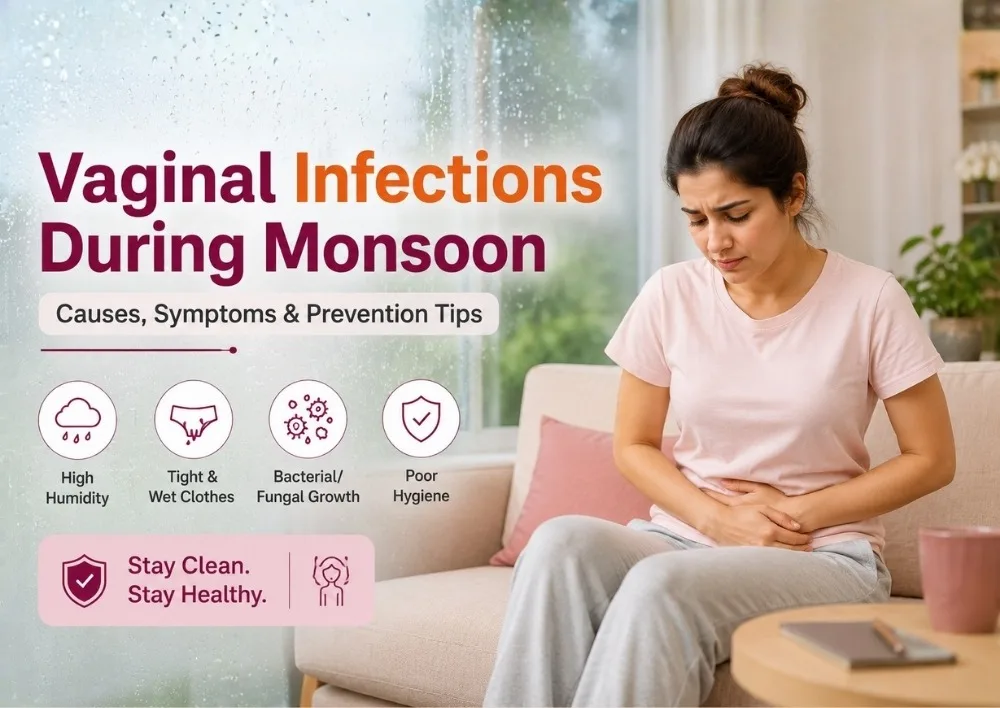
Vaginal Infections During Monsoon: Causes, Symptoms & Prevention

- Why Are Vaginal Infections More Common During Monsoon?
- What are the Common Types of Vaginal Infections?
- What Are the Symptoms of Vaginal Infection During Monsoon?
- Maintaining Vaginal and Menstrual Hygiene During Monsoon
- How to Prevent Vaginal Infections During Monsoon
- Vaginal Infections During Monsoons in Pregnant Women
- Vaginal Infections Treatment
- When Should You See a Gynecologist?
- Protect Your Vaginal Health This Monsoon
- Evidence-Based Vaginal Infection Treatment at Miracles Healthcare
Summary
Monsoon brings relief from the scorching summer heat, but the increased humidity, sweating, and prolonged dampness during the rainy season can also increase the risk of vaginal infections and intimate health concerns in women. Wearing wet clothes, staying in damp underwear or using non-breathable clothing for long periods may create a warm, moist environment that can contribute to vaginal irritation and discomfort. As a result, some women may experience vaginal itching, unusual vaginal discharge, unpleasant odour, burning or redness during the monsoon.
However, not every change in vaginal discharge means there is an infection. The vagina naturally maintains a delicate balance of healthy bacteria and microorganisms that support vaginal health. When this balance is disturbed, conditions such as yeast infections, bacterial vaginosis, and other forms of vaginitis may develop. That is why a team of 50+ female gynaecologists at Miracles Healthcare suggests that if you experience persistent or recurring vaginal infection symptoms during monsoon, it is important to identify the underlying cause rather than simply treating the symptoms.
If you or your loved ones are experiencing recurrent vaginal infections in the rainy season, this blog is for you. Here, we will discuss the causes, symptoms, prevention measures, and treatment of vaginal infections in the monsoon.
Why Are Vaginal Infections More Common During Monsoon?
The monsoon season is linked with increased moisture in the environment and frequent exposure to water. Excessive moisture in the environment may result in irritation of the skin, especially when it stays in contact with the genitals for a long time.
According to Dr. Himani Kundoo, one of the top gynaecologists in Gurgaon at Miracles Healthcare, Gurgaon, during the monsoon season, it becomes even more important for women to maintain intimate hygiene, as the presence of moisture, sweating, and damp clothes increases the risk of infection in the vagina. Maintaining cleanliness of the vagina helps to keep the vagina healthy during monsoon season.
Experiencing Vaginal Infection Symptoms? Talk to a Gynaecologist Today
Call: 0124-4797600 | WhatsApp: +91 9820965000
Some typical monsoon factors that could cause vaginal infections are:
-
Wearing wet or damp underwear
-
Wearing sweaty clothes after exercise
-
Wearing tight non-permeable clothes
-
Increased moisture in the vulvar area
-
Using fragrant products for intimate hygiene
-
Over-cleaning and douching
-
Unhealthy hygiene practice after going to the toilet
-
Antibiotic medications that affect the flora of the vagina
-
Changes in hormones due to pregnancy
-
Various diseases such as diabetes or compromised immunity
It is important to remember that the monsoon itself does not directly cause vaginal infections. Rather, heat, humidity, moisture, irritation, and changes in the vaginal microbial balance may increase the likelihood of certain problems.
What are the Common Types of Vaginal Infections?
Vaginal infections vary in their cause and symptoms. There are three kinds of vaginal infections; these are a yeast infection, bacterial vaginosis, and trichomoniasis.
|
Type |
Cause |
Common Symptoms |
|
Yeast Infection |
Overgrowth of Candida yeast |
Intense itching, redness, burning, and thick white discharge |
|
Bacterial Vaginosis (BV) |
Imbalance of vaginal bacteria |
Thin discharge, fishy odour and mild irritation |
|
Trichomoniasis |
Sexually transmitted parasite |
Yellow/green discharge, itching, redness and discomfort |
|
Other STIs |
Bacteria or viruses |
Abnormal discharge, pelvic pain, burning or abnormal bleeding |
Keep in mind that similar symptoms may be exhibited by other ailments. If you experience symptoms continuously, visit the best gynaecology doctor near you to know the vaginal infection reason and for professional advice.
What Are the Symptoms of Vaginal Infection During Monsoon?
Women may experience one or several symptoms. Watch for changes that are unusual for you, such as:
Dr. Himani kundoo says, “Persistent itching, unusual discharge, foul odour or burning should not be ignored. The vaginal infection symptoms may have different causes, so proper diagnosis is important before starting treatment.”
Vaginal Discharge Changes: Normal vaginal discharge can be clear to white and generally does not have a strong or unpleasant smell. Its amount and consistency can naturally change during the menstrual cycle.
A possible infection may cause discharge that is:
-
Much heavier than usual
-
Thick and white
-
Yellow or green
-
Frothy
-
Associated with a strong or fishy odour
-
Different in consistency from your usual discharge
Itching and Irritation: Persistent itching around the vulva or vaginal opening can occur with yeast infections and other forms of vaginitis.
Burning Sensation: Burning may occur while urinating or around the vulvar area. Since burning can have several causes, it should not automatically be assumed to be a yeast infection.
Redness or Swelling: Inflammation of the vulvar skin can cause redness, soreness, and discomfort.
Pelvic Pain or Abnormal Bleeding: Pelvic pain, bleeding between periods, or bleeding after sex should not be ignored and may require evaluation for causes beyond a simple vaginal infection.
Maintaining Vaginal and Menstrual Hygiene During Monsoon
The rainy season calls for a little extra attention to intimate hygiene. Increased humidity, sweating, and dampness can cause irritation and discomfort. However, maintaining vaginal hygiene does not mean excessive washing or using multiple intimate-care products. Simple, gentle habits can help keep the intimate area clean, dry, and comfortable.
Dr. Himani says, “Vaginal health depends on maintaining the natural balance of the vaginal environment. During monsoon, women should avoid unnecessary intimate products and excessive cleaning, as these can sometimes do more harm than good.”Change Out of Wet Clothes
If you get caught in the rain, change into clean, dry clothes as soon as possible. Avoid staying in wet underwear or damp clothes for long periods, as prolonged moisture can encourage irritation and discomfort.
1. Keep the Intimate Area Dry
After bathing, swimming, or washing, gently pat the external genital area dry. Avoid vigorous rubbing, which can irritate sensitive skin.
2. Choose Breathable Underwear
Opt for comfortable, breathable underwear, such as cotton, to allow better airflow and reduce moisture. Avoid wearing tight clothing for prolonged periods, particularly when you are sweating.
3. Maintain Good Menstrual Hygiene
During periods, change your menstrual products regularly according to the product instructions and your menstrual flow. Always wash your hands before and after changing pads, tampons or menstrual cups. If a particular menstrual product causes irritation or discomfort, speak with your gynaecologist about suitable alternatives.
Stay fresh, comfortable, and infection-free during your periods! Read our blog for simple, practical tips to maintain good menstrual hygiene.
4. Avoid Vaginal Douching
The vagina naturally cleans itself, so there is no need to wash inside it. Avoid douching, scented washes, sprays and other fragranced products, as they may irritate the vaginal area or disturb its natural balance.
Remember: Gentle external hygiene, staying dry, and changing damp clothing promptly are some of the simplest ways to support vaginal health during monsoon.
How to Prevent Vaginal Infections During Monsoon
Good intimate hygiene does not mean excessive cleaning. Simple habits can help reduce irritation and support vaginal health during the rainy season.
-
Change Out of Wet Clothes Quickly: Change wet clothes and underwear as soon as possible. Also, avoid staying in sweaty workout clothes for long periods.
-
Choose Breathable Underwear: Wear comfortable, breathable underwear and loose-fitting clothes to improve airflow and reduce moisture.
-
Keep the Vulvar Area Dry: After bathing or washing, gently pat the external genital area dry. Avoid vigorous rubbing.
-
Avoid Vaginal Douching: The vagina naturally cleans itself. Douching can disturb its natural bacterial balance and cause irritation.
-
Avoid Scented Products: Avoid perfumed soaps, sprays, wipes, and intimate washes that may irritate sensitive skin. Clean only the external vulvar area gently.
-
Maintain Good Toilet Hygiene: Wipe from front to back after using the toilet to reduce the spread of bacteria from the anal area.
-
Maintain Menstrual Hygiene: Change menstrual products regularly and follow the product's usage instructions. Avoid fragranced products if they irritate you.
-
Avoid Self-Medication: Itching or unusual discharge does not always indicate a yeast infection. If symptoms are persistent, recurrent, or unusual, consult a gynaecologist for proper diagnosis and treatment.
Vaginal Infections During Monsoons in Pregnant Women
The body goes through certain hormonal changes due to pregnancy, which might affect the vagina, making it vulnerable to infections. The humid climate and sweating during monsoons add another risk to vaginal problems in women.
Dr. Kundoo says, “During pregnancy, women should avoid self-treating vaginal symptoms. Unusual discharge, itching, burning or odour should be evaluated by a gynaecologist to ensure the cause is identified and the treatment is safe for both mother and baby.”
If you notice any unusual vaginal symptoms during pregnancy, consult your obstetrician or gynaecologist before taking any medication. Proper diagnosis will help detect the source of the infection and treat the problem accordingly.
Vaginal Infections Treatment
Treatment of vaginal infection will depend on the cause, symptoms and general health condition of the patient. As yeast infections, bacterial vaginosis and sexually transmitted diseases produce similar symptoms, proper detection of the type of infection is necessary for effective treatment. Self-treatment by using antifungal or antibiotic medicines will not help solve the problem and may actually lead to the wrong diagnosis.
-
Yeast infection: Confirmed cases of yeast infection are usually treated with the necessary antifungal medicines depending on the severity of the problem and personal medical needs of a patient.
-
Bacterial vaginosis: Bacterial vaginosis is treated with the help of prescribed antibiotics that are needed to maintain the normal bacteria composition in the vagina.
-
Trichomoniasis and other sexually transmitted infections: Appropriate testing is required for diagnosing this type of infections and treatment of the disease. Depending on the results of the diagnosis, sexual partners should also get tested and treated to lower the risk of reinfection.
-
Recurrent infections: In case if the symptoms recur, your gynaecologist may decide to conduct additional tests to find the reason for recurrent infection and offer a solution.
According to Dr. Himani Kundoo, gynaecologist at Miracles Healthcare, “Not all itching, discharge and odour mean yeast infection. Diagnoses will help us to prescribe the correct vaginal infection medicine and to avoid overuse of medicine and recurrence of the infection.”
If you have persistent, severe or recurrent symptoms, it is recommended to visit a gynaecologist rather than constantly treat the symptoms yourself.
When Should You See a Gynecologist?
Do not ignore persistent or recurrent vaginal symptoms.
Consider consulting a gynecologist if you have:
-
Persistent vaginal itching or burning
-
Unusual or foul-smelling discharge
-
Yellow, green, or frothy discharge
-
Repeated episodes of vaginal infection
-
Pain or burning while urinating
-
Pelvic pain
-
Bleeding between periods
-
Bleeding after sex
-
Vaginal sores or blisters
-
Symptoms that do not improve with treatment
Protect Your Vaginal Health This Monsoon
Monsoon humidity, sweat, and damp clothing can contribute to vaginal irritation and may increase the risk of conditions such as yeast infections and bacterial vaginosis. Simple habits like changing out of wet clothes, keeping the intimate area dry, wearing breathable underwear, avoiding scented products, and not douching can help support vaginal health.
If you experience persistent itching, unusual discharge, strong odour, burning, pelvic pain, or recurrent infections, consult a best gynecologist doctor near you for proper diagnosis and treatment.
Book your appointment today and take the right step towards better vaginal health this monsoon.
Evidence-Based Vaginal Infection Treatment at Miracles Healthcare
Miracles Healthcare is the best gynaecology hospital in Gurgaon, providing comprehensive and evidence-based care for vaginal infections and a wide range of women's health concerns since 2002. If you are experiencing vaginal itching, unusual discharge, burning, unpleasant odour, or recurrent infections, our experienced gynaecology team focuses on accurate diagnosis and personalised treatment.
What sets us apart:
-
50+ Female Gynaecologists on board, offering expert care for a wide range of gynaecological concerns.
-
Trusted by 7 Lakh+ Patients, reflecting our commitment to compassionate and patient-centric care.
-
24×7 In-House Diagnostic Facility for timely and convenient diagnosis.
-
Best Mother & Children Hospital in Gurgaon & Faridabad, recognised by The Times of India (2023).
-
25,000+ Babies Delivered, reflecting the trust of thousands of families.
-
Multispeciality Support, providing access to specialists across multiple medical disciplines when required.
-
Multilocation Presence across Gurgaon, making quality women's healthcare easily accessible.
-
Miracles Apollo Cradle, Sec 14, Gurgaon
-
Whether you need treatment for vaginal infections, recurrent symptoms, or other gynaecological concerns, book an appointment with a gynaecologist near you at Miracles Healthcare. Get an accurate diagnosis, personalised treatment and expert women's healthcare under one roof.
Written and Verified by:

Dr. Himani Kundoo Exp: 9
MBBS, MD Obstetrics & Gynaecology, FNB Maternal Fetal Medicine
Meet the Doctor
Frequently Asked Questions
Some mild vaginal infections may resolve, but many require appropriate treatment. Persistent or recurrent symptoms should be evaluated by a gynaecologist.
Common signs include intense itching, redness, burning, soreness and thick white vaginal discharge. Discomfort during urination or intercourse may also occur.
It may cause itching, burning, irritation, soreness, unusual discharge or unpleasant odour. Symptoms vary depending on the underlying cause.
The duration depends on the type and treatment. Symptoms may improve within a few days with appropriate treatment, but persistent or recurrent symptoms need medical evaluation.
Early signs may include vaginal or vulvar itching, redness, irritation and burning, followed by thick white discharge in some cases.
You cannot always identify the cause from symptoms alone because different conditions can look similar. A gynaecologist may perform an examination and, if needed, recommend a vaginal swab or other tests.






Was the information useful?
0 0