


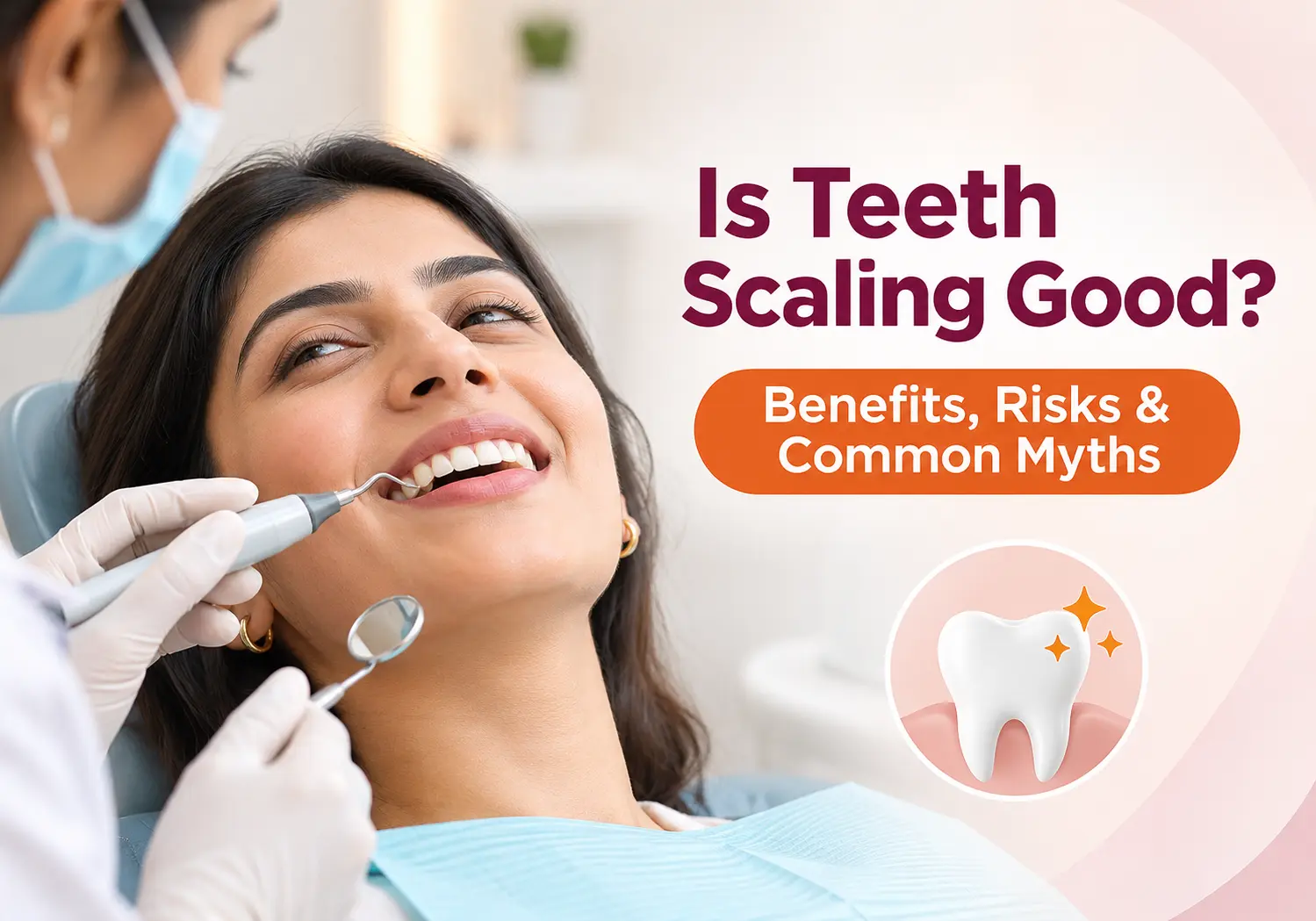
Is Scaling Good for Teeth? Benefits, Risks, and Common Myths

- What is Teeth Scaling?
- What are the Benefits of Teeth Scaling?
- Does Scaling Damage Teeth or Weaken Enamel?
- What are the Side Effects of Teeth Scaling?
- How Often Should You Get Teeth Scaling?
- Is Teeth Scaling Necessary if You Brush Twice a Day?
- What is the Difference Between Teeth Scaling and Teeth Whitening?
- What Should You Do Before and After Teeth Scaling?
- Common Myths About Teeth Scaling
- When Should You Consult a Dentist About Scaling?
- Conclusion
- Get Professional Teeth Scaling in Gurgaon at Miracles Healthcare
Summary
-
Teeth scaling removes plaque and hardened tartar that regular brushing and flossing cannot effectively eliminate.
-
Supports gum health by reducing deposits that contribute to gum inflammation, bleeding, and certain gum problems.
-
Does not normally damage healthy tooth enamel when performed appropriately by a qualified dental professional.
-
May help reduce bad breath when it is caused by tartar buildup, plaque, or gum inflammation.
-
Can improve the appearance of teeth by removing tartar and some surface deposits, but it does not whiten teeth like a whitening treatment.
-
May cause temporary side effects, including tooth sensitivity, mild gum bleeding, and tenderness.
-
Scaling frequency varies from person to person depending on tartar accumulation, gum health, and individual risk factors.
-
Brushing twice daily is essential, but professional scaling may still be needed to remove hardened tartar from difficult-to-clean areas.
-
Routine scaling and deep cleaning are different procedures; scaling and root planing may be recommended for certain cases of gum disease.
-
Proper aftercare matters: Maintain daily oral hygiene, follow your dentist’s instructions, and avoid removing tartar at home with sharp tools.
-
Consult a dentist if you experience persistent bleeding gums, visible tartar, ongoing bad breath, tooth sensitivity, or changes in your gumline.
-
Miracles Healthcare, Gurgaon, offers dental consultations to assess oral health concerns and determine whether professional teeth scaling is appropriate.
Dental scaling is a commonly performed procedure, yet questions about its effects on tooth enamel, gum health, and tooth sensitivity are often confused. Some people postpone professional cleaning because they worry it might weaken their teeth, while others wonder whether scaling is necessary if they already brush twice a day.
So, is scaling good for teeth, or can it cause damage over time? When performed appropriately by a qualified dental professional, scaling helps remove hardened tartar that cannot be eliminated through routine brushing and flossing. Its suitability depends on the condition of your teeth and gums, the amount of tartar present, and your individual oral health needs.
However, scaling is not required at the same frequency for everyone. Routine cleaning also differs from the deeper cleaning procedures used to manage certain forms of gum disease.
Understanding how teeth scaling works, when it may be recommended, and what to expect afterwards can help you make informed decisions about your oral health.
What is Teeth Scaling?
Dental scaling is a professional dental procedure that removes plaque and hardened tartar, also known as dental calculus, from tooth surfaces and around the gumline.
Plaque is a sticky film containing bacteria that forms continuously on teeth. When it is not removed adequately through daily brushing and cleaning between the teeth, it can harden into tartar. Unlike soft plaque, hardened tartar cannot be effectively removed with a regular toothbrush.
During scaling, a dental professional uses specialised hand instruments, ultrasonic instruments, or a combination of techniques to remove these deposits.
According to Dr. Divyakshi Chauhan, Senior Dentist in Gurgaon at Miracles Healthcare, “Professional teeth scaling helps remove hardened tartar that regular brushing cannot eliminate. The need for scaling and the type of cleaning required should be determined by a dentist after examining the teeth and gums.”
There are two commonly discussed forms of treatment:
-
Routine dental scaling: Removes tartar and plaque from accessible tooth surfaces and around the gumline.
-
Scaling and root planing: A deeper cleaning procedure used when deposits accumulate below the gumline in people who require treatment for periodontal disease.
The appropriate approach depends on the dental examination. Routine scaling and deep cleaning are not interchangeable, and not everyone who needs professional cleaning requires scaling and root planing.
What are the Benefits of Teeth Scaling?
The benefits of teeth scaling treatment relate primarily to removing deposits that contribute to gum inflammation and maintaining oral hygiene.
1. Helps Maintain Gum Health
Plaque bacteria can irritate the gum tissue, leading to redness, swelling, and bleeding. This early stage of gum disease is called gingivitis.
Removing plaque and tartar helps reduce the deposits contributing to gum irritation. Combined with effective daily oral hygiene, professional cleaning can help maintain healthier gums.
2. Removes Hardened Tartar
Tartar can accumulate near the gumline, between teeth, and in other areas that are difficult to clean thoroughly. Once hardened, it adheres firmly to tooth surfaces.
Professional scaling removes these deposits and helps make routine oral hygiene more effective. It is particularly useful when tartar has built up despite regular brushing.
Dr. Divyakshi Chauhan says, “Professional scaling helps remove hardened tartar from areas that regular brushing cannot effectively clean, supporting better oral hygiene and gum health.”
3. Supports the Management of Gum Disease
When gum disease progresses, the supporting tissues around teeth may become affected, and periodontal pockets can develop.
For suitable patients, scaling and root planing helps remove plaque and tartar from below the gumline. It is one component of periodontal treatment, which may also involve follow-up examinations and ongoing maintenance.
The outcome depends on the severity of the disease, individual risk factors, and adherence to recommended care.
4. May Help Reduce Bad Breath
Persistent bad breath can sometimes result from plaque accumulation, tartar deposits, and gum inflammation.
Professional cleaning may help when these are the underlying causes. However, bad breath can also be associated with dry mouth, tooth decay, certain foods and other health conditions. Persistent symptoms may require further assessment.
5. Can Improve the Appearance of Teeth
Tartar and certain external stains can make teeth appear yellow or discoloured. Scaling removes tartar and may remove some surface deposits, helping teeth look cleaner.
However, it does not change the natural shade of teeth in the same way as a whitening treatment. The extent of visible improvement depends on the type and amount of staining present.
Does Scaling Damage Teeth or Weaken Enamel?
Properly performed dental scaling does not normally damage healthy tooth enamel. The procedure is designed to remove plaque and tartar rather than the healthy outer layer of the tooth.
Dental professionals select suitable instruments and techniques according to the location of the deposits, the condition of the gums, and the patient's dental needs. Inappropriate technique or excessive force can cause injury, which is why tartar should not be scraped away at home using sharp objects or unverified tools.
Some people notice changes after scaling and assume their teeth have been damaged. However, these changes may have other explanations.
-
More noticeable spaces between teeth: Tartar may have occupied spaces between teeth. Once removed, existing spaces can become more visible.
-
Changes in tooth sensation: Removing deposits can expose areas near the gumline that were previously covered by tartar.
-
A different surface feel: Teeth may feel smoother after rough deposits are removed.
-
Changes in gum appearance: When inflamed gums become less swollen, their appearance may change.
Dr. Chauhan explains, “When performed correctly, dental scaling helps remove plaque and tartar without damaging healthy tooth enamel. Any persistent sensitivity or discomfort after the procedure should be evaluated by a dentist.”
These observations do not automatically indicate enamel damage. If you experience severe or persistent tooth sensitivity, significant pain, swelling, or increasing tooth mobility, consult a dentist to identify the underlying cause.
What are the Side Effects of Teeth Scaling?
Although teeth scaling procedure is generally well tolerated, some people experience temporary side effects. These depend on the amount of tartar present, the condition of the gums, and whether the procedure involves routine cleaning or deeper periodontal treatment.
Common side effects include:
-
Tooth sensitivity: Teeth may feel sensitive to cold drinks, hot foods, or air, particularly when gum recession or exposed root surfaces are present.
-
Mild gum bleeding: Gums that are already inflamed may bleed during or shortly after cleaning.
-
Gum tenderness: The treated areas may feel sore, especially when substantial deposits have accumulated, or deeper cleaning is required.
-
Temporary discomfort: Deep cleaning may cause more noticeable discomfort than routine scaling. Your dentist may discuss suitable measures to manage this.
Mild sensitivity and tenderness often improve within a few days, although recovery varies. If pain increases, bleeding persists, or swelling develops, contact your dentist for an assessment.
The chance and extent of side effects depend on individual oral health. Your dentist can explain what to expect based on the procedure being recommended.
How Often Should You Get Teeth Scaling?
There is no single scaling schedule that is appropriate for everyone. The recommended frequency depends on how quickly tartar accumulates and whether you have gum disease or other factors that increase your risk of oral health problems.
Your dentist may consider:
-
The rate of plaque and tartar accumulation.
-
The presence of gum inflammation or periodontal pockets.
-
A history of gingivitis or periodontitis.
-
Your brushing and interdental cleaning habits.
-
Tobacco use and certain medical conditions that affect gum health.
-
The findings of your dental examination.
People with healthy gums may need preventive cleaning at intervals determined by their dentist. Those who have received treatment for periodontitis may require a structured periodontal maintenance programme.
Dr. Divyakshi Chauhan says, “The frequency of teeth scaling should be based on an individual's gum health, tartar buildup, and dental examination findings rather than a fixed schedule for everyone.”
Teeth scaling should be recommended according to individual oral health needs rather than a fixed rule that everyone must follow every three or six months.
Regular dental examinations help determine when professional cleaning is appropriate and whether additional treatment is necessary.
Is Teeth Scaling Necessary if You Brush Twice a Day?
Brushing twice daily with fluoride toothpaste is essential for oral health, but it cannot always remove every deposit, particularly from areas between the teeth and around the gumline.
When plaque remains in hard-to-reach areas, it may eventually harden into tartar. Once tartar forms, brushing and flossing cannot reliably remove it.
This is why professional scaling may be recommended even for people who maintain a good oral hygiene routine.
To help control plaque between dental visits:
-
Brush twice daily using a soft-bristled toothbrush and fluoride toothpaste.
-
Clean between your teeth daily with dental floss or suitable interdental brushes.
-
Limit frequent consumption of sugary foods and drinks.
-
Avoid tobacco products, which can increase the risk of gum problems.
-
Attend dental examinations at intervals recommended for your oral health.
These habits help reduce plaque accumulation and support gum health between professional cleaning appointments.
What is the Difference Between Teeth Scaling and Teeth Whitening?
Teeth scaling and teeth whitening serve different purposes, although both may affect the appearance of your smile.
|
Feature |
Teeth Scaling |
Teeth Whitening |
|
Primary purpose |
Removes plaque and tartar |
Lightens the colour of natural teeth |
|
Main focus |
Oral hygiene and gum health |
Tooth appearance |
|
How it works |
Uses professional instruments to remove deposits |
Uses whitening agents to change tooth colour |
|
Removes hardened tartar |
Yes |
No |
|
Treats gum disease |
Can form part of gum disease treatment |
Does not treat gum disease |
Scaling may make teeth look cleaner by removing tartar and certain surface stains. Whitening, on the other hand, is intended to change tooth colour.
If you are concerned about stained or discoloured teeth, a dentist can assess whether the cause is tartar, external staining, or another dental condition and explain suitable options.
What Should You Do Before and After Teeth Scaling?
Preparing for scaling is generally straightforward. Inform your dentist about existing dental sensitivity, gum problems, medical conditions, or medications that may affect your treatment.
Before Teeth Scaling
-
Maintain your regular oral hygiene routine.
-
Tell your dentist if your gums bleed frequently or your teeth feel sensitive.
-
Mention any recent dental procedures or ongoing oral health concerns.
-
Ask whether routine scaling or deeper cleaning is appropriate for your condition.
After Teeth Scaling
-
Brush gently with a soft-bristled toothbrush.
-
Continue cleaning between your teeth as advised by your dentist.
-
If your teeth feel temporarily sensitive, avoid very hot or cold foods and drinks until the discomfort improves.
-
Follow any specific instructions provided after deep cleaning or periodontal treatment.
-
Avoid attempting to remove remaining tartar with sharp objects or home tools.
Dr. Chauhan says, “Following proper oral hygiene and your dentist’s aftercare advice helps maintain the benefits of teeth scaling and supports long-term gum health.”
Most people can return to their usual routine after routine scaling. However, deeper periodontal treatment may require additional aftercare depending on the extent of the procedure.
Common Myths About Teeth Scaling
Misconceptions about scaling can influence dental care decisions. Understanding the facts can help you assess the procedure more objectively.
Myth 1: Scaling Makes Teeth Loose
Fact: Properly performed scaling does not normally loosen healthy teeth. If teeth are mobile, underlying gum disease or loss of supporting bone may be responsible. Removing tartar may make existing mobility more noticeable, but the underlying cause needs to be assessed.
Myth 2: Scaling Creates Gaps Between Teeth
Fact: Tartar can accumulate in spaces between teeth. Once these deposits are removed, existing spaces may become more visible. This does not necessarily mean scaling has created new gaps.
Myth 3: Scaling Removes the Protective Enamel Layer
Fact: Professional scaling targets plaque and tartar rather than healthy enamel. However, improper instrument use can cause injury, which is why the procedure should be performed by a qualified dental professional.
Myth 4: Scaling Is Only Necessary When Teeth Look Dirty
Fact: Plaque and tartar can accumulate in areas that are not easily visible. Gum inflammation may also develop without obvious changes in the appearance of your teeth.
Myth 5: Everyone Needs Scaling at the Same Interval
Fact: The recommended frequency depends on tartar buildup, gum health, and individual risk factors. A dentist can recommend a suitable schedule after examining your teeth and gums.
When Should You Consult a Dentist About Scaling?
Consider consulting a dental specialist near you for a dental examination if you notice
-
Persistent bleeding while brushing
-
Red or swollen gums
-
Visible tartar near the gumline
-
Persistent bad breath
-
Changes in your gumline
These symptoms do not always mean scaling is required, as they can have several causes. A dentist can assess your teeth and gums, identify the likely cause, and recommend appropriate care.
If you have loose teeth, significant gum recession, persistent tooth pain, or other concerning symptoms, it is particularly important to identify the underlying cause rather than relying on cleaning alone.
People with established gum disease may need a comprehensive periodontal assessment and treatment plan. In such cases, routine scaling may be only one part of the care required.
Conclusion:
Teeth scaling is an important part of preventive and periodontal dental care when recommended for the right reasons. It removes hardened tartar, supports gum health, and helps manage problems associated with plaque accumulation. Properly performed scaling does not normally damage healthy tooth enamel.
However, scaling is not a substitute for daily oral hygiene, and it is not necessary at the same interval for everyone. The appropriate approach depends on your gum health, tartar buildup, and individual dental needs.
If you are concerned about bleeding gums, visible tartar, persistent bad breath, or tooth sensitivity, a dental examination can help identify the cause and determine whether professional cleaning is appropriate.
Maintaining a consistent brushing and interdental cleaning routine, together with dental check-ups at suitable intervals, can help you make informed decisions about your long-term oral health.
Get Professional Teeth Scaling in Gurgaon at Miracles Healthcare
Miracles Healthcare is a dental hospital in Gurgaon providing dental consultations and treatment for various oral health concerns since 2002. Patients experiencing tartar buildup, bleeding gums, persistent bad breath, or other dental problems can consult experienced dental specialists for an assessment of their oral health. Based on the condition of the teeth and gums, the dentist can recommend suitable treatment, including professional teeth scaling when required.
With centres in Sector 14, Sector 56, and Sector 82, Gurgaon, patients can access dental consultations and follow-up care at a convenient location. To book professional dental scaling near you, Call 906-906-8800.
Written and Verified by:

Frequently Asked Questions
Teeth scaling is generally safe when performed by a qualified dental professional. Temporary sensitivity, mild gum bleeding, or tenderness may occur.
Scaling every two months is not necessary for everyone. The frequency should depend on tartar buildup, gum health, and your dentist’s recommendation.
Temporary tooth sensitivity, gum tenderness, and mild bleeding are possible side effects. Persistent pain or sensitivity should be assessed by a dentist.
Routine scaling usually causes little to no pain, although you may feel pressure or mild discomfort. Deeper cleaning may require local anaesthesia.
Scaling removes plaque and hardened tartar to support gum health, while whitening lightens tooth colour. The better option depends on your dental needs and goals.
If you experience sensitivity, avoid very hot or cold foods and drinks until it improves. Follow your dentist’s aftercare instructions, especially after deep cleaning.




Was the information useful?
0 0