




Gynaecology Conditions We Treat
Comprehensive Care for Your Health

A chemical pregnancy is a very early pregnancy loss that occurs shortly after implantation, usually before the pregnancy can be seen on an ultrasound. It happens when a pregnancy test becomes positive because the body has started producing the pregnancy hormone human chorionic gonadotropin (hCG), but the pregnancy stops developing very early.
Because a chemical pregnancy occurs so early, some women may mistake it for a late or heavier-than-usual period. Others may notice a positive pregnancy test followed by bleeding and a negative test a few days later.
A chemical pregnancy can be emotionally difficult, especially for couples trying to conceive. Importantly, having a chemical pregnancy does not necessarily mean that you cannot have a healthy pregnancy in the future.
If you have experienced bleeding after a positive chemical pregnancy test or have had repeated chemical pregnancies, consult an experienced gynaecologist in Gurgaon at Miracles Healthcare for proper evaluation and guidance. Book an appointment for personalized care and support for your reproductive health and future pregnancy planning.
A chemical pregnancy is an early pregnancy loss that occurs shortly after implantation, generally before the pregnancy is visible on ultrasound.
In a typical pregnancy, after fertilisation and implantation, the developing pregnancy begins producing hCG. Urine and blood pregnancy tests detect this hormone. In a chemical pregnancy, hCG may rise enough to produce a positive pregnancy test, but the pregnancy stops developing very early.
The pregnancy may therefore be detected through a pregnancy test but not confirmed as a normally developing pregnancy on ultrasound.
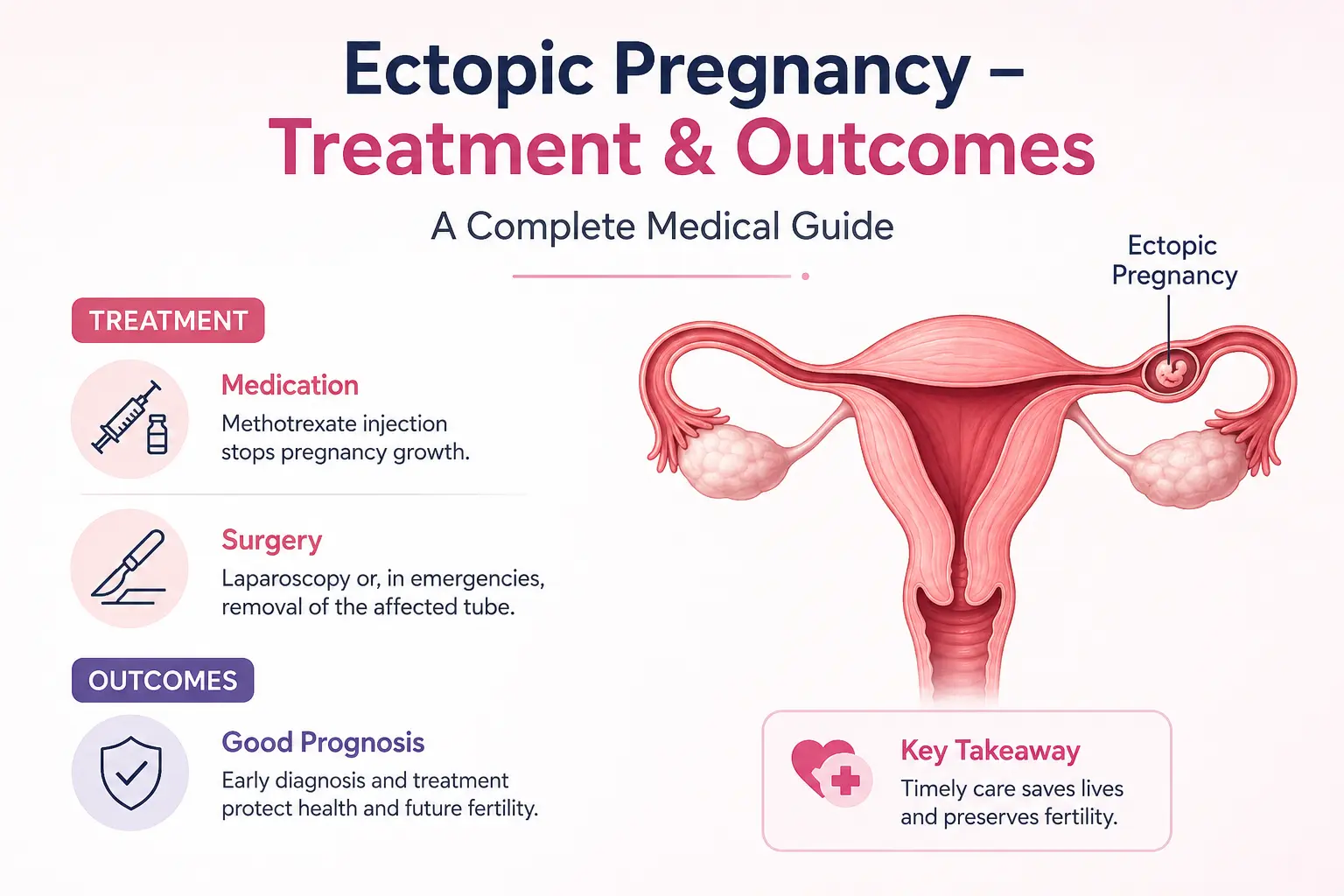
A chemical pregnancy is different from an ectopic pregnancy, although both can involve early pregnancy bleeding and changing hCG levels. Therefore, medical evaluation is important when pregnancy-related bleeding occurs.
Chemical pregnancies are typically classified according to how the pregnancy is detected and how it progresses rather than into formal clinical subtypes.
Biochemical Pregnancy: A biochemical pregnancy is identified through a positive pregnancy test or detectable hCG, followed by a fall in hCG without ultrasound evidence of a developing pregnancy.
Very Early Pregnancy Loss: In some cases, the pregnancy may begin developing but stop before it becomes visible on ultrasound. The woman may experience bleeding around the time her period was expected. The exact clinical terminology used can vary depending on the timing of the pregnancy loss and the findings on blood tests and ultrasound.
Some women may not experience noticeable symptoms. When symptoms occur, they may include:
A positive pregnancy test followed by a negative test
Bleeding around the expected date of the period
Heavier bleeding than usual
Mild to moderate lower abdominal or menstrual-like cramps
A sudden decrease in early pregnancy symptoms, if symptoms were present
Falling hCG levels on blood testing
However, bleeding during early pregnancy does not always mean a miscarriage. It can also occur in other conditions, including ectopic pregnancy. Therefore, persistent, heavy, or painful bleeding should be evaluated by a gynaecologist.
If you experience bleeding, cramping, or a positive pregnancy test followed by a sudden change in symptoms, consult a gynaecologist near you for proper evaluation.
Seek prompt medical attention if you experience:
Heavy vaginal bleeding
Severe or increasing abdominal pain
One-sided abdominal or pelvic pain
Dizziness, fainting, or marked weakness
Shoulder-tip pain associated with abdominal pain or bleeding
Fever or foul-smelling vaginal discharge
These symptoms can indicate complications that need urgent evaluation, including ectopic pregnancy.
In many cases, the exact reasons for a chemical pregnancy cannot be determined. One of the most common explanations for very early pregnancy loss is a chromosomal abnormality in the developing embryo. Chromosomal abnormalities can occur randomly during the formation of the egg, sperm, or embryo and may prevent normal development. Research says early miscarriages are associated with abnormal chromosome numbers.
Other factors may sometimes contribute to early pregnancy loss, including:
Abnormal embryo development
Problems affecting the uterus or uterine lining
Certain hormonal or metabolic conditions
Some medical conditions
Maternal age
Certain infections or other health problems
However, a chemical pregnancy is usually a random event, and it is generally not caused by routine activities such as working, exercising, having sex, everyday stress, or normal physical activity.
Diagnosis may involve a combination of pregnancy history, blood tests, and ultrasound.
Pregnancy Test: A urine pregnancy test may initially be positive because hCG is present in the body. If the pregnancy stops developing, hCG levels can subsequently fall, and the test may become negative.
Quantitative β-hCG Blood Test: A quantitative blood test measures the exact level of hCG. Your doctor may recommend serial β-hCG tests, performed several days apart, to understand whether the hormone level is increasing appropriately, falling, or remaining abnormal.
Ultrasound: Your doctor may recommend an ultrasound depending on the timing of the pregnancy and hCG levels. In a chemical pregnancy, an intrauterine pregnancy may not be visible because the loss occurs extremely early. USG and serial hCG measurements can also help doctors distinguish an early pregnancy loss from other conditions, particularly ectopic pregnancy.
Clinical Evaluation: Your gynae doctor may consider your menstrual history, pregnancy-test results, bleeding pattern, pain, and previous pregnancy history before determining whether additional tests are required.
A chemical pregnancy often does not require a specific procedure because the pregnancy ends very early and the body usually passes the pregnancy tissue naturally.
Treatment depends on the individual situation.
Expectant Management: If there is no heavy bleeding, infection, or other complication, your doctor may recommend waiting for the body to complete the process naturally.
Medical Treatment: Medication may sometimes be recommended in early pregnancy loss when pregnancy tissue remains in the uterus or when spontaneous passage does not occur. The choice of medication depends on the clinical situation and should only be made by a qualified doctor.
Surgical Treatment: Surgical management is not usually necessary for every chemical pregnancy. If tissue remains in the uterus or there is significant bleeding, infection, or another medical concern, a procedure may be considered. For early pregnancy loss requiring treatment, accepted approaches include expectant, medical, and surgical management, depending on the patient's clinical condition.
Follow-Up After a Chemical Pregnancy: Your doctor may recommend repeating a pregnancy test or checking β-hCG levels to ensure that hCG has returned to a non-pregnant range. If hCG does not fall as expected, further evaluation may be necessary to rule out an ectopic pregnancy or retained pregnancy tissue.
A chemical pregnancy can happen to anyone, and having one does not necessarily mean that another pregnancy will be affected.
Factors associated with an increased risk of early pregnancy loss may include:
Increasing maternal age
Previous pregnancy loss
Certain chromosomal abnormalities
Some uterine or reproductive health conditions
Certain hormonal or metabolic disorders
Some underlying medical conditions
Age is an established risk factor for early pregnancy loss, with the risk increasing as maternal age increases.
It is important not to assume that a chemical pregnancy was caused by something you did. In many cases, the underlying reason cannot be identified.
There is no guaranteed way to prevent a chemical pregnancy because many occur due to random chromosomal abnormalities that cannot be predicted or prevented.
However, maintaining overall reproductive health can support a healthy pregnancy. Depending on your individual circumstances, your doctor may recommend:
Starting prenatal care early
Taking folic acid as advised
Managing existing medical conditions
Avoiding smoking and recreational drugs
Limiting alcohol when trying to conceive and during pregnancy
Maintaining a healthy lifestyle
Reviewing medications with your doctor before conception
Attending preconception or fertility counselling when appropriate
If chemical pregnancies occur repeatedly, your gynaecologist or fertility specialist may recommend an evaluation to look for potentially treatable factors.
A chemical pregnancy is technically a very early pregnancy loss. The main difference is the timing and whether the pregnancy was visible on ultrasound.
|
Chemical Pregnancy |
Miscarriage |
|
Occurs extremely early in pregnancy |
Can occur later in the first trimester or beyond |
|
May only be detected through hCG testing |
Pregnancy may already be visible on ultrasound |
|
Pregnancy may never be visible on ultrasound |
A gestational sac or embryo may have been identified |
|
Bleeding may occur around the expected period |
Bleeding and cramping may occur later in pregnancy |
|
Usually resolves without a procedure |
Treatment depends on the stage and clinical findings |
Consult a gynaecologist if:
You have a positive pregnancy test followed by bleeding.
Your pregnancy test becomes negative after previously being positive.
You have repeated chemical pregnancies.
You experience heavy bleeding or significant abdominal pain.
Your hCG levels are not falling as expected.
You are trying to conceive after previous pregnancy losses and want preconception guidance.
Prompt assessment is particularly important when bleeding is accompanied by severe pain, dizziness, or fainting because an ectopic pregnancy needs to be ruled out.
For women experiencing a chemical pregnancy, choosing a hospital with experienced gynaecologists, pregnancy care, diagnostic facilities, and access to emergency support can help ensure appropriate evaluation and follow-up. Miracles Healthcare is the best gynecology hospital in gurgaon provides comprehensive women's healthcare and gynaecology services. With its multidisciplinary approach, women can receive evaluation for early pregnancy concerns, pregnancy-related complications and reproductive health conditions under specialist care.
The team of 50+ female gynaecologists can assess symptoms, review β-hCG results, recommend ultrasound when appropriate, and determine whether observation, medication, or further treatment is required based on the individual case.
If you have experienced a chemical pregnancy, you do not have to go through the uncertainty alone. Consult an experienced gynaecologist near you at Miracles Healthcare in Gurgaon for personalized evaluation, treatment, and guidance for your next pregnancy.

Comprehensive Care for Your Health
Meet our expert team of obstetrician & gynaecologist where compassionate care meets expertise.
_Dr_._Punita_Arora_.webp)
Gynaecology , Obstetrics and Gynaecology

Gynaecology , Obstetrics and Gynaecology

Gynaecology , Obstetrics and Gynaecology

Gynaecology , Obstetrics and Gynaecology

Gynaecology , Obstetrics and Gynaecology

Gynaecology , Obstetrics and Gynaecology

Gynaecology , Obstetrics and Gynaecology

Gynaecology , Obstetrics and Gynaecology

Gynaecology , Obstetrics and Gynaecology

Gynaecology , Obstetrics and Gynaecology

Gynaecology , Obstetrics and Gynaecology

Gynaecology , Obstetrics and Gynaecology

Gynaecology , Obstetrics and Gynaecology

Gynaecology , Obstetrics and Gynaecology

Gynaecology , Obstetrics and Gynaecology

Gynaecology , Obstetrics and Gynaecology

Gynaecology , Obstetrics and Gynaecology

Gynaecology , Obstetrics and Gynaecology

Gynaecology , Obstetrics and Gynaecology
Inspiring Journeys: True Patient Stories

Thanks Mr. Nedrat Abdul for your grateful words fo...

Watch what one of our patient Mrs. Maria Amelin Ma...

Mr. Aadarsh Kumar - Patient Testimonial for Matern...

Our team at Miracles Healthcare takes extra care o...
Miracles Healthcare is a leading multispeciality hospital in Gurgaon. We are committed to providing comprehensive and high-quality medical care across all specialties under one roof.






Learn about the world class health care we provide
Source for Expert Advice and Health Tips



Learn about the world class health care we provide
Chemical pregnancies usually happen very early in pregnancy, often before or around 5 weeks, before the pregnancy can be seen on an ultrasound.
Many women can conceive again soon after a chemical pregnancy, but the timing varies. Your doctor can advise when it is appropriate to try based on your recovery and individual health.
Bleeding may resemble a heavier or later-than-usual period, sometimes with cramping or small clots. However, bleeding patterns vary from person to person.
Yes. A chemical pregnancy is considered a very early miscarriage, occurring after implantation but before the pregnancy is visible on ultrasound.
A chemical pregnancy may be suspected when a pregnancy test is initially positive but becomes negative, often followed by vaginal bleeding and falling β-hCG levels.
Most chemical pregnancies cannot be prevented because they are often linked to random chromosomal abnormalities in the developing embryo.


