

TSH High but T3 and T4 Normal: Should You Be Worried?


- What Do TSH, T3, and T4 Mean?
- What Does High TSH With Normal T3 and T4 Mean?
- What is the Normal TSH Range?
- TSH Levels Chart
- TSH Level in Pregnancy
- What Causes High TSH but Normal T3 and T4?
- High TSH Value Symptoms
- Is High TSH With Normal T3 and T4 Serious?
- When Should TSH Be Rechecked?
- What Other Tests May Be Recommended For Thyroid?
- Does High TSH Always Require Treatment?
- When Should You See a Doctor?
- Don’t Ignore Persistent Thyroid Symptoms, Get Your Thyroid Checked
- Complete Thyroid Care, From Diagnosis to Treatment Under One Roof in Gurgaon
Summary
Seeing high TSH levels with normal T3 and T4 on a thyroid report can leave you wondering whether you actually have a thyroid problem. In many cases, this combination can point to subclinical hypothyroidism, where the thyroid hormones are still in the normal range, but the body is asking the thyroid to work a little harder. It may happen in the early stages of hypothyroidism or due to conditions such as Hashimoto’s thyroiditis. Some people may have symptoms like tiredness, weight gain, constipation, dry skin, or feeling cold, while others may feel completely normal.
A high TSH does not always mean you need thyroid medication right away. Your doctor will usually look at how high the TSH is, whether you have symptoms, your medical history, and whether the result stays elevated over time. In some cases, repeating the thyroid test after a period of time may be all that is needed, while others may require further tests or treatment. If your report shows high TSH despite normal T3 and T4, getting it reviewed by a doctor can help you understand what the result means and whether any follow-up is needed.
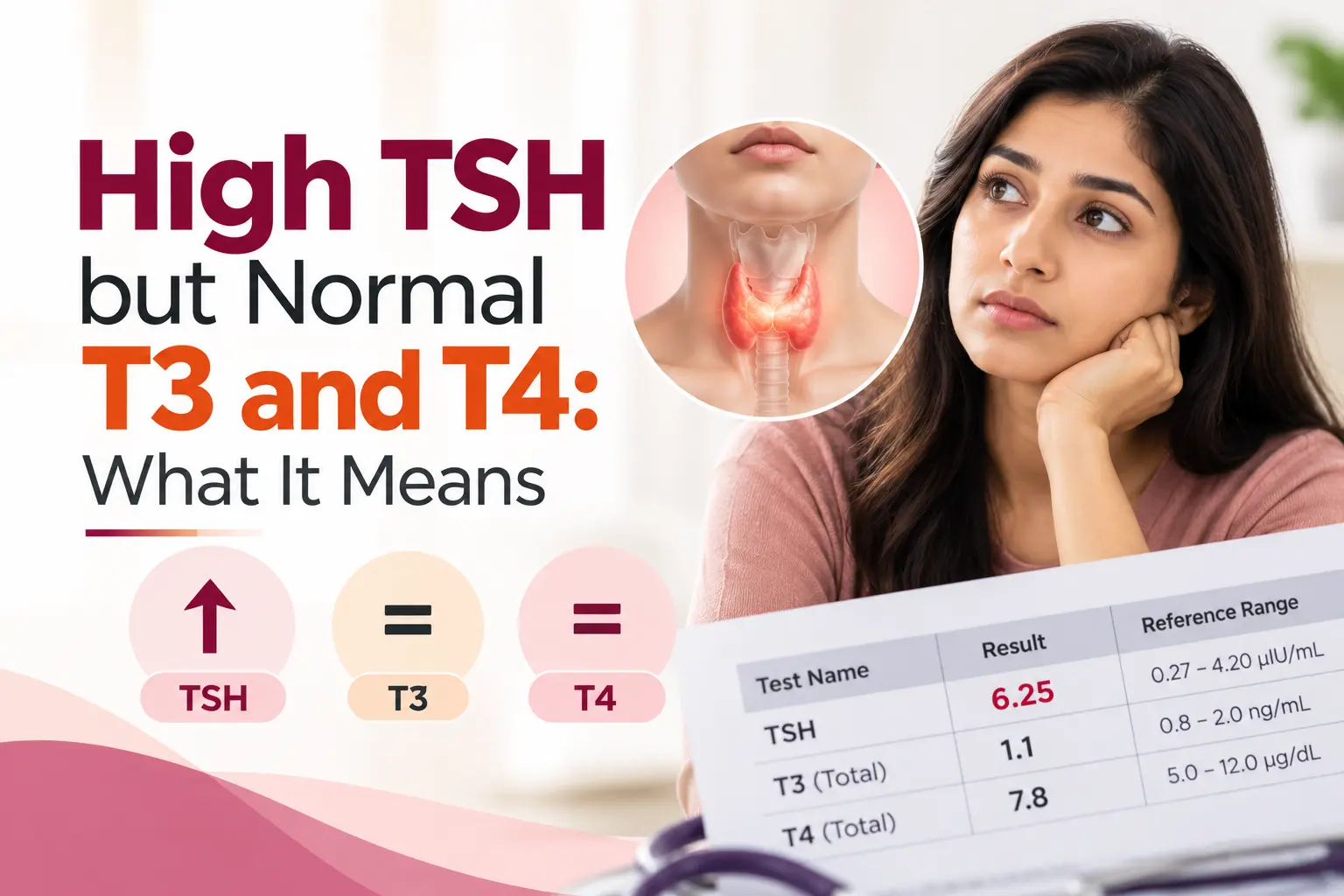
Your thyroid report may look confusing when one number is high while the others appear normal. If your TSH is elevated but your T3 and T4 levels are within the normal range, it does not always mean that you have full-blown hypothyroidism. This combination can occur when the thyroid is beginning to slow down, with the body producing more TSH to encourage the thyroid gland to maintain normal hormone levels. It is often referred to as subclinical hypothyroidism, although other factors can also cause a temporary high TSH but normal t3 t4.
Thyroid disorders are a growing health concern in India, with estimates from various studies suggesting that around 42 million people are affected by thyroid-related conditions. This makes understanding thyroid test results particularly important, especially when an abnormal TSH level appears alongside normal T3 and T4.
So, what does this result actually mean for you? The answer depends on more than just one number on the report. Your TSH level, symptoms, age, medical history, medications, thyroid antibodies, and repeat test results can all help determine whether the change needs treatment or simply monitoring. Understanding the relationship between TSH, T3, and T4 can make your thyroid report easier to understand and help you know when it may be worth speaking with a doctor.
What Do TSH, T3, and T4 Mean?
The thyroid gland produces hormones that influence metabolism, energy use, heart rate, body temperature, and several other body functions.
The main thyroid-related blood tests include:
-
TSH (thyroid-stimulating hormone): Produced by the pituitary gland, TSH signals the thyroid to produce thyroid hormones.
-
T4 (thyroxine): The primary hormone produced by the thyroid. Most circulating T4 is converted into the more active T3.
-
T3 (triiodothyronine): The more biologically active thyroid hormone involved in regulating metabolism.
The relationship between these hormones is important. When thyroid hormone production decreases, the pituitary gland may produce more TSH to stimulate the thyroid.
Dr. Karabi Roy, a renowned pathologist in Gurgaon at Miracles Healthcare, explains that thyroid test results should be interpreted together rather than focusing on a single hormone value.
Therefore, high TSH with normal T3 and T4 can indicate that the thyroid is requiring more stimulation to maintain normal hormone levels.
What Does High TSH With Normal T3 and T4 Mean?
High TSH doesn’t always mean your thyroid hormones are low. If your TSH is above the normal range but your T3 and T4 are still within range, your thyroid may be working harder than usual to keep hormone levels balanced. This pattern is commonly known as subclinical hypothyroidism.
The term “subclinical” can be misleading because you may still experience symptoms such as tiredness, feeling cold, weight changes, or constipation, or you may feel completely fine. What matters is how high your TSH is and whether it remains elevated over time. A single abnormal result may not tell the whole story, which is why your doctor may recommend repeat testing and other thyroid investigations before deciding on treatment.
What is the Normal TSH Range?
Wondering whether your TSH level is high? For most non-pregnant adults, Normal TSH level is commonly considered to be around 0.4–4.0 mIU/L, although the exact reference range can vary between laboratories, testing methods, age groups, and pregnancy stages.
For this reason, it is important to interpret your TSH result using the reference range provided on your laboratory report, rather than comparing it with a general number found online.
Dr. Karabi says, “TSH results should always be interpreted according to the laboratory’s reference range and along with other thyroid test findings.”
A mildly elevated TSH may require monitoring and repeat testing, while a significantly raised level may need further evaluation and, in some cases, treatment.
Thyroid problems are increasingly common among women. Learn about the possible causes, symptoms, and treatment options in our detailed guide on Thyroid Problems in Women: Causes, Symptoms and Treatment.
TSH Levels Chart
|
TSH Level |
General Interpretation |
|
Below 0.27 µIU/L |
Low TSH. It may be associated with hyperthyroidism or other conditions |
|
0.27–4.20 µIU/L |
Common reference range for most adults |
|
4.0–10 µIU/L |
Mildly elevated TSH. it may indicate subclinical hypothyroidism |
|
Above 10 µIU/L |
Significantly elevated TSH. It generally warrants medical evaluation |
TSH Level in Pregnancy
TSH levels naturally change during pregnancy, so pregnancy-specific reference ranges are generally used instead of standard adult ranges.
|
Pregnancy Stage |
Typical TSH Range* |
|
1st trimester |
0.1–2.5µIU/L (MIcro IU) |
|
2nd trimester |
0.2–3.0 µIU/L |
|
3rd trimester |
0.3–3.0 µIU/L |
What Causes High TSH but Normal T3 and T4?
Many factors can contribute to this thyroid test pattern.
1. Early or Mild Hypothyroidism
In some people, an elevated TSH may be an early sign that the thyroid is becoming less able to produce sufficient hormones. T3 and T4 can remain normal initially because the thyroid is still able to compensate.
2. Hashimoto's Thyroiditis
Hashimoto’s thyroiditis is an autoimmune condition in which the immune system mistakenly attacks the thyroid gland. Over time, this can affect the thyroid’s ability to produce hormones and is a common cause of hypothyroidism. Doctors may recommend thyroid antibody testing, particularly anti-thyroid peroxidase (anti-TPO) antibodies, when an autoimmune thyroid condition is suspected.
Dr. Karabi Roy says, “Anti-TPO antibody testing can provide useful clues when an autoimmune cause of thyroid dysfunction is suspected.”
3. Recovery From Illness
TSH levels can temporarily change during or after certain illnesses. A single abnormal result may therefore not necessarily indicate permanent thyroid dysfunction.
4. Certain Medications
Some medicines and supplements can influence thyroid function or affect the way thyroid hormones are processed in the body. If your TSH is unexpectedly high, your doctor may review the prescription medicines, over-the-counter products, and supplements you are taking to check whether they could be contributing to the change.
Dr. Roy says, “It is important to consider a patient’s current medicines and supplements when interpreting an unexpected change in thyroid test results.”
5. Iodine Imbalance
Both insufficient and excessive iodine intake can impact thyroid function. However, iodine supplementation should not be started without medical advice because excessive iodine can also interfere with thyroid function.
6. Previous Thyroid Treatment
People who have previously received treatment for thyroid disease may have altered TSH levels depending on their treatment and current thyroid function.
High TSH Value Symptoms
Some people with high TSH and normal T3 and T4 have no symptoms.
Others may experience symptoms commonly associated with an underactive thyroid, such as:
-
Tiredness or low energy
-
Feeling unusually cold
-
Dry skin
-
Constipation
-
Unexplained weight gain
-
Difficulty concentrating
-
Hair thinning or hair loss
-
Changes in menstrual cycles
-
Muscle aches
-
Feeling sluggish
These symptoms are not specific to thyroid disease and can occur with several other conditions. Therefore, symptoms alone cannot confirm hypothyroidism.
If you are experiencing persistent tiredness, unexplained weight changes, feeling unusually cold, or other symptoms of an underactive thyroid, don’t ignore them; consult an internal medicine doctor near you to understand whether your thyroid levels could be contributing to your symptoms and high TSH treatment.
Is High TSH With Normal T3 and T4 Serious?
Dr. Karabi Roy explains, “When TSH is elevated, but T3 and T4 remain normal, the significance of the result depends on the degree of TSH elevation and the patient’s overall clinical picture.”
In many cases, a mildly raised TSH may simply require monitoring, while a higher or persistent elevation may need further evaluation. Your symptoms, age, pregnancy status, thyroid antibody levels, and medical history can also influence the next steps.
Since thyroid levels can change over time, your doctor may recommend repeat testing or additional investigations before deciding whether treatment is necessary. Avoid starting or stopping thyroid medication based on a single test result.
When Should TSH Be Rechecked?
If your TSH is unexpectedly high while T3 and T4 are normal, your doctor may recommend repeating thyroid function tests after an appropriate interval.
A repeat test can help determine whether the TSH elevation is:
-
Temporary
-
Persistent
-
Increasing
-
Returning to the normal range
The timing of repeat testing depends on your individual situation and should be decided by your healthcare provider.
What Other Tests May Be Recommended For Thyroid?
Depending on your symptoms and medical history, your doctor may recommend additional tests, such as:
-
Anti-TPO Antibody Test: This test can help identify autoimmune thyroid disease such as Hashimoto's thyroiditis.
-
Free T4: Free T4 measures the unbound form of thyroxine available to tissues and may provide useful information when evaluating thyroid function.
-
Repeat TSH: Repeating TSH can help confirm whether the initial elevation persists.
Other tests may be recommended when your doctor suspects another condition contributing to your symptoms.
Does High TSH Always Require Treatment?
No. Treatment is not automatically required for every person with elevated TSH and normal thyroid hormone levels.
Management depends on factors such as:
-
The degree of TSH elevation
-
Whether the elevation persists
-
Presence of symptoms
-
Thyroid antibody results
-
Age
-
Pregnancy or plans for pregnancy
-
Existing medical conditions
-
Previous thyroid disease or treatment
For some people, regular monitoring may be appropriate. Others may benefit from thyroid hormone replacement.
Your doctor can determine the appropriate approach after considering your complete clinical picture.
When Should You See a Doctor?
Consider discussing your thyroid report with a doctor if:
-
Your TSH is repeatedly above the reference range.
-
You have symptoms suggestive of hypothyroidism.
-
You have a history of thyroid disease.
-
Thyroid problems run in your family.
-
You are pregnant or planning a pregnancy.
-
Your anti-TPO antibodies are positive.
-
Your TSH is significantly elevated.
-
You are already taking thyroid medication, and your report is abnormal.
A doctor can review your report along with your symptoms, medical history, medications, and other relevant test results.
Don’t Ignore Persistent Thyroid Symptoms, Get Your Thyroid Checked
A high TSH with normal T3 and T4 does not always mean you have a serious thyroid disorder, but it is worth understanding why the TSH level is elevated. It may be linked to subclinical hypothyroidism, an early thyroid change, or a temporary fluctuation.
Instead of focusing on a single test value, a doctor can look at your TSH and T4 levels, symptoms, thyroid antibodies, medical history, and repeat test results to determine whether you need monitoring, further testing, or treatment.
If you have persistent symptoms such as unexplained tiredness, weight changes, feeling unusually cold, constipation, or hair thinning, or your thyroid report shows an elevated TSH, get yourself tested and consult an internal medicine specialist near you for a proper evaluation and personalised guidance.
Book your thyroid test near you at Miracles Healthcare today.
Complete Thyroid Care, From Diagnosis to Treatment Under One Roof in Gurgaon
Miracles Healthcare is a leading multispeciality hospital in Gurgaon, has been offering comprehensive diagnostic services, specialist consultations, and treatment under one roof for over two decades. Our team evaluates your thyroid reports along with your symptoms, medical history, and previous test results to help identify thyroid disorders and plan appropriate care.
-
Advanced Laboratory: Equipped with advanced diagnostic technologies from Roche, Bio-Rad, and bioMérieux to support accurate and reliable test results.
-
Diagnostic Range: Availability of 2,000+ basic and advanced diagnostic tests to support evaluation of other associated health concerns.
-
Quick Test Results: Normal test results are available within a span of 6 hours, depending on the test.
-
24×7 Laboratory Facility: Round-the-clock laboratory services are available for patients requiring urgent investigations.
-
Easy Reports: Receive your reports through WhatsApp and access them conveniently through the patient portal.
-
Expert Team: A skilled team of pathologists, microbiologists, and laboratory professionals ensures quality testing and accurate reporting.
-
Multispecialist Support: Access to specialists in Internal Medicine, Endocrinology, Obstetrics & Gynaecology, and other relevant specialties for comprehensive evaluation and management of thyroid conditions.
-
Multilocation Presence: With healthcare facilities across Sector 14, Sector 56, and Sector 82, Gurgaon, patients can access diagnostic testing and specialist consultations at a convenient location.
-
Miracles Mediclinic, Sector 14, Gurgaon: Convenient for patients from Old Gurgaon, Civil Lines, Patel Nagar, Rajiv Chowk, and Sadar Bazaar.
-
Miracles Mediclinic, Sector 56, Gurgaon: Conveniently located for patients from Golf Course Road, Sushant Lok, DLF Phase 1, South City, and Nirvana Country.
-
Miracles Apollo Cradle/Spectra, Sector 82, Gurgaon: Suitable for patients from New Gurgaon, Sector 83, Sector 85, Sector 90, Sector 93, Vatika India Next, and Dwarka Expressway.
-
Concerned about high TSH, abnormal T3 or T4 levels, or symptoms of a thyroid problem? Schedule a thyroid test in Gurgaon and consult our specialists at Miracles Healthcare for timely evaluation and appropriate care.
Written and Verified by:

Frequently Asked Questions
There is no safe way to lower TSH instantly. Treatment depends on the underlying cause and may include monitoring or thyroid hormone medication prescribed by your doctor.
Yes. TSH, T3, and T4 can sometimes show different patterns depending on the thyroid condition, illness, medications, or treatment. The results should be interpreted together.
Yes, mildly elevated TSH can sometimes return to the normal range, particularly when the cause is temporary. Persistent elevation may require further evaluation and treatment.
Dr. Karabi advises not to take excessive iodine supplements, as too much iodine can affect thyroid function.
Hypothyroidism is a common cause of high TSH, with Hashimoto’s thyroiditis being a frequent underlying cause. Other factors, including medications and temporary thyroid changes, can also affect TSH levels.
For most adults, a TSH level is generally around 0.4–4.0 mIU/L, although the reference range can vary by laboratory. TSH above 10 mIU/L is considered significantly elevated and usually warrants medical evaluation, particularly if it persists or is accompanied by symptoms.



Was the information useful?
0 0