


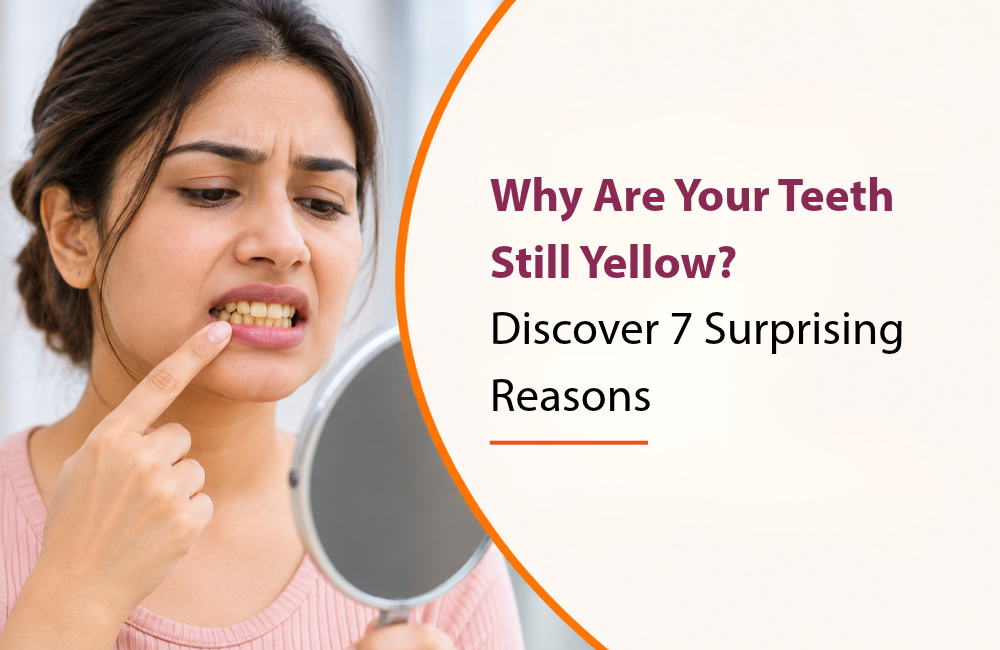
Why Are My Teeth Yellow Even After Brushing Every Day?

Summary
-
Yellow teeth despite regular brushing can result from natural enamel thickness, dentin colour, food stains, tartar buildup, ageing, tobacco use, or certain medications.
-
Tea, coffee, dark-coloured foods, and tobacco can contribute to tooth discolouration over time.
-
Brushing twice daily, flossing, and limiting staining beverages can help maintain oral hygiene.
-
Consult a dentist if tooth discolouration persists, appears suddenly, or is accompanied by pain, sensitivity, or bleeding gums.
Brushing your teeth twice a day, using fluoride toothpaste, and maintaining oral hygiene are essential habits for healthy teeth. But what if your teeth still look yellow despite following these practices regularly? You may wonder whether you are brushing incorrectly or if something is affecting your tooth colour.
The truth is that yellow teeth are not always a sign of poor oral hygiene. Natural tooth structure, enamel thickness, food habits, ageing, and plaque accumulation can all influence the appearance of your teeth. In some cases, the discolouration may also be related to certain medications or previous dental problems.
So, why are your teeth yellow even after brushing every day? Understanding the possible causes can help you identify whether you need better oral hygiene practices, professional dental cleaning, or a specific dental treatment.
Common Causes of Yellow Teeth Even After Brushing
Your teeth may remain yellow even after regular brushing because brushing removes food particles and some surface stains, but it cannot address every cause of tooth discolouration. Natural tooth colour, thinning enamel, visible dentin, hardened plaque (tartar), tobacco use, certain foods and drinks, and some medications can all make teeth appear yellow.
The outer layer of the tooth, called enamel, is naturally translucent, while the dentin beneath it has a yellowish colour. As enamel slowly wears down or becomes thinner, the yellow dentin may become more visible, making teeth look yellow despite maintaining good oral hygiene.
In other cases, stains or tartar may build up in areas that regular brushing cannot clean effectively. This is why yellow teeth do not always indicate poor brushing habits. The underlying cause of discolouration determines whether professional cleaning, dental treatment, or another approach may help.
1. Natural Enamel Thickness and Tooth Colour
Not everyone’s teeth are naturally bright white. Some people have slightly yellowish teeth because of their genetics, enamel thickness, and the natural colour of dentin.
Enamel acts as a protective covering, but its thickness and translucency vary between individuals. If the enamel is relatively thin, the yellowish dentin underneath may be more visible.
This means that even people who brush correctly and maintain good oral hygiene may have naturally cream-coloured teeth.
Dr. Divyakshi Chauhan, Dentist in Gurgaon at Miracles Healthcare, says, “Natural tooth colour varies from person to person. Slightly yellow teeth do not necessarily indicate poor oral hygiene, as enamel thickness and underlying dentin also influence their appearance.”
2. Tea, Coffee and Staining Foods
Your everyday food and beverage choices can gradually affect the colour of your teeth and contribute to a yellow teeth problem, even when you follow a regular brushing routine.
Tea and coffee contain tannins, which can contribute to external stains by allowing coloured compounds to accumulate on tooth surfaces. Frequent consumption may make these stains more noticeable over time.
Other foods and beverages that can contribute to tooth staining include:
-
Red wine and dark-coloured beverages.
-
Cola and certain carbonated drinks.
-
Dark berries such as blueberries and blackberries.
-
Soy sauce and strongly pigmented sauces.
-
Certain coloured foods and beverages.
Regular brushing helps remove plaque and food debris, but established stains may not disappear completely with a toothbrush. This is why people experiencing a persistent yellow teeth problem may need professional dental assessment to identify the cause of discolouration.
Rinsing your mouth with water after consuming staining beverages may help reduce the contact of pigments with your teeth. Professional dental cleaning may also be useful when surface stains have accumulated.
3. Plaque and Tartar Buildup
Even if you brush twice every day, plaque can accumulate in areas that are difficult to clean properly. Plaque is a sticky film of bacteria that continuously forms on tooth surfaces. When it is not removed effectively, minerals in saliva can cause it to harden into tartar, also known as dental calculus. Tartar can appear yellow or brown, particularly around the gumline and between teeth. It may also contribute to gum inflammation and other oral health problems.
Unlike soft plaque, hardened tartar cannot be removed through ordinary brushing at home. Professional scaling by a dentist is generally required to remove it.
Dr. Divyakshi Chauhan shares, “Brushing regularly is important, but it may not remove hardened tartar or stains from every area of the teeth. Professional dental cleaning helps address deposits that routine brushing cannot eliminate.”
4. Incorrect Brushing Technique
Brushing every day does not necessarily mean that all tooth surfaces are being cleaned effectively. Sometimes, the problem is not how frequently you brush but how you brush.
Common brushing mistakes include:
-
Brushing for less than two minutes.
-
Ignoring the inner surfaces of teeth.
-
Not cleaning properly along the gumline.
-
Using a toothbrush with worn-out bristles.
-
Applying excessive pressure while brushing.
-
Skipping, flossing or cleaning between teeth.
To maintain good oral hygiene, use a soft-bristled toothbrush and fluoride toothpaste. Brush gently for two minutes, twice a day, making sure to clean all tooth surfaces.
Cleaning between teeth with dental floss or an appropriate interdental cleaning aid can also help remove plaque from areas that a toothbrush cannot reach.
5. Age-Related Changes in Teeth
Ageing is another common reason for slow tooth discolouration. Over time, enamel undergoes natural wear due to everyday chewing and other factors. As the enamel becomes thinner, the underlying yellowish dentin may become more visible.
Other changes associated with ageing include:
-
Gradual enamel wear.
-
Accumulation of external stains over the years.
-
Changes in tooth surface appearance.
-
Gum recession that may expose darker root surfaces.
Although these changes are part of the ageing process, maintaining good oral hygiene and attending regular dental check-ups can help preserve dental health.
6. Smoking and Tobacco Consumption
Smoking and tobacco use can contribute to yellow or brown stains on teeth, even when you maintain a regular brushing routine. Nicotine and tar present in tobacco can leave stains on tooth surfaces, which may become more noticeable with continued use.
According to studies, regular tobacco use is associated with increased tooth discolouration, as staining compounds slowly accumulate on enamel. These deposits may not be removed completely through everyday brushing, which is why people experiencing yellow teeth from smoking may require professional dental cleaning.
Tobacco consumption can also increase the risk of gum disease, tooth loss and oral cancer.
Reducing and ideally quitting tobacco use is an important step towards protecting your oral health. If you notice persistent yellow or brown stains, consult a dentist to understand the cause and discuss suitable cleaning or treatment options.
7. Certain Medicines and Previous Dental Problems
Sometimes, tooth discolouration may be associated with medication exposure, dental trauma, or previous dental procedures.
For example:
-
Certain antibiotics, including tetracycline, can cause tooth discolouration when exposure occurs during specific stages of tooth development.
-
Dental trauma may cause an individual tooth to turn yellow, grey or darker over time.
-
Previous dental treatments or restorative materials may influence the appearance of a tooth.
-
Certain medications can contribute to dry mouth, which may indirectly affect oral health.
Dr. Chauhan says, "A sudden change in the colour of a tooth should not be ignored, as it may indicate an underlying dental issue that needs professional evaluation."
If you notice sudden discolouration in one tooth or a change after starting a medication, consult a dentist near you for an assessment. Do not discontinue prescribed medicines without medical advice.
How to Reduce Yellow Teeth?
The right approach to yellow teeth depends on the underlying cause. While some stains can be managed through improved oral hygiene, others may require professional treatment for yellow teeth.
Here are some practical measures that can help maintain cleaner-looking teeth.
1. Brush Twice Daily Using the Correct Technique
Brush your teeth twice a day for approximately two minutes using a soft-bristled toothbrush and fluoride toothpaste. Avoid applying excessive pressure, as aggressive brushing can contribute to enamel wear and gum recession. Pay attention to the inner surfaces, outer surfaces, and gumline.
2. Clean Between Your Teeth Every Day
Food particles and plaque can accumulate between teeth, where toothbrush bristles may not reach effectively. Use dental floss or an appropriate interdental cleaning aid to clean these spaces. This helps maintain gum health and reduces plaque accumulation.
3. Limit Frequent Consumption of Staining Beverages
If you regularly drink tea, coffee, or other dark-coloured beverages, consider reducing their frequency. Rinse your mouth with water afterwards to help wash away residual pigments. If you consume acidic drinks, avoid brushing immediately afterwards because acid can temporarily soften the enamel surface.
4. Schedule Regular Dental Check-ups
Routine dental visits help identify plaque accumulation, tartar, cavities, and gum problems before they become more significant. Your dentist can also assess whether the yellow appearance is caused by external stains or changes within the tooth.
5. Consider Professional Teeth Cleaning
Professional scaling and polishing may help remove hardened tartar and certain external stains. However, dental cleaning and teeth whitening are different procedures. Teeth Scaling removes deposits from tooth surfaces, whereas whitening treatments use suitable bleaching agents to lighten certain types of discolouration. The appropriate option depends on your dental examination.
6. Avoid Unverified Home Whitening Remedies
Lemon juice, vinegar, charcoal, and abrasive powders are often promoted as natural ways to whiten teeth. However, these remedies may damage enamel, irritate gums, or increase tooth sensitivity.
Similarly, using whitening products without understanding their ingredients and suitability may lead to unwanted side effects.
Dr. Divyakshi Chauhan advises, “Not every yellow stain requires teeth whitening. Identifying whether the discolouration is external or internal is important before choosing a treatment that is appropriate for your teeth.”
Can Yellow Teeth Become White Again?
Yes, certain types of tooth discolouration can be improved with appropriate dental treatment. However, the results depend on what is causing the yellow appearance.
Different treatment options may include:
-
Professional scaling and polishing: Helps remove plaque, tartar, and certain external stains.
-
Professional teeth whitening: Uses dentist-approved bleaching agents to lighten suitable types of tooth discolouration.
-
Dental restorations: In selected cases, veneers or crowns may be considered when discolouration cannot be adequately addressed through cleaning or whitening.
It is important to understand that teeth whitening does not work equally well for every type of stain. Discolouration caused by certain medications, dental trauma, or changes within the tooth may require a different approach. A dental examination can help determine the most appropriate treatment while protecting the natural tooth structure.
When Should You Consult a Dentist About Yellow Teeth?
Yellow teeth are not necessarily a sign of dental disease. However, persistent or sudden changes in tooth colour deserve attention, particularly when accompanied by other symptoms.
Seek medical advice from a dental specialist near you if:
-
Your teeth remain yellow despite maintaining good oral hygiene.
-
You notice brown or dark patches on your teeth.
-
One tooth suddenly becomes yellow, grey, or darker than the others.
-
You experience tooth sensitivity or pain.
-
Your gums bleed during brushing.
-
You notice hardened deposits around the gumline.
-
Tooth discolouration is accompanied by swelling or discomfort.
A dentist can examine your teeth and gums, identify the possible cause, and recommend appropriate treatment.
For example, if the discolouration is caused by tartar, professional scaling may be sufficient. If it is related to enamel changes or internal staining, other treatment options may be considered.
Conclusion:
Yellow teeth despite regular brushing can occur due to several factors, including natural enamel thickness, dentin colour, food and beverage stains, tobacco use, ageing, and tartar buildup. While maintaining good oral hygiene is essential, brushing alone may not remove every type of stain or address underlying dental concerns.
The right approach begins with identifying the cause of discolouration. A dental professional can assess your teeth, recommend suitable cleaning or whitening options where appropriate, and help you maintain good oral health without relying on harsh or unverified home remedies.
If you are looking for professional guidance for tooth discolouration, meet a dentist near you at Miracles Healthcare for guidance to understand the reason and care for your teeth and gums.
Dental Care in Gurgaon at Miracles Healthcare
Whether you are concerned about yellow stains, changes in tooth appearance, or routine dental health, timely consultation can help you make informed decisions about your oral care.
At Miracles Healthcare, Gurgaon, you can consult a team of dental doctors for evaluation of tooth discolouration and other dental concerns. Our dental team assesses oral health, identifies possible causes of yellow teeth, and guides you on appropriate options, such as professional cleaning or teeth whitening, depending on individual needs.
To schedule your dental consultation at Miracles Healthcare, call 906-906-8800.
Written and Verified by:

Frequently Asked Questions
Not necessarily. Teeth naturally vary in colour, and slightly yellow teeth do not always indicate poor oral hygiene. However, sudden discolouration or persistent staining may need dental evaluation.
Foods such as berries, tomato-based sauces, curry, and dark-coloured fruits may stain teeth over time, particularly with frequent consumption.
Brush twice daily with fluoride toothpaste, floss regularly, limit stain-causing foods and drinks, rinse your mouth with water after consuming them, and visit your dentist for routine check-ups.
There is no reliable scientific evidence that turmeric whitens teeth. It should not replace regular oral hygiene or dentist-recommended whitening methods.
Tea, coffee, red wine, and dark-coloured soft drinks can stain tooth enamel over time, especially when consumed frequently.
Dentist-supervised whitening is generally a safer option when performed after assessing your teeth and gums. Avoid abrasive home remedies such as lemon, charcoal, or baking soda scrubs.






Was the information useful?
0 0