


Orthopedic Conditions We Treat
Comprehensive Care for Your Health

Scoliosis is a medical term used to describe an abnormal curvature of the spine, leading to misalignment and abnormal shape of the spine. When diagnosed early and treated appropriately, these complications can be prevented or improved, thereby improving quality of life. If scoliosis goes undiagnosed until it becomes significant, it can worsen over time, resulting in additional complications such as low back pain, impaired posture, and impairment in breathing function (in severe cases) as it continues to progress.
Scoliosis is a medical condition in which the spine curves sideways in an abnormal “S” or “C” shape instead of being straight.
Normally, the spine runs straight down the back. In scoliosis, the curve may develop in the upper, middle, or lower spine.
It commonly occurs in:
Children and teenagers (most common)
Adults due to aging or spine degeneration
Scoliosis can range from mild to severe.
In the early stages, scoliosis may not cause pain. However, visible physical changes can be noticed.
Common symptoms include:
Uneven shoulders
One shoulder blade is more prominent than the other
Uneven waist
One hip is higher than the other
Body leaning to one side
Back pain
Difficulty standing straight
Severe scoliosis symptoms may include:
Breathing difficulty
Reduced physical activity
Severe spine deformity
In many cases, the exact cause is unknown. This is called idiopathic scoliosis.
Scoliosis can develop because of different reasons depending on age and underlying health conditions. In many cases, the exact cause of scoliosis may not be known. The most common causes include
This is the most common type of scoliosis in children and teenagers. The exact cause is unknown, but it usually develops during the growth spurt before puberty. It may slowly worsen if not monitored during growth years.
Congenital scoliosis is present at birth. It occurs when the spine does not form properly during fetal development. This abnormal spinal formation can cause the spine to curve as the child grows.
This type of scoliosis is caused by conditions that affect the nerves and muscles, which support the spine. It is commonly seen in children with neurological or muscular disorders such as cerebral palsy, muscular dystrophy, or spinal cord conditions. The curve may progress more rapidly in these cases.
Degenerative scoliosis develops in adults, usually after the age of 40, due to wear and tear of the spine. It is caused by aging, arthritis, weakening of spinal joints, or degeneration of spinal discs. This type is associated with back pain and stiffness.
An early diagnosis of scoliosis provides an opportunity to prevent increased spinal curvation and initiate treatment early. This will help determine if the patient needs physical therapy or surgery. Determining whether a patient has scoliosis involves a combination of a thorough physical evaluation, followed by a doctor to confirm the diagnosis and determine its severity.
During the physical exam, the doctor carefully evaluates your posture and spine alignment. This includes checking
Shoulder alignment.
Spine shape and curvature.
Waist symmetry.
Hip alignment.
Overall posture and balance.
The doctor may also ask the patient to bend forward to observe any abnormal spinal curve.
If scoliosis is suspected, then imaging studies are done to determine if there is scoliosis and how curved the person’s spine.
X-ray: The most common test used to confirm scoliosis and measure the curve of the spine.
MRI Scan: This scan helps evaluate your spinal cord, nerves, and soft tissues.
CT Scan: Used to evaluate the spine in detail; a CT scan is particularly valuable in unusual or complex cases, and also for use when planning for surgery.
These tests help determine the severity and guide doctors for the most appropriate treatment plan.
Scoliosis treatment depends on several factors, including
Age of the patient.
Severity of the spinal curve.
Cause of scoliosis.
Symptoms and progression of the condition.
The main goal of treatment is to prevent the curve from worsening, reduce symptoms, and improve posture and quality of life.
1. Observation and Monitoring: This approach is recommended for mild scoliosis.
It includes
Regular check-ups.
Periodic X-rays to monitor curve progression.
No immediate medical or surgical treatment.
Many mild cases do not worsen and only require observation.
2. Bracing: Bracing is generally recommended for children and teenagers whose bones are still growing.
Benefits of bracing include
Prevents further progression of the spinal curve.
Supports proper spine alignment.
Reduces the need for surgery in many cases.
Braces do not cure scoliosis but help control its progression.
3. Physiotherapy and Exercise: Physiotherapy plays a very important role in scoliosis management.
It helps to
Improve posture.
Strengthen back and core muscles.
Increase flexibility.
Reduce pain and discomfort.
Improve overall spinal support.
Regular exercises can help patients maintain better spinal health.
4. Pain Management: Pain management is mainly recommended for adults with scoliosis.
It may include
Medications to reduce pain and inflammation
Exercise therapy.
Lifestyle modifications.
Physical therapy.
This helps improve daily comfort and mobility.
5. Scoliosis Surgery: Surgery is recommended in severe scoliosis cases, especially when
The curve is severe.
The condition is worsening rapidly.
The patient has significant pain or functional problems
Scoliosis surgery helps to
Correct and straighten the spinal curve.
Stabilize the spine.
Improve posture and body balance.
Prevent further progression
With modern surgical techniques and advanced technology, scoliosis surgery is safe and offers faster recovery and excellent results.
Scoliosis cannot always be prevented, but early care can stop progression.
Prevention tips include
Regular health check-ups in children.
Early screening during growth years.
Maintain proper posture.
Regular exercise.
Strengthening back muscles.
Early treatment prevents complications.
Certain factors can increase the risk of developing scoliosis.
These include:
Age between 10 and 15 years (growth period)
Family history of scoliosis
Female gender (higher risk of progression)
Congenital spine abnormalities
Neuromuscular conditions
Spine injury or trauma
Aging and degenerative spine conditions
Arthritis affecting the spine
Early screening in high-risk individuals can help detect scoliosis early and prevent complications.
If you notice scoliosis symptoms, early consultation with an orthopedist is important. Miracles Healthcare is one of the best hospitals for scoliosis treatment in Gurgaon, offering advanced diagnosis and complete spine care under one roof. The hospital has experienced spine specialists and modern imaging facilities such as X-ray, MRI, and CT scan for accurate diagnosis. Treatment includes personalized care plans, physiotherapy, advanced spine surgery, and full rehabilitation support. With modern technology and a high success rate, Miracles Healthcare provides effective and trusted scoliosis treatment to help patients recover faster and improve their quality of life.

Comprehensive Care for Your Health
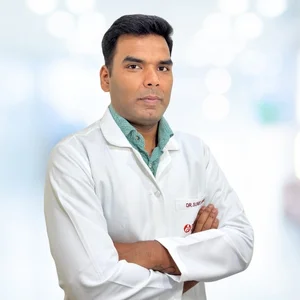
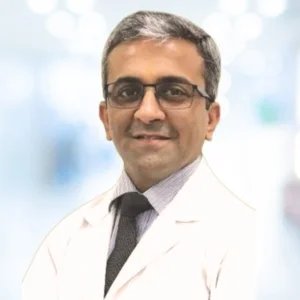
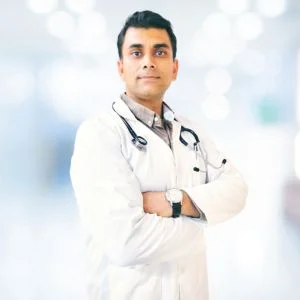
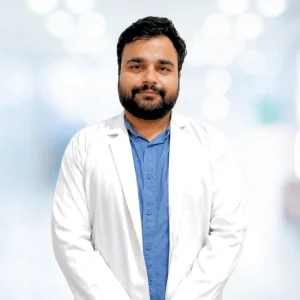
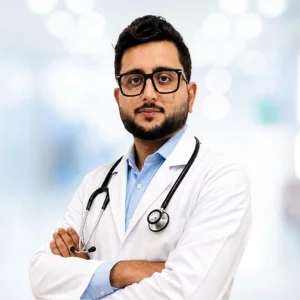
Meet our expert team of orthopaedic doctors where compassionate care meets expertise.





Inspiring Journeys: True Patient Stories

Thanks Mr. Nedrat Abdul for your grateful words fo...

Watch what one of our patient Mrs. Maria Amelin Ma...

Mr. Aadarsh Kumar - Patient Testimonial for Matern...

Our team at Miracles Healthcare takes extra care o...
Miracles Healthcare is a leading multispeciality hospital in Gurgaon. We are committed to providing comprehensive and high-quality medical care across all specialties under one roof.





Learn about the world class health care we provide
Source for Expert Advice and Health Tips



Learn about the world class health care we provide
The most common cause is idiopathic scoliosis, which means the exact reason is unknown. It generally develops during growth in children and teenagers.
Yes, scoliosis can be managed and corrected with bracing, physiotherapy, and surgery.
Scoliosis commonly starts between 10 and 15 years of age, especially during growth spurts.
Sleeping on the back or side with a proper pillow support can help maintain spine alignment as well as reduce discomfort.
There is no single deficiency, but low Vitamin D and calcium may weaken bones and increase spine problems.
Yes, most people with mild to moderate scoliosis live normal, active lives with proper monitoring, exercise, and treatment if required.
Common symptoms are uneven shoulders, uneven hips, a curved spine, poor posture, and back pain.
Untreated scoliosis may worsen over time.It can cause severe deformity, chronic pain, posture problems, and breathing problems in serious cases.
In adults, scoliosis can develop because of aging, spine degeneration, arthritis, or injury.


