


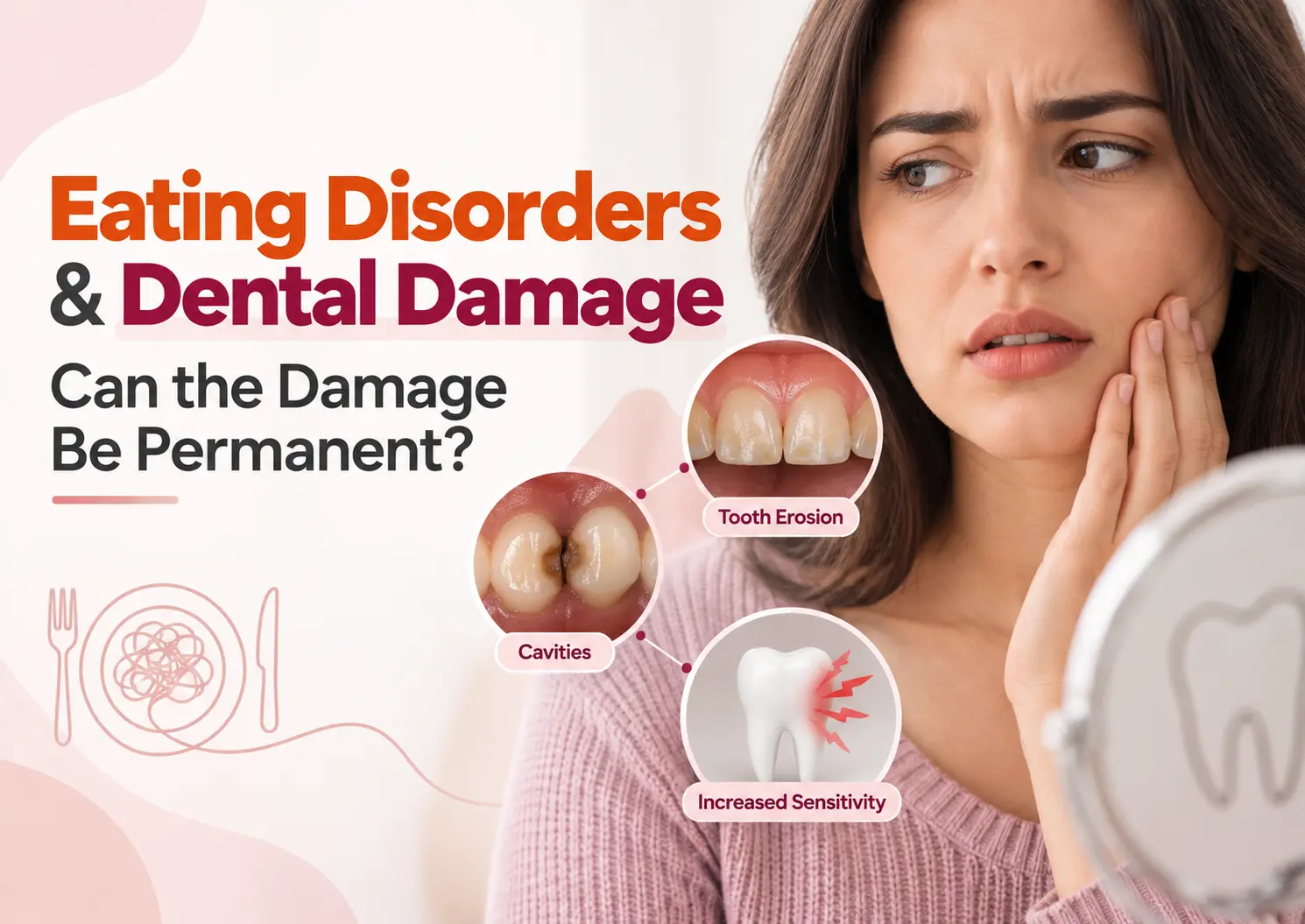
Can Eating Disorders Cause Permanent Dental Damage?


- Connection Between Eating Disorders and Oral Health
- What Are Eating Disorders?
- Eating Disorders Can Cause Permanent Dental Damage
- How Do Eating Disorders Affect Dental Health?
- Warning Signs of Eating Disorder-Related Dental Problems
- How Can You Protect Your Teeth During an Eating Disorder?
- When Should You See a Dentist?
- Take Care of Your Oral Health
- Protect your teeth with expert dental care in Gurgaon
Summary
Connection Between Eating Disorders and Oral Health
Eating disorders are serious mental and physical health conditions that can affect many parts of the body, including the mouth. While changes in weight, eating patterns, and overall nutrition are often the more visible concerns, dental health can also be significantly affected by eating disorders.
Research states that repeated vomiting, nutritional deficiencies, dehydration, frequent consumption of sugary or acidic foods, and changes in oral hygiene can increase the risk of dental erosion, cavities, dry mouth, tooth sensitivity, gum problems, and other oral-health complications. In some cases, oral changes may be among the first signs noticed by a dentist, making regular dental check-ups important for early identification and management.
Eating disorders such as anorexia nervosa, bulimia nervosa, and binge-eating disorder affect oral health in different ways. The severity of dental problems can also depend on how long the eating disorder has been present, the person's nutritional status, oral hygiene habits, frequency of vomiting, and other individual factors.
Understanding the connection between eating disorders and dental health is important because early dental care can help prevent permanent damage and protect the teeth and gums.
What Are Eating Disorders?
Dr. Divyakshi Chauhan, dental Specialist in Gurgaon at Miracles Healthcare, says, “Eating disorders are mental and physical health conditions that can affect eating behaviours, thoughts about food, weight or body image, and the ability to maintain healthy eating patterns.”
Common types of eating disorders include:
-
Anorexia nervosa: Severe restriction of food intake, often accompanied by an intense fear of gaining weight or a distorted perception of body weight.
-
Bulimia nervosa: Recurrent episodes of binge eating followed by compensatory behaviours, which may include self-induced vomiting or excessive exercise.
-
Binge-eating disorder: Repeated episodes of eating unusually large amounts of food with a feeling of loss of control, without regular compensatory behaviours.
-
Other specified eating disorders: Conditions that may cause significant distress or health problems but do not fit completely into one specific diagnostic category.
Because eating disorders can affect nutrition, hydration, stomach acid exposure, and eating habits, they can have a direct and indirect impact on oral health.
Eating Disorders Can Cause Permanent Dental Damage
Yes, some dental damage linked to eating disorders can become permanent, especially when enamel erosion and other oral problems continue for a long time.
One important point to remember is that tooth enamel cannot naturally grow back once it is lost. Repeated exposure to stomach acid, poor nutrition, dehydration, and inadequate oral care can slowly weaken the teeth, making them more sensitive and vulnerable to decay.
However, early dental care can make a significant difference. A dentist may recommend fluoride treatments to strengthen remaining enamel, strategies to manage tooth sensitivity, restorative procedures for damaged teeth, and other preventive measures based on the extent of the damage.
Addressing the eating disorder alongside dental problems is equally important. The sooner both are recognised and treated, the better the chances of preventing further damage and protecting long-term oral health.
How Do Eating Disorders Affect Dental Health?
The mouth can be affected by many factors associated with eating disorders. Some of the most common dental effects include enamel erosion, cavities, tooth sensitivity, dry mouth, gum problems, and changes to the soft tissues of the mouth.
Let's understand these effects in detail.
1. Tooth Enamel Erosion
One of the most significant dental complications associated with repeated vomiting is tooth enamel erosion.
When a person vomits, stomach acid comes into contact with the teeth. Stomach acid is highly acidic and can slowly soften and wear away tooth enamel.
Unlike a cavity, enamel erosion is not caused by bacteria directly. Instead, the acidic environment chemically weakens the tooth surface.
Repeated exposure can result in:
-
Thinning of tooth enamel
-
Increased tooth sensitivity
-
Smooth or worn tooth surfaces
-
Changes in tooth shape
-
Increased risk of cavities
Teeth appearing more yellow because the underlying dentin becomes more visible
Enamel does not naturally grow back once it has been permanently lost. This is why early dental evaluation is important when repeated vomiting is occurring.
2. Increased Tooth Sensitivity
As enamel becomes thinner, the underlying dentin can become exposed. Dentin contains microscopic pathways that can transmit sensations toward the nerve of the tooth. As a result, a person may experience sensitivity when consuming:
-
Hot foods or drinks
-
Cold beverages
-
Sweet foods
-
Acidic foods
-
Very cold air
Dr. Divyakshi says, "Tooth sensitivity may initially seem like a minor inconvenience, but persistent sensitivity can indicate significant enamel wear or another underlying dental problem and should not be ignored.”
3. Higher Risk of Cavities
Eating disorders can increase the risk of dental caries, commonly known as cavities, through several pathways.
Frequent consumption of sugary foods or drinks can expose the teeth to fermentable carbohydrates. Oral bacteria use these sugars to produce acids that can damage tooth enamel.
Inadequate nutrition can also affect saliva production and overall oral health. When combined with poor oral hygiene, frequent snacking, or episodes of binge eating, the risk of tooth decay may increase.
People experiencing eating disorders may also have irregular oral-care routines, particularly during periods of emotional distress or poor physical health.
4. Dry Mouth
Dry mouth, medically known as xerostomia, can occur in people with eating disorders.
Dehydration, inadequate food and fluid intake, vomiting, certain medications, and nutritional deficiencies may contribute to reduced saliva production.
Saliva plays an important role in maintaining oral health. It helps:
-
Wash away food particles
-
Neutralise acids in the mouth
-
Lubricate oral tissues
-
Support enamel remineralisation
-
Control the growth of certain microorganisms
When saliva production decreases, the mouth loses some of its natural protection.
Dry mouth can therefore increase the risk of cavities, bad breath, mouth discomfort, and difficulty swallowing or speaking.
Dr. Chauhan says, “Reduced saliva production can weaken the mouth’s natural defence against acids and bacteria, increasing the risk of tooth decay, sensitivity and other oral health problems.”
5. Gum Problems
Nutritional deficiencies associated with restrictive eating patterns can affect the health of the gums and other oral tissues.
A person may develop any of the following gum problems:
-
Red or swollen gums
-
Bleeding while brushing or flossing
-
Gum tenderness
-
Increased plaque accumulation
-
Gum recession
-
Periodontal problems
Poor oral hygiene can further worsen these problems.
If gum bleeding continues regularly, it should not simply be assumed to be caused by an eating disorder. A dental examination can help identify whether plaque, gingivitis, periodontal disease, nutritional issues, or another condition is responsible.
6. Changes in the Mouth and Oral Tissues
Nutritional deficiencies may affect the tissues inside the mouth.
Depending on the person's nutritional status, they may experience:
-
Mouth sores
-
Dry or cracked lips
-
Burning sensations
-
A sore or inflamed tongue
-
Changes in the appearance of oral tissues
-
Delayed healing
These symptoms are not specific to eating disorders and can occur for many other reasons. However, when they occur alongside significant changes in eating behaviour or nutrition, they should be evaluated by a healthcare professional.
7. Swollen Salivary Glands
Repeated vomiting can sometimes be associated with enlargement or swelling of the salivary glands, particularly the parotid glands located near the cheeks and jaw. This can cause noticeable fullness around the cheeks or jawline.
Salivary gland swelling has several possible causes, so it should be assessed by a healthcare professional rather than automatically attributed to an eating disorder.
Dr. Divyakshi Chauhan explains, “Swelling of the salivary glands can have several causes, so persistent swelling around the cheeks or jaw should be evaluated by a healthcare professional.”
8. Bad Breath
Bad breath, or halitosis, may occur because of:
-
Dry mouth
-
Reduced saliva production
-
Vomiting
-
Poor oral hygiene
-
Food accumulation
-
Changes in oral bacteria
Persistent bad breath should be evaluated by a dentist, especially if it occurs along with gum bleeding, tooth sensitivity, or other oral symptoms.
Do you often skip your breakfast because of a busy schedule or changes in your eating habits? Learn how skipping breakfast can affect your teeth and gums in our blog, The Shocking Link Between Skipping Breakfast and Dental Health.
Warning Signs of Eating Disorder-Related Dental Problems
A person may benefit from a dental evaluation if they experience:
-
Increasing tooth sensitivity
-
Teeth becoming more yellow or translucent
-
Tooth surfaces appearing worn or smooth
-
Frequent cavities
-
Gum bleeding or swelling
-
Persistent dry mouth
-
Recurrent mouth sores
-
Swollen cheeks or salivary glands
-
Persistent bad breath
-
Pain while eating or drinking
-
Chipped or weakened teeth
These symptoms do not necessarily mean that someone has an eating disorder. They can occur because of many dental or medical conditions.
A dentist can assess the symptoms and determine the appropriate next steps.
If you are experiencing any of the above-mentioned symptoms or other dental changes related to an eating disorder, consult a dentist near you for an evaluation. Early assessment can help identify damage and prevent further complications.
How Can You Protect Your Teeth During an Eating Disorder?
Dental care should be part of your overall recovery, alongside appropriate medical and mental-health support.
-
Maintain Regular Dental Visits: Regular check-ups can help detect enamel erosion, cavities, gum problems, and sensitivity early. Tell your dentist about vomiting, dry mouth, or restrictive eating so they can plan appropriate care.
-
Use Fluoride Toothpaste: Brush twice daily with fluoride toothpaste to strengthen enamel and protect against cavities. Avoid brushing too aggressively.
-
Choose a Soft-Bristled Toothbrush: Use a soft-bristled toothbrush and gentle movements to minimise damage to weakened enamel and gums.
-
Rinse After Vomiting: After vomiting, rinse your mouth with water instead of brushing immediately, as stomach acid can temporarily soften enamel.
-
Stay Hydrated: Drink enough water to support saliva production and reduce dry-mouth symptoms. Persistent dryness should be discussed with a dentist or doctor.
-
Limit Acidic and Sugary Exposures: Frequent acidic or sugary foods and drinks can increase the risk of enamel erosion and tooth decay. A dietitian can help support nutrition without encouraging restrictive eating habits.
-
Avoid Abrasive Whitening Products: Whitening products and abrasive toothpastes may worsen sensitivity or enamel wear. Consult your dentist before using them, particularly if your enamel is already damaged.
When Should You See a Dentist?
You should consider scheduling a dental appointment for eating disorders treatment if you notice new or worsening oral symptoms, particularly if you have experienced:
-
Recurrent vomiting
-
Significant dietary restriction
-
Frequent binge eating
-
Tooth sensitivity
-
Enamel wear
-
Cavities
-
Gum bleeding
-
Dry mouth
-
Mouth sores
-
Persistent dental pain
You do not need to wait until you have severe tooth pain before seeking help. A dentist can examine your teeth and gums, identify early signs of damage, and recommend ways to protect your oral health.
Take Care of Your Oral Health
Eating disorders can affect teeth, gums, saliva, and overall oral health. Stomach acid, nutritional deficiencies, dehydration, and dry mouth can increase the risk of enamel erosion, cavities, sensitivity, and gum problems.
Early dental care can help prevent further damage and manage existing problems.
If you experience tooth sensitivity, enamel changes, gum problems, or mouth discomfort, consult a qualified dental specialist near you at Miracles Healthcare for personalised care.
Schedule a dental consultation today to protect your teeth and gums.
Protect your teeth with expert dental care in Gurgaon
If you are experiencing tooth sensitivity, enamel erosion, dry mouth, gum problems, cavities, or other oral-health changes associated with an eating disorder, timely dental care can help prevent further damage. Miracles Healthcare, a top-rated dental hospital in Gurgaon, has been providing quality dental care since 2002, supported by experienced specialists and modern dental technology for comprehensive, personalised oral healthcare.
-
The hospital is trusted by 10,000+ national and international patients, reflecting its focus on quality and patient-centred care.
-
An experienced team of dental specialists assesses enamel erosion, tooth sensitivity, cavities, gum problems, and other oral-health concerns.
-
Advanced Digital dental technology supports accurate assessment and treatment planning for individual orthodontic needs.
-
3D intraoral scanning can provide a more comfortable and precise alternative to traditional dental impressions in applicable procedures.
-
Comprehensive dental care is available for preventive, restorative, and general oral-health concerns.
-
Personalized treatment plans help manage existing dental problems while focusing on protecting healthy tooth structure.
-
Access to multiple medical specialties allows additional support when required as part of overall healthcare.
-
In-house 24x7 diagnostic services are available, including digital X-rays, MRI, CT scans, ultrasound, and laboratory investigations, providing convenient access to essential diagnostic support when required.
-
Convenient locations across Gurgaon, including Sector 14, Sector 56, and Sector 82, make dental care more accessible.
Whether you are dealing with enamel wear, sensitive teeth, dry mouth, gum bleeding, or recurrent cavities, a dental evaluation can help identify the problem early and guide appropriate treatment.
Book a dental consultation at Miracles Healthcare today to discuss your oral health concerns and take steps towards protecting your teeth and gums.
Written and Verified by:

Dr. Divyakshi Chauhan Exp: 12
Frequently Asked Questions
Yes. Severe food restriction can lead to nutritional deficiencies and reduced saliva production, which may increase the risk of enamel weakening, tooth decay, and other oral-health problems.
Dr. Divyakshi Chauhan explains that when you limit essential nutrients, it can affect the health of the teeth and gums. So, it is important to eat properly to maintain healthy oral tissues and support proper healing.
Yes. Inadequate nutrition can contribute to deficiencies that may cause or worsen mouth sores, inflammation, and changes in oral tissues.
A diet high in sugary or acidic foods can increase the risk of cavities and enamel erosion, while inadequate nutrition can affect saliva, gums, and the tissues of the mouth.
A balanced diet containing vegetables, fruits, whole grains, dairy or other calcium-rich foods, protein, and adequate water supports healthy teeth and gums.




Was the information useful?
0 0