


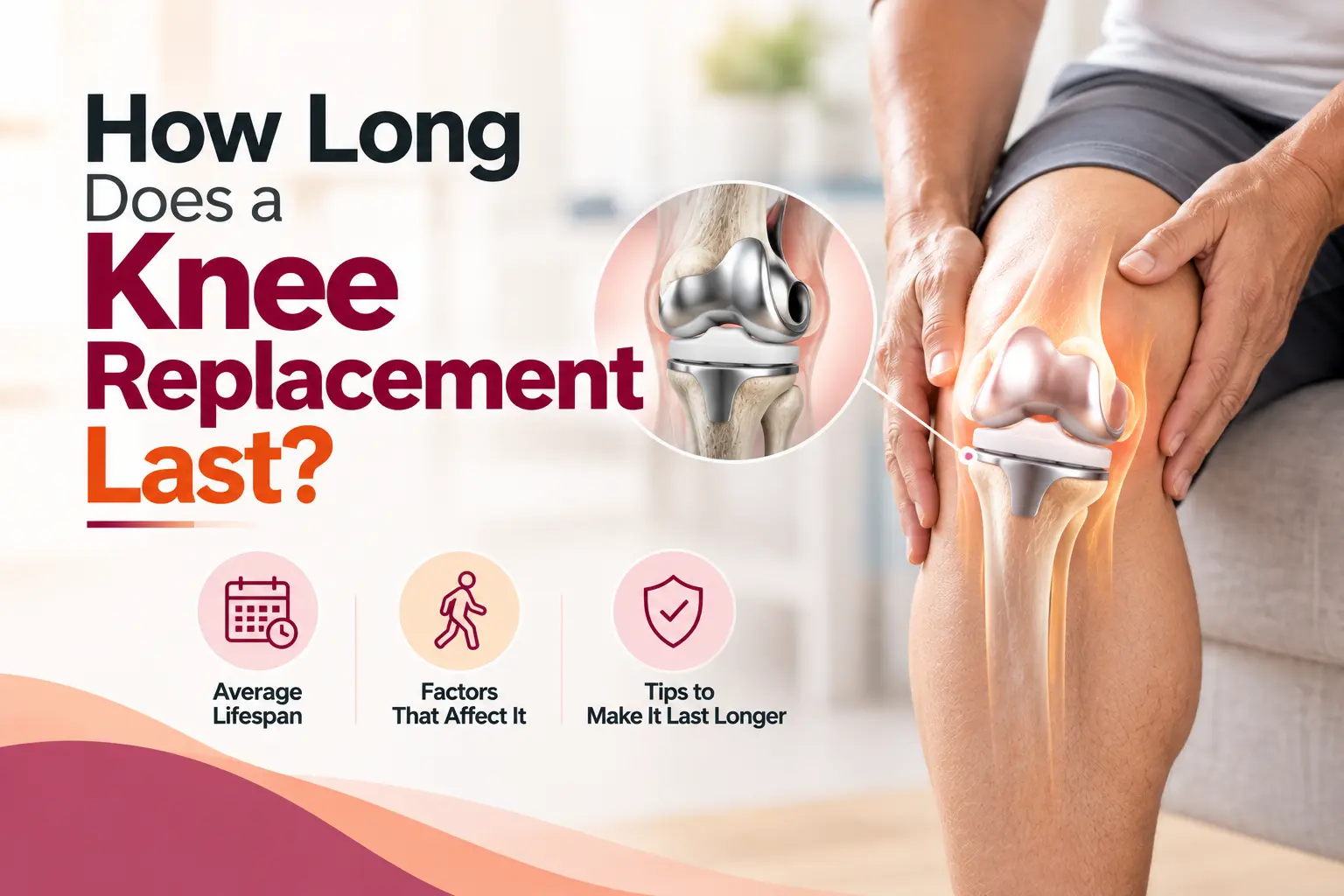
How Long Does a Knee Replacement Last for an Active Person?


- How Long Does a Knee Replacement Last?
- Does Being Active Make a Knee Replacement Wear Out Faster?
- Symptoms of Knee Replacement Wearing Out
- How Do Implant Materials Affect Knee Replacement Lifespan?
- Which Activities Can You Do After Knee Replacement?
- Which Activities Should You Be Careful With?
- Can You Run After Knee Replacement?
- Does Body Weight Affect Knee Replacement Longevity?
- How Can You Help Your Knee Replacement Last Longer?
- Can You Travel After Knee Replacement?
- When Should You Consider Knee Replacement?
- A Longer-Lasting Knee Replacement Starts With How You Care for It
- Specialized Knee Replacement Care in Gurgaon at Miracles Healthcare
Summary
A knee replacement is designed to provide long-term pain relief and restore mobility, and for many patients, it can last 15 to 20 years or longer. However, the exact lifespan varies depending on factors such as age, body weight, implant type, surgical technique, muscle strength, overall health, and activity level. Staying active after knee replacement is possible, but choosing the right activities matters. Low-impact exercises such as walking, cycling, swimming, and guided strength training can help maintain fitness while placing less stress on the artificial joint.
For active individuals, recovery should focus on slowly rebuilding strength, flexibility, balance, and confidence rather than rushing back to strenuous activities. Avoiding excessive high-impact exercise, maintaining a healthy weight, following physiotherapy, and attending recommended follow-up appointments can help support the long-term function of the replacement. At Miracles Healthcare, a team of 10+ orthopedic surgeons evaluates the knee condition, understands the lifestyle and activity goals, and helps patients determine whether knee replacement is appropriate for them.
“If I stay active after knee replacement, will my new knee wear out faster?” It is a common concern for people considering knee replacement who still want to enjoy walking, cycling, exercising, travelling, or simply living an active life without letting knee pain dictate what they can do.
A knee replacement is designed to provide long-term pain relief and mobility, and many implants can last 15 to 20 years or longer. However, the knee replacement longevity depends on factors such as activity level, weight, muscle strength, implant type, and overall health. The goal after knee surgery is not to avoid activity, but to return to movement slowly and choose exercises that support your knee without placing unnecessary stress on the replacement.
How Long Does a Knee Replacement Last?
A knee replacement can often last 15 to 20 years or more, although individual results vary.
Some patients continue to have a well-functioning knee replacement beyond 20 years. Others may experience problems earlier due to factors such as implant wear, loosening, infection, injury, excessive stress on the joint, or other medical conditions.
This means that the number of years cannot be predicted simply by looking at your age or activity level.
For example, two people of the same age may have very different results. One may regularly walk, cycle, maintain a healthy weight, and follow an appropriate exercise routine. Another may participate in repeated high-impact activities or have other factors that place greater stress on the joint.
Dr. Sumit Anand, Orthopedic Surgeon in Gurgaon at Miracles Healthcare, says, “The longevity of a knee replacement depends on several factors. Staying active is important, but the type and intensity of activity should be appropriate for the replaced joint.”
Does Being Active Make a Knee Replacement Wear Out Faster?
Dr. Sumit explains, “Knee replacement surgery doesn't need to wear out faster in active people. An active lifestyle after knee replacement is helpful, but choosing the right type of activity is important to avoid placing unnecessary stress on the replaced joint.”
An artificial knee is designed to let you walk and do everyday activities. Physical activity is also important for maintaining muscle strength, flexibility, balance, and general fitness.
However, not every form of exercise puts the same amount of stress on the knee.
Low-impact activities such as walking, cycling, and swimming generally place less impact on the artificial joint than activities involving repeated jumping, running, or sudden twisting movements.
This distinction is particularly important for people who were highly active before surgery.
If you previously enjoyed running, playing competitive sports, or high-intensity workouts, your post-surgery exercise plan may need some adjustments.
That does not mean you have to give up an active lifestyle. It means finding activities that allow you to remain fit while being mindful of the artificial joint.
Symptoms of Knee Replacement Wearing Out
A knee replacement can provide relief for many years, but like any artificial joint, it can slowly develop wear or other problems over time. Dr. Sumit explains, “A change in pain, swelling, stability, or knee function after a period of good recovery should not be ignored, as it may indicate a problem that needs evaluation.”
Not every ache or discomfort means that your knee replacement is wearing out. However, certain changes are worth discussing with your orthopaedic surgeon.
Common symptoms may include:
-
Increasing knee pain: Pain that returns after a period of comfortable movement or slowly becomes more frequent may need evaluation.
-
Swelling: Persistent or recurring swelling around the knee can sometimes indicate irritation or another underlying problem.
-
Instability: Feeling that the knee is giving way, shifting, or becoming less stable while walking may require assessment.
-
Stiffness or reduced movement: Difficulty bending or straightening the knee compared with your previous level of movement can be a warning sign.
-
Changes in walking: Developing a limp or finding it increasingly difficult to walk comfortably may indicate that the knee needs to be checked.
-
Clicking or unusual sensations: New or persistent clicking, grinding, or other unusual sensations should be discussed with your surgeon, particularly if they occur with pain or instability.
-
Reduced ability to perform daily activities: If activities that were previously comfortable, such as walking, climbing stairs, or getting up from a chair, become increasingly difficult, seek medical advice.
These symptoms do not necessarily mean that the implant has worn out. They can have several possible causes, including loosening, infection, injury, alignment problems, or changes in the surrounding bone and soft tissues. If you notice a new or worsening change in your knee after replacement, an orthopaedic evaluation can help identify the cause and determine whether any treatment is required.
How Do Implant Materials Affect Knee Replacement Lifespan?
The materials used in a knee replacement can influence the implant’s durability, wear characteristics, and compatibility with the patient’s individual needs. However, no single material can guarantee a longer-lasting knee replacement. The overall lifespan also depends on implant design, surgical technique, positioning, bone quality, body weight, activity level, and rehabilitation.
Common materials used in knee replacement implants include:
-
Cobalt-Chromium: Cobalt-chromium alloys are commonly used for the femoral component because they offer high strength, durability, and resistance to wear. They are designed to withstand the repeated loading and movement that occur during everyday activities.
-
Titanium: Titanium and titanium alloys may be used in certain components, particularly where bone integration is important. Titanium is lightweight, strong, and has properties that can make it useful for specific implant designs and fixation methods.
-
Ceramic: Ceramic materials may be used in selected implant components because of their hardness and wear-resistant properties. Their use depends on the implant system and the patient's individual requirements.
The choice between these materials is not simply about which one is strongest or most expensive. Your orthopaedic surgeon considers your age, bone quality, knee anatomy, ligament stability, activity level, overall health, and the extent of joint damage when selecting the appropriate implant.
Dr. Sumit Anand, Joint Replacement Surgeon at Miracles Healthcare, explains, “Implant material is one consideration in knee replacement, but long-term results depend on the complete picture—including implant design, accurate positioning, surgical technique, patient factors, and appropriate rehabilitation.”
Therefore, if you are concerned about how long your knee replacement implant will last, discuss the available implant materials and designs with your surgeon rather than choosing an implant based only on its material, brand, or cost.
Which Activities Can You Do After Knee Replacement?
Once your surgeon and physiotherapist have cleared you for exercise, you can slowly build physical activity into your routine.
-
Walking: Walking is one of the simplest ways to remain active after knee replacement. You may initially walk for short periods and slowly increase the duration as your strength and confidence improve. For many patients, returning to a regular morning or evening walk is an important milestone after surgery.
-
Cycling: Cycling is a low-impact activity that can help improve cardiovascular fitness while putting less stress on the replaced knee. A stationary bike is often introduced during rehabilitation, while outdoor cycling can be considered once you have regained adequate strength, balance, and knee control. Dr. Sumit says, “Cycling can be an excellent way to stay active after knee replacement, as it helps maintain knee movement and muscle strength without the repetitive impact of running.”
-
Swimming: Swimming and water-based exercises can be useful because water supports some of your body weight while allowing the knee to move. Your surgical wound needs to heal adequately before you return to swimming, so follow your surgeon's advice regarding when it is safe.
-
Strength Training: Strong muscles around the knee and hip can support better movement and make everyday activities easier. Exercises targeting the quadriceps, hamstrings, gluteal muscles and other supporting muscles may form part of your rehabilitation programme. The exercises and resistance should be increased slowly under professional guidance.
-
Light Recreational Activities: Depending on your recovery and individual condition, you may be able to enjoy activities such as light hiking, golf, recreational cycling and other low-impact exercises. Your surgeon can help determine what is appropriate based on your implant, recovery, and lifestyle.
If you are considering knee replacement, learn more about the different types, procedure, benefits, risks, and recovery in our detailed guide to Knee Replacement: Types, Procedure, Benefits, Risks and Recovery.
Which Activities Should You Be Careful With?
After knee replacement, activities involving repeated high-impact forces may place additional stress on the artificial joint.
Your doctor may therefore recommend limiting activities such as:
-
Long-distance running
-
Repetitive jumping
-
High-impact aerobics
-
Contact sports
-
Activities involving frequent pivoting
-
Sports requiring sudden changes in direction
However, there is no single activity list that applies identically to every patient.
A recreational athlete and a competitive athlete may have very different expectations from their knee replacement. Discuss your specific goals with your orthopaedic surgeon before returning to demanding sports.
Can You Run After Knee Replacement?
This is a very important question for active patients, especially runners with knee replacements who want to know whether they can return to the activity they enjoy. Running creates repeated impact through the lower limbs. Because of this, many orthopaedic specialists advise patients to choose lower-impact activities after total knee replacement rather than making long-distance running a regular exercise.
Dr. Sumit says, “Running after knee replacement may not be suitable for everyone, so it is important to consider the condition of the joint, your recovery, and the level of impact involved before returning to it.”
If running is an important part of your lifestyle, discuss this with your surgeon before surgery itself. Your treatment plan should take into account not only the condition of your knee but also what you expect to do after recovery. This can help you understand which activities may be appropriate and how you can safely work towards your fitness goals
Does Body Weight Affect Knee Replacement Longevity?
“Does my weight affect how long my knee replacement will last?” This is a very common question, especially among patients who are overweight or have struggled with weight because of years of knee pain. Body weight can influence the amount of mechanical load placed on the knee.
The knee supports your body during activities such as walking, standing, climbing stairs, and getting up from a chair. Excessive body weight can therefore increase the forces passing through the joint.
Maintaining a healthy weight after knee replacement surgery can help reduce unnecessary stress on the artificial knee. However, weight management should be realistic.
If you have lived with severe knee pain for many years, exercise may have become difficult or uncomfortable. Your first goal after surgery may simply be to regain comfortable movement. As your mobility improves, you can slowly work towards a healthier and more active routine.
How Can You Help Your Knee Replacement Last Longer?
You cannot control every factor affecting implant longevity, but a few everyday habits can help protect your artificial knee.
-
Attend Physiotherapy Sessions: Physiotherapy helps improve muscle strength, flexibility, balance, and knee movement. Follow your rehabilitation plan rather than progressing too quickly.
-
Choose Appropriate Exercises: Stay active with low-impact activities such as walking, cycling, and swimming, which can help maintain fitness while reducing stress on the joint.
-
Maintain a Healthy Weight: Maintaining a healthy weight can reduce the mechanical load on your artificial knee and make movement more comfortable.
-
Avoid Sudden Overexertion: Increase activity slowly after surgery. Give your muscles and knee time to adapt before returning to higher-intensity activities.
-
Take Persistent Symptoms Seriously: Ongoing or new pain, swelling, or instability should not be ignored. Consult your orthopaedic surgeon if your knee feels different or becomes difficult to use.
-
Keep Up With Follow-Up Visits: Regular follow-ups allow your doctor to monitor the condition of your knee replacement and identify potential concerns early.
Can You Travel After Knee Replacement?
For many active patients, travelling is one of the activities they most want to return to after surgery.
Whether it is a family holiday, a business trip or simply visiting another city, improved mobility can make travelling more comfortable.
However, travelling soon after surgery requires planning. Your recovery stage, wound healing, ability to walk, risk of swelling, and your doctor's advice all need to be considered.
Once you have recovered sufficiently, you can discuss longer journeys and travel-related precautions with your doctor.
When Should You Consider Knee Replacement?
Not every person with knee pain needs a knee replacement surgery. The procedure may be considered when advanced knee damage is causing persistent pain and difficulty with daily activities, and other treatment options are no longer providing adequate relief.
You may find that knee pain is affecting:
-
Walking
-
Climbing stairs
-
Getting up from a chair
-
Exercising
-
Sleeping
-
Travelling
-
Working
-
Participating in hobbies
-
Spending time with family
If these limitations are becoming part of everyday life, consult an orthopedist near you at Miracles Healthcare and determine the cause of your symptoms and whether knee replacement or another treatment option is appropriate.
A Longer-Lasting Knee Replacement Starts With How You Care for It
A knee replacement does not mean the end of an active life. In fact, for many people, it can be the beginning of moving more comfortably, walking with greater confidence, and returning to activities they had slowly stopped enjoying because of knee pain.
A modern knee replacement can often last 15 to 20 years or longer, although every patient is different. What matters most is giving your knee the right support, following your rehabilitation plan, staying active with appropriate exercises, maintaining a healthy weight, and attending regular follow-up appointments.
You do not need to be afraid of movement after knee replacement. With the right guidance and realistic expectations, you can work towards an active routine that fits your lifestyle while taking care of your new joint.
If knee pain is keeping you from the activities you love, meet an experienced orthopedic surgeon near you in Gurgaon at Miracles Healthcare. A proper evaluation can help you understand your options and take the next step towards moving with greater comfort and confidence.
Specialized Knee Replacement Care in Gurgaon at Miracles Healthcare
Miracles Healthcare is a trusted orthopedic hospital in Gurgaon, providing specialized, patient-focused care for people experiencing knee pain, arthritis, joint damage, sports injuries, and other musculoskeletal conditions.
-
An experienced team of orthopaedic specialists evaluate persistent knee pain, arthritis, stiffness, reduced mobility, and joint damage to identify the underlying cause and recommend appropriate treatment.
-
Joint replacement expertise, including evaluation for total and partial knee replacement, with treatment plans based on the patient's condition, age, activity level, and lifestyle goals.
-
7 lakh+ patients served, with a focus on personalised, compassionate, and patient-centred healthcare.
-
Multispecialty care under one roof, allowing patients to access physiotherapy, internal medicine, diagnostics, and other specialties when additional medical expertise is required.
-
26,000+ surgeries performed across specialties, supported by advanced infrastructure and a focus on patient safety.
-
24×7 advanced diagnostic facilities, including CT scan, MRI scan, ultrasound, X-ray, BMD, ECG, Echo, TMT, and other investigations to support accurate diagnosis and treatment planning.
-
Post-surgery rehabilitation and physiotherapy support to help patients slowly regain knee movement, muscle strength, balance, and confidence after knee replacement.
-
24×7 emergency services for sudden severe knee pain, fractures, serious injuries, and other conditions requiring timely medical attention.
-
Convenient locations across Gurgaon, including Sector 14, Sector 56, and Sector 82, making specialised orthopaedic care more accessible.
If persistent knee pain is affecting your walking, exercise, sleep, travel, or everyday activities, timely orthopaedic evaluation can help identify the cause and determine whether non-surgical treatment, joint preservation, or knee replacement may be appropriate. Consult an experienced orthopaedic specialist at Miracles Healthcare, Gurgaon, for personalised evaluation and treatment guidance.
Written and Verified by:

Frequently Asked Questions
A knee replacement can continue to function well beyond 20 years in some patients, while others may develop wear, loosening, or other problems. Regular follow-up can help monitor the implant.
Many patients can cross their legs after recovery, but comfort and movement vary. Follow your surgeon’s guidance, particularly during the early recovery period.
Yes, walking is an important part of rehabilitation after knee replacement. Start slowly and increase your walking as your strength and mobility improve.
Many people experience less pain and improved mobility, allowing them to return to everyday activities and suitable forms of exercise after recovery.
Recovery varies from person to person. Many patients gradually regain a more natural walking pattern over several weeks to months with appropriate physiotherapy and rehabilitation.
There is no universal list of activities that everyone must permanently avoid. High-impact activities such as repetitive jumping or long-distance running may be discouraged, depending on your individual situation and surgeon’s advice.





Was the information useful?
0 0